
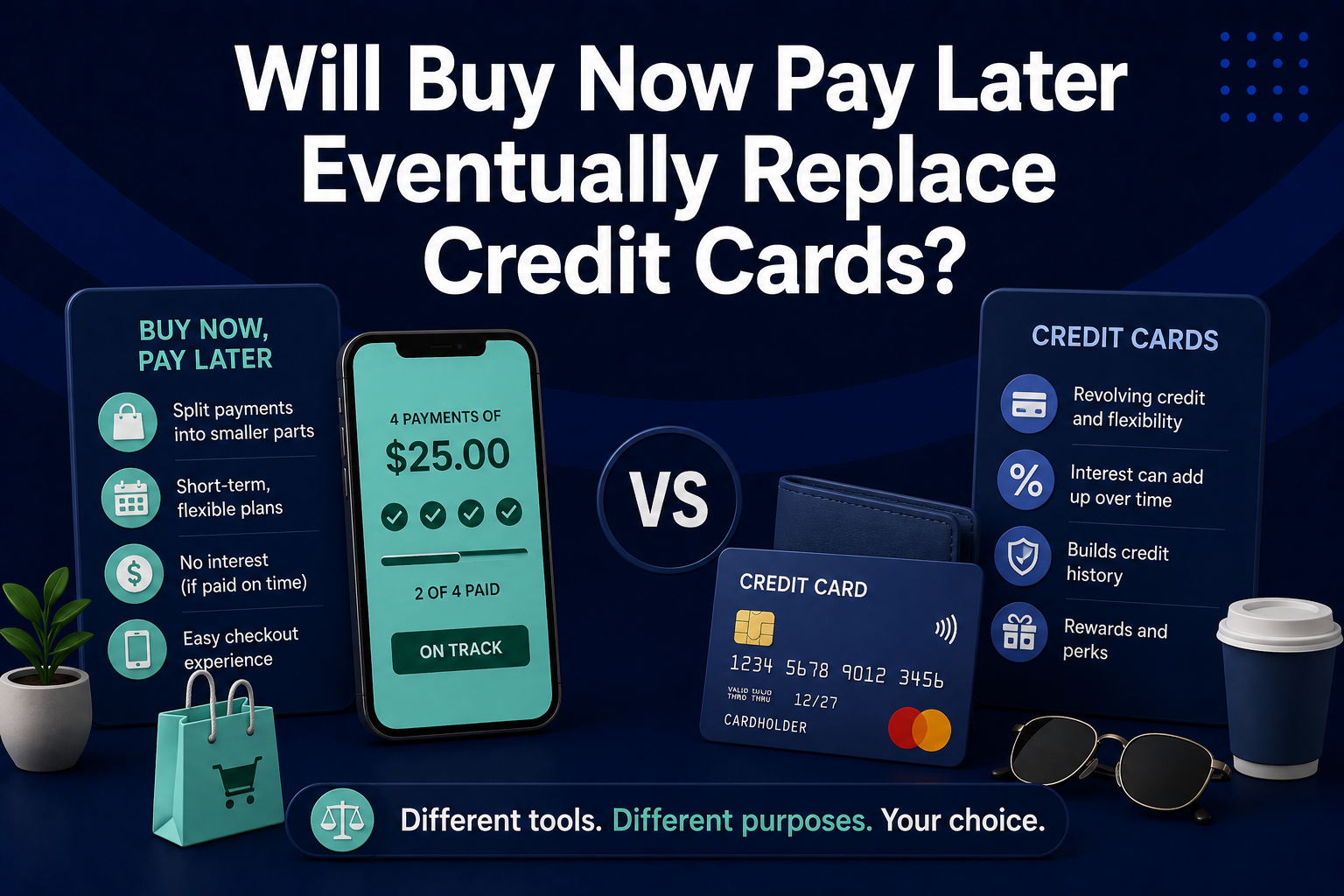
Buy Now Pay Later has grown from a niche checkout option to one of the most widely used payment methods in the United States. Tens of millions of Americans now use it regularly. The companies behind it are valued in the billions. And a growing number of younger consumers appear to prefer it over traditional credit cards.
So will Buy Now Pay Later eventually replace credit cards? The short answer is no, at least not in any complete or near-term sense. But the longer answer reveals something more interesting about how the two products are evolving and what that means for your credit.
What Buy Now Pay Later does well
Buy Now Pay Later solves a specific problem elegantly: it lets consumers spread the cost of a purchase over a short period, typically four installments over six weeks, without the complexity of a credit card application, a credit limit, or revolving debt.
For many consumers, particularly younger ones who are skeptical of credit card debt or who have been excluded from traditional credit products, Buy Now Pay Later is more accessible and feels more transparent. You know exactly what you will pay and when. There is no revolving balance that can grow if you only pay the minimum.
The frictionless checkout experience has also driven rapid adoption. Adding a Buy Now Pay Later option at checkout takes seconds. It does not require an existing account or a credit check in most cases. For retailers, it increases conversion and average order value. For consumers, it feels less like debt and more like a payment schedule.
What Buy Now Pay Later does not do
Despite its growth, Buy Now Pay Later has significant limitations that prevent it from replacing credit cards for most consumers and use cases.
It does not build credit reliably. Credit cards with consistent on-time payments build a strong credit history. Buy Now Pay Later reporting to credit bureaus is inconsistent across providers and still evolving. For consumers who need to build or maintain a credit score for housing, auto loans, or mortgages, credit cards remain the more reliable credit-building tool.
It does not offer the same consumer protections. Credit cards come with robust federal protections including the ability to dispute charges, chargeback rights, and zero liability for fraudulent purchases. Buy Now Pay Later protections vary significantly by provider and are generally weaker. The CFPB has noted this gap and has signaled interest in extending credit card-style protections to Buy Now Pay Later products.
It does not offer rewards. The rewards ecosystem built around credit cards, including cash back, travel points, and sign-up bonuses, represents significant value for cardholders who pay their balance in full. Buy Now Pay Later products generally offer no equivalent.
It does not work everywhere. Credit cards are universally accepted. Buy Now Pay Later is available only at participating merchants. For everyday spending like groceries, gas, and utilities, credit cards remain the only option.
It does not handle large or ongoing expenses. Buy Now Pay Later is designed for discrete purchases. It does not work for recurring bills, subscriptions, or large ongoing expenses in the way that a credit card with a revolving limit does.
How credit cards are responding
The credit card industry has not ignored Buy Now Pay Later’s growth. Major card issuers have responded by adding installment plan features directly to existing cards. American Express, Chase, Citi, and others now offer their own versions of pay-over-time options for large purchases.
This hybrid approach combines the credit-building benefits, consumer protections, and universal acceptance of credit cards with the installment payment structure that makes Buy Now Pay Later appealing. For many consumers, this may be the best of both worlds.
The regulatory picture
The CFPB has taken an increasing interest in Buy Now Pay Later and in 2024 issued guidance clarifying that many Buy Now Pay Later products should be treated as credit cards under existing law, which would subject them to the same disclosure requirements, dispute rights, and consumer protections.
This regulatory pressure is pushing the industry in two directions simultaneously: toward more consumer-friendly terms that look more like credit cards, and toward more consistent credit bureau reporting. Both developments will change the credit implications of Buy Now Pay Later over the next several years.
What this means for your credit
As Buy Now Pay Later reporting to credit bureaus becomes more common, the credit implications of these products will become more significant in both directions. On-time payments may begin building credit more reliably. Missed payments will increasingly damage credit scores.
For anyone actively building or managing their credit, the practical implication is to treat Buy Now Pay Later obligations with the same discipline as credit card payments. Missed payments are increasingly likely to show up on your credit report, and the informal feeling of the product should not obscure that reality.
For credit building specifically, traditional tools like credit cards, credit builder loans, and rent reporting through services like Credit Genius remain more reliable than Buy Now Pay Later because their reporting relationships with credit bureaus are established and consistent.
The bottom line
Buy Now Pay Later will not replace credit cards. It will continue to grow as a complement to credit cards for specific purchase types and specific consumer segments. The two products are converging in some ways, with credit cards adding installment features and Buy Now Pay Later products facing pressure to add consumer protections and credit reporting.For consumers, the takeaway is straightforward. Use Buy Now Pay Later where it genuinely helps you manage a purchase. Treat every payment obligation seriously regardless of how informal the product feels. And if building or maintaining your credit score is a priority, make sure the financial behaviors you are relying on to do that are connected to products with reliable, consistent bureau reporting.