
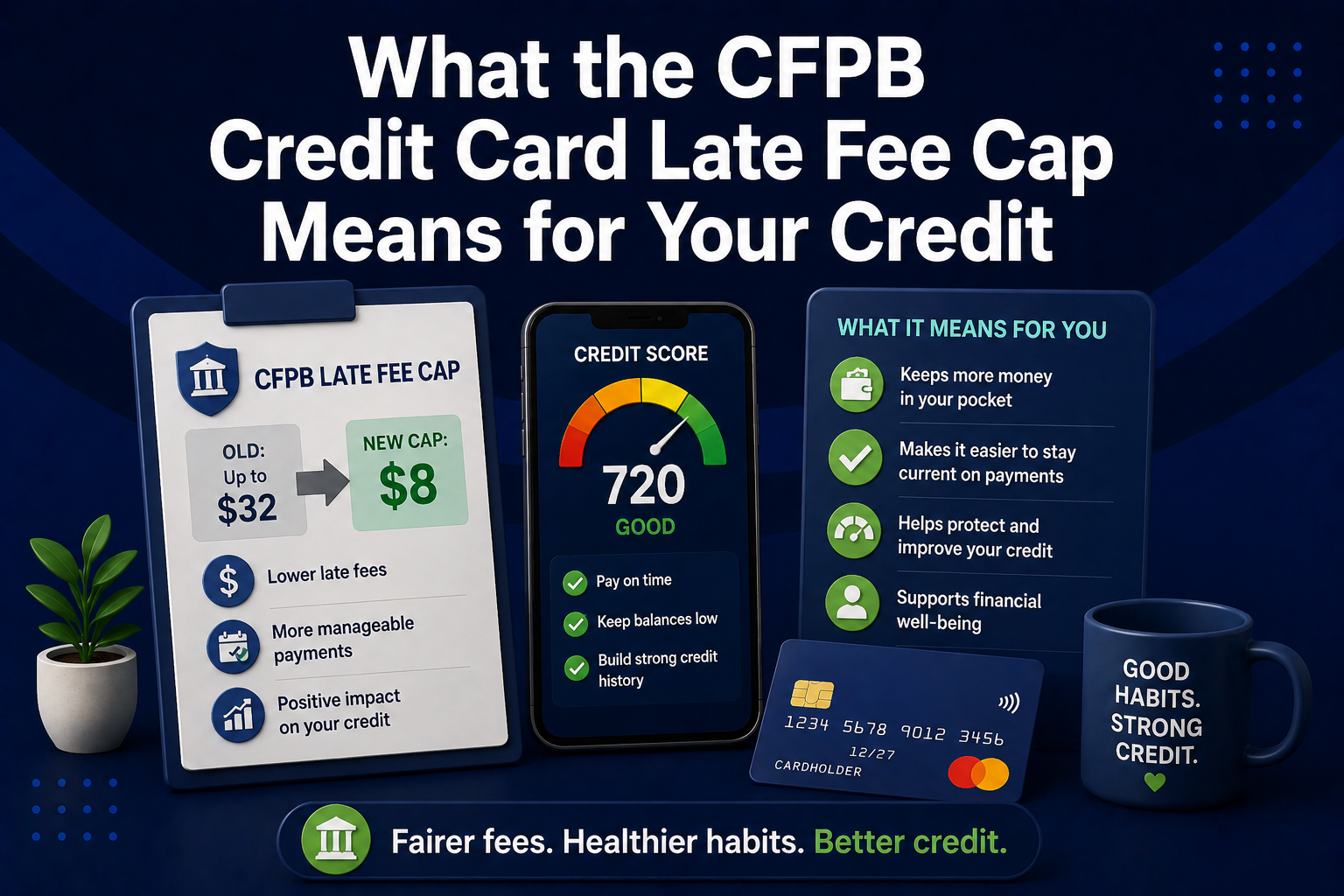
In 2024 the Consumer Financial Protection Bureau finalized a rule that would cap credit card late fees at eight dollars for most credit card issuers, down from the typical 30 to 41 dollar fees that had become standard. The rule was immediately challenged in court by the banking industry and its implementation has been tied up in legal proceedings.
Regardless of where the legal battle ultimately lands, the rule and the debate around it have significant implications for how Americans think about late fees, credit card costs, and credit building. Here is what you need to know.
What the rule actually says
The CFPB’s rule, issued under authority granted by the Credit Card Accountability Responsibility and Disclosure Act of 2009, known as the CARD Act, would limit late fees to eight dollars for a first missed payment and the same amount for subsequent missed payments. Current rules allow fees up to 30 dollars for a first late payment and up to 41 dollars for additional late payments within six months.
The CFPB estimated that the rule would save American consumers approximately 10 billion dollars per year in late fees. The banking industry contested this, arguing that the fees serve as a deterrent against late payments and that reducing them would lead issuers to raise interest rates or reduce credit access to offset the lost revenue.
The rule applies to larger credit card issuers and exempts smaller institutions with fewer than one million open accounts.
What the rule does not change
This is the most important thing to understand about the late fee rule from a credit perspective: it does not change how late payments are reported to the credit bureaus or how they affect your credit score.
A payment reported as 30 days late damages your credit score the same amount whether the late fee was 8 dollars or 41 dollars. The fee is a financial penalty charged by the lender. The credit report mark is a separate event reported to the bureaus. Reducing the fee does not reduce the credit score impact.
If the rule leads some consumers to be less concerned about missing a payment because the fee is smaller, that would be the wrong conclusion to draw. The fee is one cost of a late payment. The credit score damage is a separate and often much larger cost.
The potential unintended consequences
The banking industry’s argument that reduced late fees would lead to higher interest rates or tighter credit access is not without basis. Credit card issuers need to price risk into their products. If one revenue source is capped, they may adjust elsewhere.
Some analysis has suggested that the primary beneficiaries of late fees are the issuers themselves, since the fees often exceed the actual cost to the issuer of a late payment. Other analysis suggests that consumers who miss payments regularly are higher-risk borrowers and that higher fees serve a legitimate deterrence function.
What is clear is that the net effect on consumers depends on how issuers respond. If they raise interest rates to compensate, consumers who carry balances may pay more overall even with lower late fees. If they tighten credit access, some consumers may find it harder to get approved.
What this means for credit building
For consumers actively building or protecting their credit score, the late fee cap changes very little in practical terms. The single most important credit principle remains unchanged: pay on time, every time.
A missed payment costs 50 to 100 points or more on your credit score and stays on your report for seven years. That is a cost that dwarfs any late fee, capped or uncapped. The fee reduction does not change the calculus around the importance of on-time payments.
Set up autopay for the minimum payment on every account. This ensures you never miss a payment due to forgetfulness regardless of what the late fee happens to be. The fee is the least of the consequences of a missed payment.
The broader CFPB credit reform agenda
The late fee rule is one piece of a broader CFPB agenda that has significant implications for how credit works in America. Other major actions have included the removal of medical debt from credit reports, guidance on Buy Now Pay Later regulation, and ongoing scrutiny of credit reporting accuracy.
The removal of medical collections under 500 dollars from credit reports in 2023 was a significant change that directly improved scores for millions of Americans who had medical debt on their files. This is an example of a regulatory change that had a real and immediate credit score impact, unlike the late fee cap which leaves the credit reporting system unchanged.
Staying informed about regulatory changes affecting the credit system is worth doing. Tools like Credit Genius that provide real-time Experian monitoring and AI-powered guidance will reflect these changes as they take effect and help users understand how their own credit profile is affected.
The bottom line
The CFPB credit card late fee cap is a significant consumer finance development that could save Americans billions of dollars in fees if implemented as written. Its legal future remains uncertain as of 2026.For your credit score, the rule changes nothing. Late payments damage your credit regardless of the fee size. The most important thing you can do remains the same: pay on time, every time, on every account. No regulatory change makes that less true.