
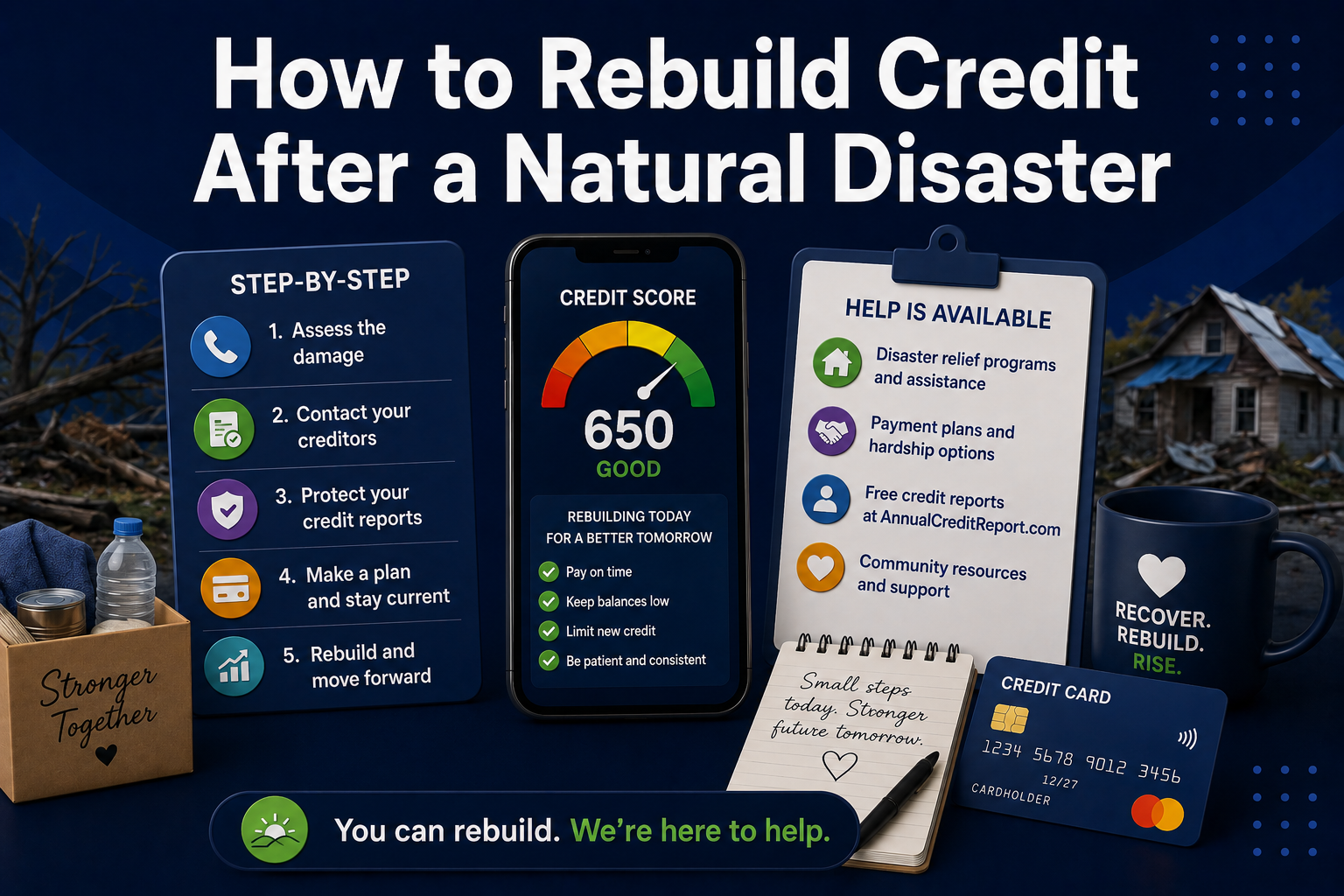
Natural disasters upend everything simultaneously. Housing, employment, transportation, access to basic services, and the financial systems people depend on for daily life can all be disrupted at once. In the chaos of rebuilding a life after a hurricane, wildfire, flood, or tornado, credit is often the last thing on anyone’s mind.
But the credit damage that can accumulate during and after a disaster is real, and it can make the financial recovery significantly harder. Understanding your options, your rights, and the steps available to you is an important part of the full recovery process.
How disasters damage credit
Natural disasters damage credit through a chain of financial disruptions rather than a single event. Income is disrupted when businesses are destroyed or employees cannot get to work. Housing costs spike when people are displaced and need temporary accommodation on top of ongoing rent or mortgage obligations. Insurance reimbursements take time while immediate costs arrive immediately. Banks and payment systems may be inaccessible in affected areas.
The result is that people who were managing their finances responsibly before the disaster find themselves unable to make payments they would normally make without difficulty. Missed payments, high utilization from emergency expenses charged to credit cards, and potential collections from bills that fell through the cracks during displacement are all common outcomes.
Contact your lenders immediately
This is the most important step and the one most people skip because they are overwhelmed. Contact every lender you have, credit cards, auto loans, mortgage or rent, utilities, and any other financial obligation, and explain that you have been affected by a declared disaster.
Most major lenders have disaster relief programs that can defer payments, waive late fees, and suspend negative reporting to the credit bureaus for a defined period. These programs exist specifically for situations like this. They are not guaranteed and not every lender participates but many do, and the relief can be substantial.
The key is to call before you miss a payment if possible. Lenders are more accommodating when you reach out proactively than when you have already missed several payments and the account is in collections.
Know your rights under FCRA disaster provisions
The Fair Credit Reporting Act contains provisions relevant to natural disasters. If you notify a credit bureau that you have been affected by a natural disaster and your address is in a federally declared disaster area, the bureau is required to flag your file. This notation can affect how lenders and others interpret negative marks that appear during the disaster period.
Additionally, if a lender agrees to defer payments or modify your account terms during the disaster period, they are generally required to report your account status accurately, meaning a deferred payment should not be reported as a missed payment if the deferral was formally agreed.
Document every agreement you make with lenders in writing. If you call and agree to a three-month payment deferral, follow up with an email confirming the terms. This documentation protects you if the account is later reported incorrectly.
Check FEMA and government assistance programs
Federal Emergency Management Agency assistance, SBA disaster loans, and state-level programs can provide financial support that reduces the need to rely on credit during a disaster recovery period. FEMA assistance for declared disasters can cover temporary housing, home repair, and other essential needs.
SBA disaster loans are available to homeowners, renters, and businesses in declared disaster areas at low interest rates. For credit rebuilding purposes, an SBA disaster loan that helps you stabilize your financial situation can prevent the credit damage that would otherwise accumulate from missed payments and emergency credit card charges.
Register with FEMA at disasterassistance.gov as early as possible after a declared disaster. Deadlines for assistance applications are real and missing them can mean losing access to programs that would have helped.
Pull your credit reports and dispute disaster-related errors
Once the immediate crisis has stabilized, pull your credit reports from all three bureaus at annualcreditreport.com and review them carefully. Look specifically for accounts that show missed payments during the disaster period that should have been covered by a deferral agreement, accounts that were sent to collections despite a hardship arrangement, and any other entries that do not accurately reflect what actually happened.
If you find errors, dispute them with documentation. Your written agreements with lenders are your evidence. A lender who agreed to defer payments and then reported them as missed has made an error that can and should be disputed.
Start rebuilding systematically
Once the emergency phase is over and you have a stable housing and income situation, begin rebuilding your credit profile deliberately.
Set up autopay on all accounts that are current so that as your life normalizes, your payment history is automatically protected. If you are renting in your recovery location, enroll in rent reporting through Credit Genius. Adding verified rent payment history to your Experian file creates positive data that begins to counterbalance any negative marks from the disaster period.
If you had to open new credit accounts during the disaster, manage them carefully. Emergency credit card balances should be paid down as insurance reimbursements and assistance arrive to reduce utilization.
The timeline for recovery
The credit recovery timeline after a natural disaster depends heavily on how much damage accumulated during the event and how quickly you were able to contact lenders and access assistance. For someone who caught the situation early, contacted lenders immediately, and secured deferral agreements, the credit damage may be minimal and recovery relatively quick.
For someone whose credit took significant hits through missed payments and collections during an extended displacement, the recovery timeline is similar to other credit rebuilding scenarios: twelve to twenty-four months of consistent positive behavior to meaningfully improve a damaged score, with the most severe marks fading over time even as they remain on the report for up to seven years.
The bottom line
Credit damage after a natural disaster is real but it is also one of the most preventable forms of credit damage if you act quickly. Contact lenders immediately. Access government assistance. Document every agreement. Dispute inaccurate entries. Then rebuild steadily with the same tools available to anyone rebuilding credit: consistent payments, rent reporting, and positive new credit history.A disaster is not a credit failure. It is a disruption. With the right response, the credit impact can be minimized significantly.