
Tax season leaves a lot of people with an unexpected bill from the IRS. Whether it is a few hundred dollars or several thousand, owing the IRS is stressful on its own. The worry that it might also damage your credit score adds another layer of concern.
The short answer is more nuanced than most people expect. Here is exactly how IRS debt interacts with your credit score, what has changed in recent years, and what you should do if you owe.
Does simply owing the IRS hurt your credit score?
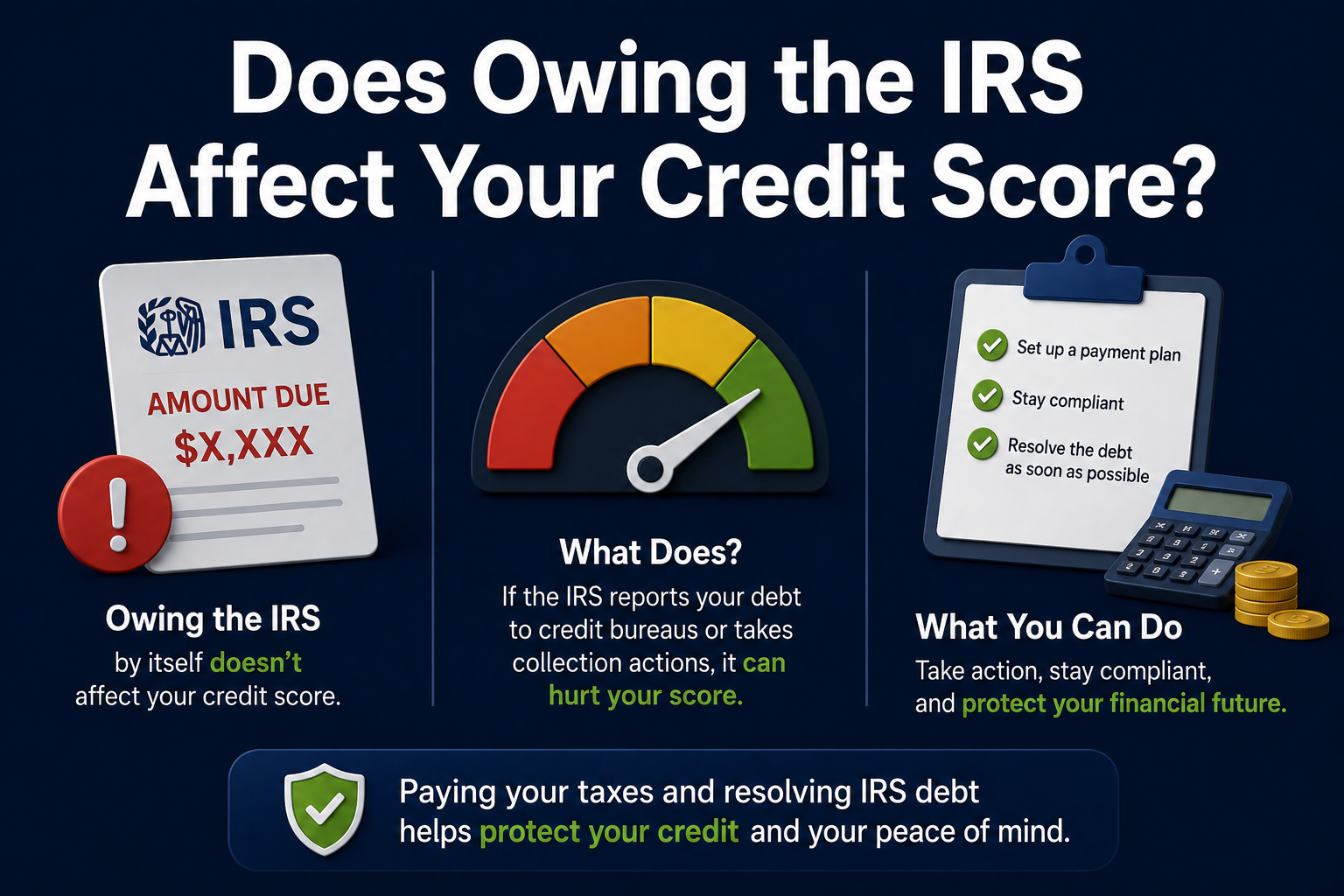
No. Owing money to the IRS does not automatically appear on your credit report or affect your credit score. The IRS does not report tax debts to the credit bureaus the way that lenders and creditors do. Simply having an unpaid tax balance, even a large one, does not create a negative entry on your credit file.
This surprises many people who assume that any significant debt to a government agency would show up on their credit report. Tax debt is treated differently from consumer debt in the credit reporting system.
What about tax liens? This is where it used to get complicated.
Historically, the biggest credit concern around IRS debt was the federal tax lien. When a taxpayer failed to pay a significant tax debt after the IRS made a formal demand for payment, the IRS could file a Notice of Federal Tax Lien, which was a public record claiming the government’s interest in your assets. These liens used to appear on credit reports and could significantly damage credit scores.
That changed significantly in 2017. In April of that year, Equifax, Experian, and TransUnion announced that they would no longer include tax liens on consumer credit reports as part of a broader initiative to improve the accuracy of credit reporting. This change went into effect in July 2017.
As a result, federal tax liens no longer appear on consumer credit reports from the three major bureaus. If you had a tax lien on your credit report before 2017 it should have been removed. If a tax lien is currently appearing on your report from any of the three major bureaus, it is likely an error and should be disputed.
Can IRS debt ever affect your credit?
There are indirect ways that unresolved IRS debt can create credit complications, even without appearing directly on your credit report.
Even though tax liens no longer appear on consumer credit reports, a federal tax lien is still a public record that affects your ability to sell property or refinance a mortgage. Title searches conducted during real estate transactions will reveal existing tax liens, which must typically be resolved before closing.
If the IRS escalates collection efforts, it can levy your bank accounts or garnish your wages. A bank account levy that drains funds you were using to pay other obligations can lead to missed payments on credit accounts, which would damage your credit score. The IRS debt itself does not appear on your credit report but the consequences of unresolved IRS debt can cascade into credit-damaging events.
For very large tax debts, the IRS can certify the debt to the State Department, which can deny passport applications or revoke existing passports. This does not affect credit directly but it is a significant consequence of large unresolved tax debt.
What to do if you owe the IRS
The good news is that the IRS offers several options for taxpayers who cannot pay their full balance immediately, and engaging with these options prevents the escalation that can lead to indirect credit damage.
Installment agreement. You can set up a payment plan with the IRS to pay your balance over time. If you owe less than 50,000 dollars and have filed all required returns, you can often set up an online payment plan without speaking to an IRS agent. Installment agreements are not reported to credit bureaus and do not affect your credit score.
Offer in Compromise. If you cannot pay the full amount owed and it would create financial hardship, you may qualify for an Offer in Compromise, which allows you to settle your tax debt for less than the full amount. Qualification depends on your income, expenses, and asset equity.
Currently Not Collectible status. If paying your tax debt would prevent you from covering basic living expenses, the IRS can place your account in Currently Not Collectible status, temporarily suspending collection activity. Interest and penalties continue to accrue but active collection stops.
The worst approach to IRS debt is ignoring it. Ignoring it leads to escalating penalties, interest, and eventually the levies and liens that can create indirect credit damage even if they no longer appear directly on credit reports.
Protect your credit while resolving IRS debt
While working through an IRS debt situation, protect your credit score by maintaining all other payment obligations. Set up autopay on all credit accounts so that the stress and distraction of dealing with the IRS does not result in missed payments elsewhere.
Monitor your credit file during this period as well. Real-time monitoring through a tool like Credit Genius alerts you immediately if anything unexpected appears on your Experian file, giving you the earliest possible warning if any IRS-related record shows up or if another issue emerges while your attention is elsewhere.
The bottom line
Owing the IRS does not directly damage your credit score. Tax liens were removed from consumer credit reports in 2017 and the IRS does not report tax debts to the credit bureaus. However, ignoring a tax debt can lead to IRS collection actions that create indirect credit damage through missed payments or bank levies.
The practical advice is straightforward: engage with the IRS, set up a payment plan if you cannot pay in full, and protect your credit obligations while you work through it. The IRS is one of the more accommodating creditors when it comes to payment arrangements. Use that to your advantage.