
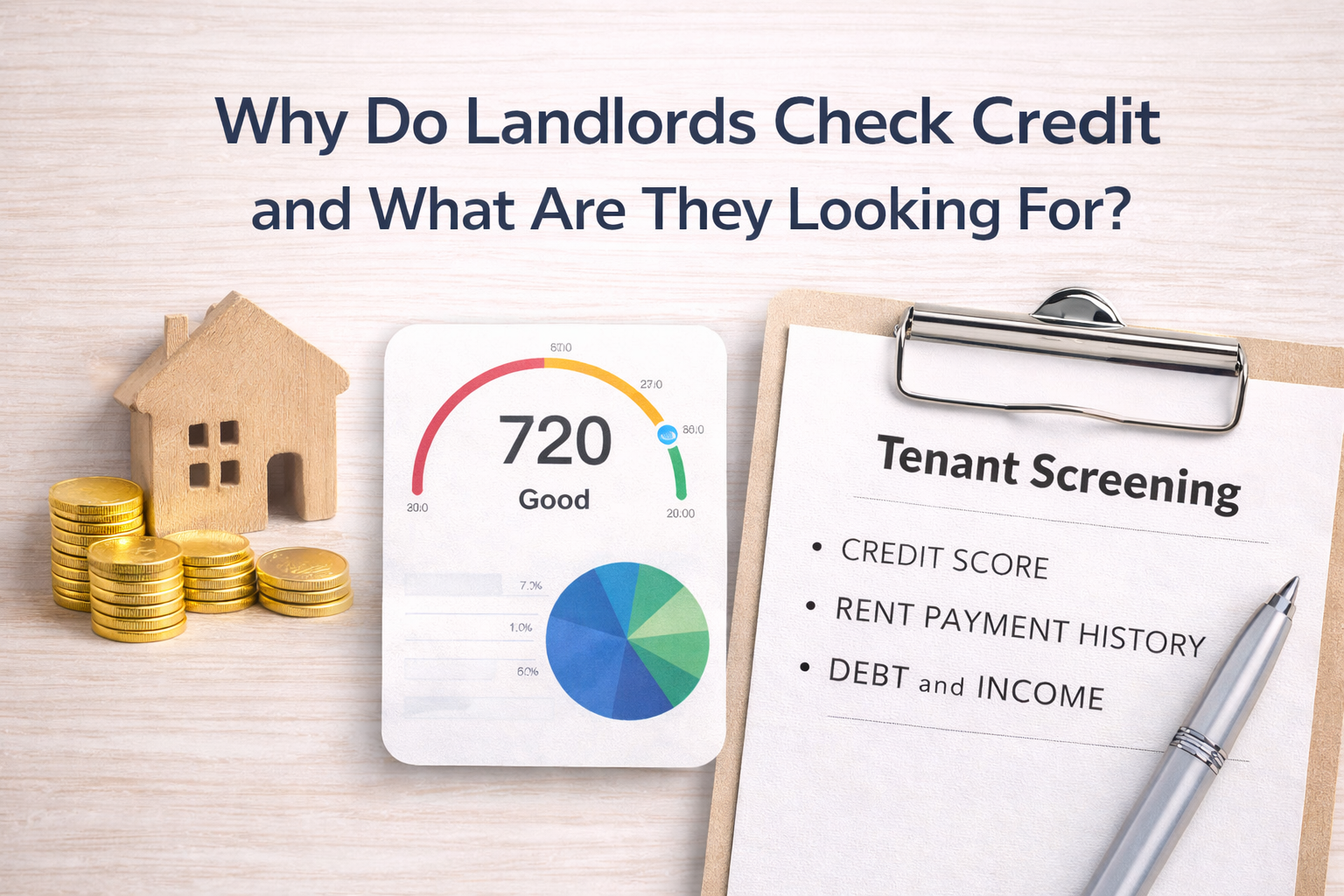
If you have ever applied for an apartment and been asked to authorize a credit check, you might have wondered what exactly the landlord is looking at and how much weight it carries. Credit checks are now standard practice in most professional rental markets, and understanding what landlords are looking for can help you prepare a stronger application and avoid surprises.
Why landlords run credit checks at all
A landlord’s primary concern is simple: will this person pay rent on time every month for the duration of the lease? A credit check is the most practical tool available to answer that question before signing a legal agreement.
Your credit file is essentially a track record of how you have managed financial obligations over time. A landlord who reviews it gets a data-backed picture of your payment behavior, your debt load, and any serious financial events in your recent history, all of which are relevant to the question of whether you are likely to be a reliable tenant.
Evicting a non-paying tenant is an expensive, time-consuming legal process in most states. Landlords use credit checks partly to avoid getting into that situation in the first place.
What landlords actually look at
Many landlords don’t simply review your credit score. They perform a tenant screening report which provides them with information about your credit score as well as additional details regarding your entire credit file.
Landlords examine three main areas:
Payment history. This is the most important factor. Landlords want to see a consistent pattern of on-time payments. Late payments on credit cards or loans raise a flag. Late payments on previous rent or utilities are an even bigger concern because they suggest the specific behavior the landlord is trying to avoid.
Collections accounts. A collections account means a debt went unpaid long enough that it was sent to a collections agency. Landlord-related collections, meaning unpaid rent or damages from a previous tenancy, are often automatic disqualifiers regardless of the overall credit score.
Eviction records. These often appear on tenant screening reports separately from the standard credit report. An eviction on your record is typically the most serious red flag a landlord can see, even more damaging than a low credit score.
Overall credit score. Most professional property managers have a minimum score threshold, often somewhere between 620 and 680 depending on the market. In high-demand cities the bar tends to be higher. In less competitive markets some landlords are more flexible.
Debt to income ratio. Many landlords also look at how much debt you are carrying relative to what they know about your income. A high debt load alongside a modest income raises questions about whether rent payments will consistently be prioritized.
Public records. Bankruptcies and civil judgments can appear on credit reports and tenant screening reports. A recent bankruptcy is a concern for most landlords. An older one with a clean record since then is viewed more charitably.
Hard inquiry or soft inquiry
Most tenant credit checks are soft inquiries, which means they do not affect your credit score. However, some landlords or screening services run a hard inquiry, which does have a small temporary impact. It is worth asking before you authorize the check.
If you are applying to multiple apartments around the same time, multiple soft inquiries will not affect your score at all. Multiple hard inquiries in a short window may have a minor cumulative effect but this is generally small and temporary.
What screening service are they using
Most landlords do not directly access their tenants’ credit information with Experian, Trans Union, and/or Equifax. Instead, most utilize a third party Tenant Screening Service which aggregates the information from one or all three of those credit agencies into a format specifically for rentals. The screening service will also usually provide additional types of information including; eviction history, criminal background check results, as well as income verification along with the tenant’s credit history.
When you see a credit score associated with your tenant application the credit score being displayed is most likely a Vantage Score instead of a FICO score, and was probably generated by just one agency. Knowing this makes sense because if your landlord is viewing what appears to be a lower credit score then the one you’re seeing on your credit monitoring app, it could affect how seriously your landlord takes your application.
Screening Models (as opposed to “Traditional” Scoring Models) can give greater weight to behaviors specific to renting. For example, having a verified history of making timely rent payments via a service such as Credit Genius is beneficial when it comes to demonstrating to potential landlords or screening companies that you have a proven track record of making on-time payments for past housing expenses.
What you can do if your credit is not strong
A credit check result that falls below a landlord’s threshold does not always mean automatic rejection. There are several ways to strengthen your application alongside a weaker credit profile.
Offer a larger security deposit. Many landlords will accept two or three months of rent upfront in exchange for approving an applicant they might otherwise pass on.
Provide proof of strong, stable income. Most landlords want to see monthly income of at least two to three times the rent. If your income significantly exceeds that threshold, it can offset a lower score.
Get a co-signer with strong credit. A co-signer accepts legal responsibility for the rent if you default. It is a significant ask of the co-signer but a common solution when credit is the only issue.
Provide a reference from a previous landlord. A letter confirming consistent on-time rent payments from a previous tenancy is credible evidence that speaks directly to what the landlord is trying to assess.
Start reporting your rent now. If you are not yet applying but know you will be in the coming months, enrolling in a rent reporting service like Credit Genius can add positive payment history to your Experian file before your next application. The backdating feature means you do not have to start from zero.
The bottom line
Landlords use credit reports because there simply is no other reliable data-driven way to evaluate whether or not the applicant will continue to pay rent on time & honor their financial obligations. Landlords don’t look at just a number; they look at the story behind that number. Understanding what that story says about you, and taking steps to make it as strong as possible before you apply, gives you a meaningful advantage in any rental market.