
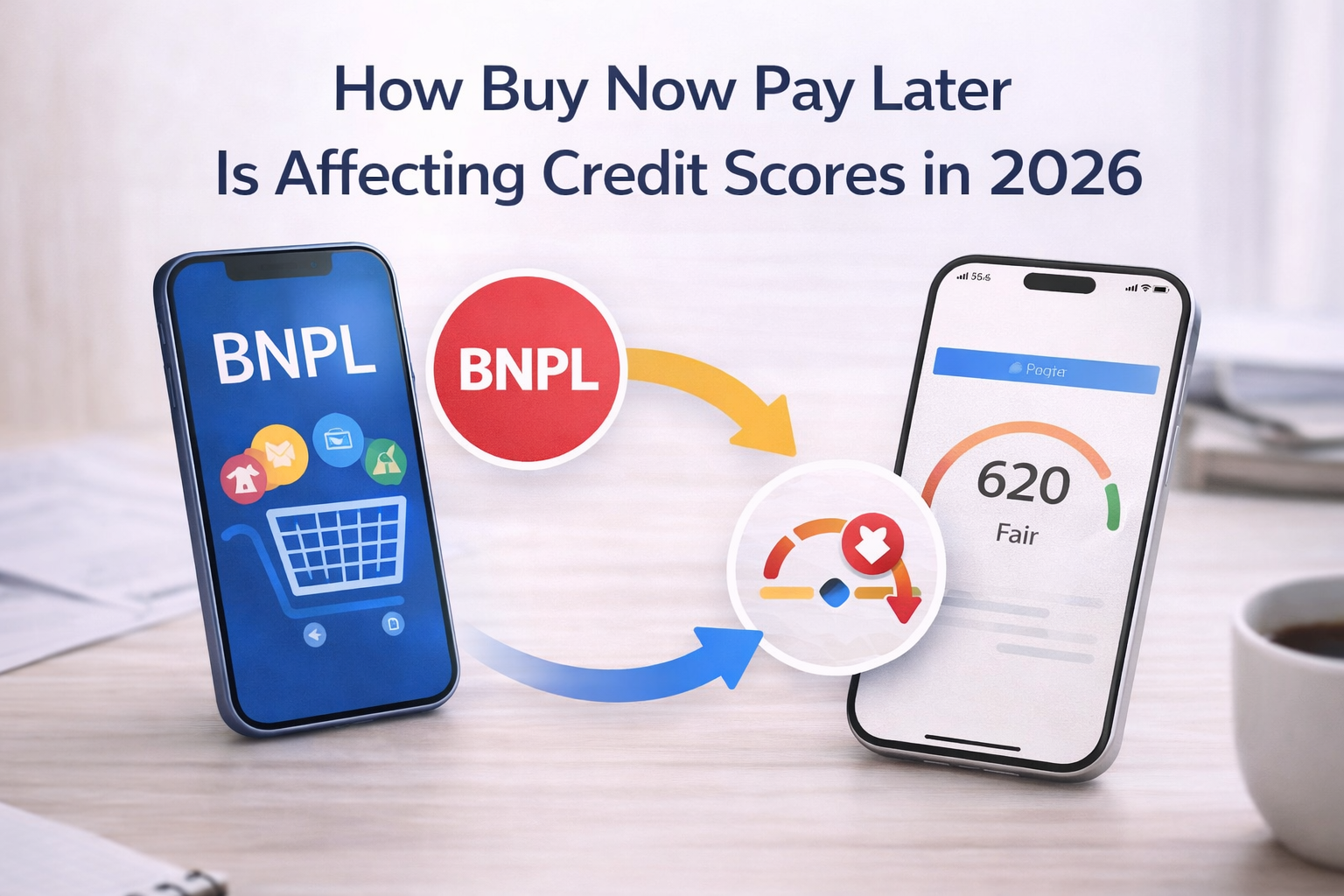
Buy Now Pay Later has gone from a niche checkout option to one of the most widely used payment methods in the United States. Tens of millions of Americans now use services like Affirm, Klarna, Afterpay, and Zip to split purchases into installments. What most of them do not know is that the credit implications of these products are changing fast, and in 2026 the rules are meaningfully different from what they were two years ago.
Here is what you need to know about how Buy Now Pay Later is affecting credit scores right now.
Buy Now Pay Later was mostly invisible to credit bureaus. That is changing.
The majority of time in its history, there was no credit reporting for Buy Now Pay Later activities. If you got a dozen installment plans and paid each one back, your credit score will likely not budge. It worked similarly when you failed to make your payments. Credit reporting agencies simply didn’t receive this information.
That is changing. Experian, TransUnion, and Equifax have all been developing frameworks for incorporating Buy Now Pay Later data into credit files. Several major providers have begun reporting to one or more bureaus, and the trend is accelerating. The result is that Buy Now Pay Later is becoming a two-edged instrument: used responsibly it can build credit, used carelessly it can damage it.
How Buy Now Pay Later can hurt your credit score
The risk side of Buy Now Pay Later on credit is more developed than the benefit side in 2026. Here is where it can cause damage.
Missed payments. As more providers begin reporting to credit bureaus, missed or late Buy Now Pay Later payments are increasingly likely to show up as derogatory marks on your credit report. A missed payment on a 40 dollar installment plan can carry the same weight as a missed credit card payment. It gets reported as a delinquency and stays on your report for seven years.
Hard inquiries. Some Buy Now Pay Later providers run a hard credit inquiry when you apply for a larger purchase plan. Hard inquiries have a small temporary negative impact on your score and remain on your credit report for two years. If you are applying for multiple Buy Now Pay Later plans in a short period, the cumulative effect of multiple hard inquiries can add up.
Utilization complexity. As scoring models evolve to incorporate Buy Now Pay Later data, there is ongoing uncertainty about how outstanding installment balances will affect utilization calculations. Carrying multiple open Buy Now Pay Later plans simultaneously could affect how scoring models assess your debt load, though the specifics vary by model and are still being standardized across the industry.
Overextension. The ease and accessibility of Buy Now Pay Later makes it particularly easy to take on more payment obligations than your budget comfortably supports. Missing one plan because you forgot about another is one of the most common ways Buy Now Pay Later users end up with unexpected derogatory marks.
How Buy Now Pay Later can help your credit score
The positive side is real but less consistent across providers and scoring models.
Building payment history. For providers that report on-time payments to credit bureaus, Buy Now Pay Later can add positive payment history to your credit file. For someone with a thin file who is making small, consistent installment payments, this can be a legitimate credit-building tool. The key is confirming that your specific provider reports to bureaus and that they report positive payments, not just negative ones.
Credit mix. Installment accounts contribute to credit mix, which accounts for 10% of a FICO score. If your file currently only has revolving accounts like credit cards, adding an installment account can marginally improve this factor.
Does your Buy Now Pay Later provider report to credit bureaus?
This is the most important question to answer before using any Buy Now Pay Later service in 2026. The answer varies significantly by provider and is changing as the industry evolves.
Some providers report to all three bureaus. Some report only to one. Some report negative information only. And some do not report at all. It would be wise to check your provider’s current credit reporting policy (which is typically located in their terms of service or FAQs) before making use of a Buy Now Pay Later service for anything greater than an immediate, low dollar repayment obligation.
The CFPB has been actively examining the Buy Now Pay Later industry and has indicated that further regulatory guidance on credit reporting requirements is likely. The landscape in late 2026 may look different from what it does early in the year.
What this means for your credit strategy
Treat Buy Now Pay Later like any other credit obligation. The informal, frictionless nature of these services can make them feel less serious than a credit card or loan, but that framing is increasingly inaccurate as bureaus incorporate more of this data.
Track every active Buy Now Pay Later plan you have open. Set payment reminders. Do not assume that missing a small installment will not affect your credit just because the purchase was inexpensive. And if you are actively trying to build or improve your credit, prioritize credit-building tools that have well-established, consistent reporting relationships with the bureaus.
Rent reporting through a service like Credit Genius, for example, has a clear and consistent reporting relationship with Experian. The payments you are submitting are verified and the credit impact is predictable. That is a different situation from the still-evolving and inconsistent world of Buy Now Pay Later credit reporting.
The bottom line
Buy Now Pay Later is no longer credit-neutral. As bureau reporting becomes more widespread across providers, the same payment discipline that matters for credit cards and loans is increasingly relevant for installment plans at checkout.
Pay on time. Track what you owe. Know whether your provider reports to bureaus. And if you are actively building credit, do not rely on Buy Now Pay Later as your primary tool until the industry’s reporting standards are more consistent and predictable.