
Millions of Americans get paid in cash. Restaurant workers, contractors, cleaners, caregivers, day laborers, and small business owners operating on a cash basis all share the same frustrating credit reality: the income they earn every day is essentially invisible to the financial system.
Cash income does not automatically flow through a bank account. There is no pay stub. No W-2. No direct deposit history. And without that paper trail, applying for credit products that require income verification becomes significantly harder.
But here is the thing: your credit score itself is not based on your income. It is based on your credit behavior. That means the path to building credit when you are paid in cash is more accessible than most people in this situation realize. You just need to know where to start.
Why cash income creates credit challenges
Your income does not appear on your credit report and does not directly affect your credit score. The credit system only sees your payment history, your balances, your account age, your credit mix, and your inquiries. A person earning 80,000 dollars a year in cash and a person earning 80,000 dollars on a paycheck both build credit the same way.
The challenge shows up when you try to apply for credit products that require income verification. Many credit cards, personal loans, and even some secured products ask for income documentation as part of the application. Without pay stubs or bank statements showing regular deposits, this can create friction.
The solution is twofold: start with credit products that have low or no income verification requirements, and simultaneously build a paper trail around your cash income so that future applications are smoother.
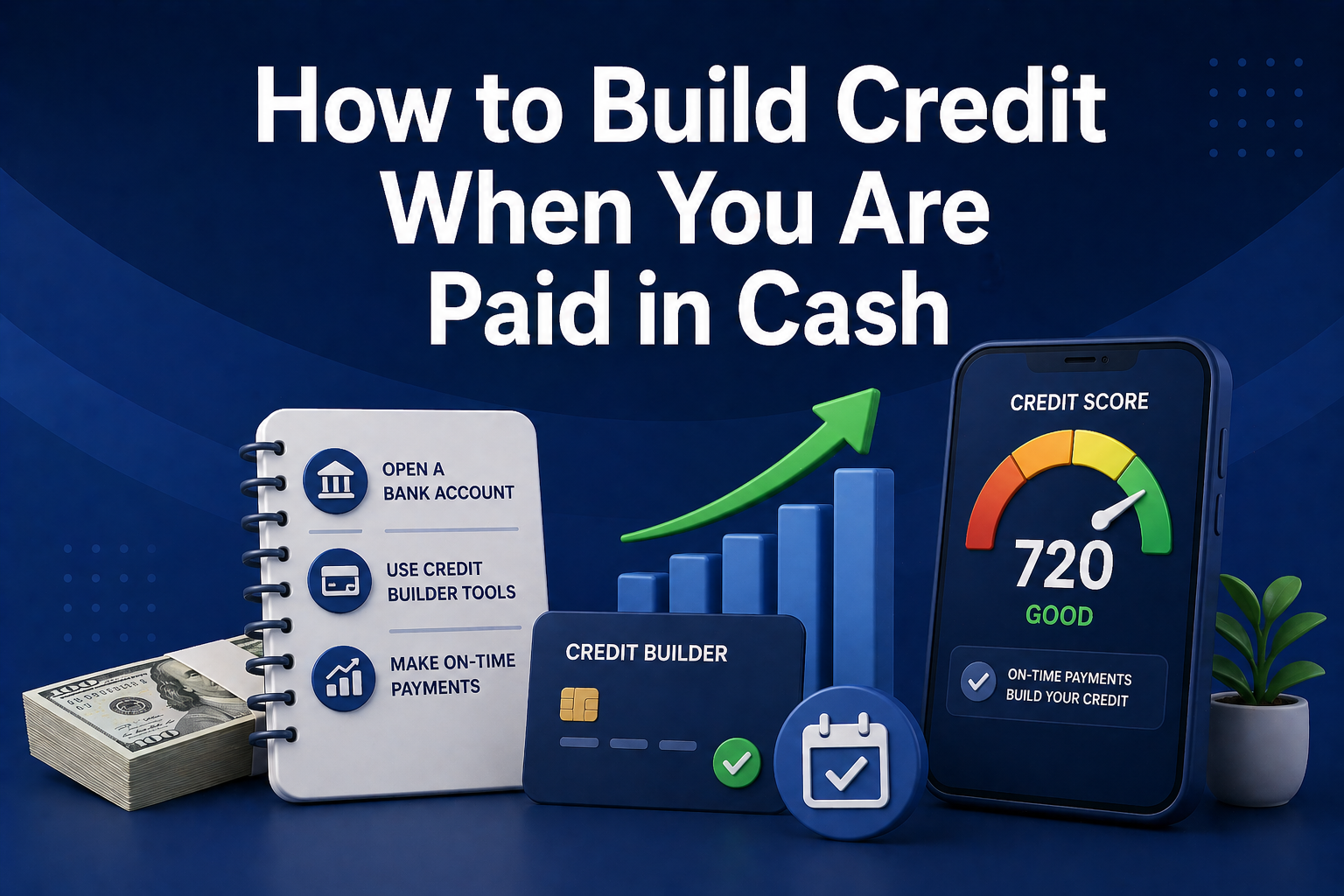
Open a bank account and deposit your cash income consistently
This is the foundational step that unlocks everything else. If you are not already banking your cash income, start now. Open a checking account at a bank or credit union, deposit your cash earnings regularly, and maintain that account consistently over time.
Bank statements showing regular cash deposits are a form of income documentation that many lenders accept alongside or instead of pay stubs. Three to six months of consistent deposit history begins to create the paper trail that makes credit applications easier.
If you have had banking issues in the past, look into second-chance checking accounts offered by many banks and credit unions specifically for people who have been denied traditional accounts. Online banks and fintech platforms also often have lower barriers to account opening.
Report your rent payments
If you are renting and paying on time, your rent payment is your most powerful credit-building tool regardless of how you earn your income. Rent reporting services do not require documentation of your employment type or income source. They verify your rent payment history and submit it to the credit bureaus.
Credit Genius reports rent payments to Experian with backdating of up to 24 months. For someone paid in cash who has been renting responsibly for a year or more, this can create an immediate foundation of verified payment history on their credit file without any reference to how their income is earned.
This is one of the cleanest entry points into the credit system for cash-paid workers because the barrier is your rent payment behavior, not your employment documentation.
Apply for a secured credit card
Secured credit cards are one of the most income-agnostic credit products available. Because you provide a cash deposit that covers your credit limit, the lender’s risk is minimal. Income verification requirements are typically lower than for unsecured products, and some secured cards require very minimal income documentation.
When applying, you can often report self-employment income or cash income on the application without needing to provide documentation upfront. The key is to be accurate about what you earn. Many applications allow you to include any income you have regular access to, including cash earnings, tips, and freelance work.
Use the card for one or two small purchases each month and pay the full balance before the due date. The credit-building value comes from the consistent monthly payment record, not from how much you spend.
Try a credit builder loan
Credit builder loans at credit unions and community banks are specifically designed for people with thin or no credit history. Many have minimal income documentation requirements because the loan is secured by the savings account into which payments are deposited. The risk to the lender is low regardless of how you earn your income.
Monthly payments are fixed and typically small, which makes them manageable even on irregular cash income. The payments are reported to the credit bureaus and build your payment history over the loan term. At the end of the term you receive the accumulated payments back minus any fees.
For someone with no banking history and no credit file, a credit builder loan from a local credit union that accepts cash deposits is a practical starting point.
Become an authorized user
Being added as an authorized user on a family member or trusted friend’s credit card does not require any income documentation on your part. The primary cardholder applies for and manages the account. You simply benefit from their credit history appearing on your report.
If you have a family member with a long-standing account in good standing, this is one of the fastest ways to go from no credit to a scoreable profile without navigating any income documentation requirements at all.
Document your income for future applications
While you are building your credit profile, work in parallel on creating documentation of your cash income. This makes future credit applications significantly smoother.
File your taxes accurately and on time, including all cash income. Self-employed individuals file a Schedule C. Tax returns are one of the most widely accepted forms of income documentation by lenders and they establish a credible, official record of what you earn.
Keep records of your work: invoices, receipts, client payments, or any documentation that supports the income you report. A folder of organized financial records, even informal ones, paired with bank statements showing deposits, creates a picture of financial reliability that goes beyond just a pay stub.
Use AI-powered credit guidance to prioritize your moves
When you are building credit from scratch and navigating the additional complexity of cash income, knowing which move to make first matters. Generic credit advice tells everyone the same things. Personalized guidance tells you what will move your specific file the most given where you are starting from.
Credit Genius analyzes your actual Experian credit profile and surfaces the specific actions most likely to improve your score. For someone paid in cash with a thin file, that might mean prioritizing rent reporting before opening a secured card, or it might mean the opposite depending on what is already in their file. The personalization is what makes the guidance useful rather than generic.
The bottom line
Being paid in cash makes the credit-building process slightly more complex but it does not make it impossible. Your credit score is built from your payment behavior, not your income source. The path is the same as it is for anyone starting from scratch: start with the payments you are already making, add one or two accessible credit products, pay everything on time, and build a paper trail around your income in parallel.