
How to Build Credit as a Single Parent on One Income
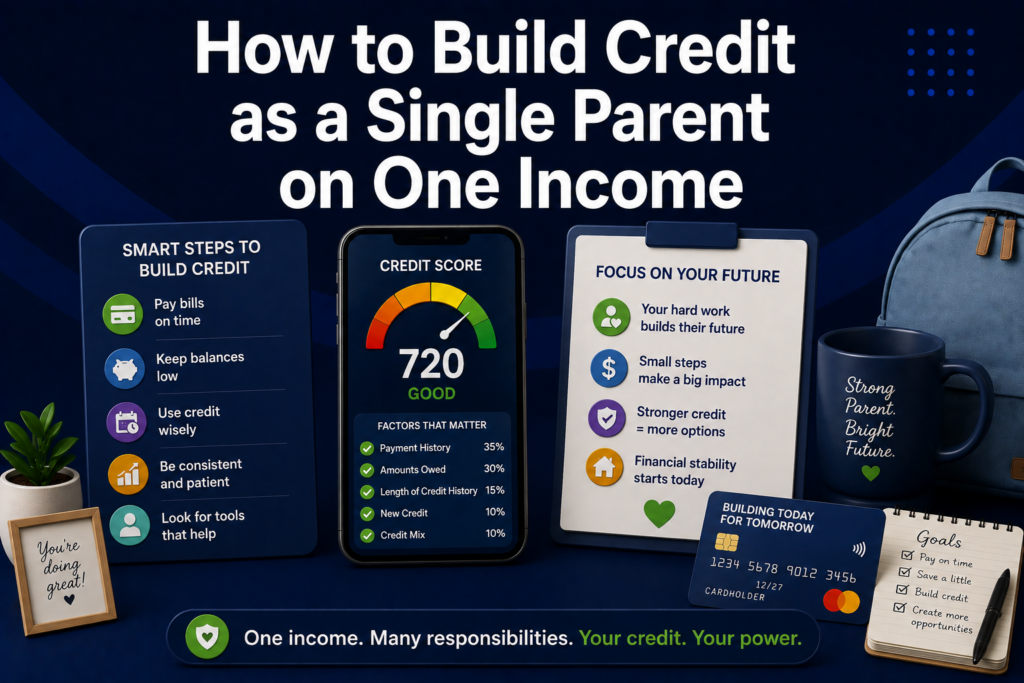
Single parents manage one of the most financially demanding situations in American life. One income covering housing, childcare, groceries, healthcare, transportation, and everything else a family needs. The margin for error is small and the competing demands on every dollar are relentless. Building credit in this environment is not impossible but it requires a different approach than the generic advice written for people with more financial breathing room. Here is a practical, honest guide to building credit when you are doing it all on one income. Why credit matters more for single parents For single parents, a strong credit score is not just a financial metric. It is a practical tool that determines the quality of housing you can access, the cost of the car loan you need to get to work, the insurance premiums you pay, and your ability to access emergency credit when something goes wrong and there is no second income to fall back on. A weak credit profile in a single-income household means higher costs across every major financial category at exactly the moment when keeping costs down matters most. The return on investing time and attention in your credit is higher for single parents than for almost any other demographic. Protect payment history above everything else Payment history is 35% of your FICO score and the most important factor. For a single parent managing multiple financial obligations on one income, protecting this factor is the highest priority credit action available. Set up autopay for the minimum payment on every credit account right now. The minimum is enough to protect your payment history even if you cannot pay the full balance. A missed payment from a month when childcare costs spiked or a medical bill arrived unexpectedly stays on your report for seven years. Autopay prevents that outcome automatically. If you are facing a month where you genuinely cannot make a minimum payment, call the lender before the due date. Many have hardship programs that can defer or reduce a payment temporarily without reporting a negative event to the bureaus. The key is to call before you miss, not after. Report your rent Most single parents are renters. That monthly rent payment is almost certainly the largest financial commitment you make every month and it is not helping your credit unless someone is reporting it. Most landlords do not. Rent reporting services submit your payment history to credit bureaus. Credit Genius reports to Experian with backdating of up to 24 months, meaning months of on-time payments you have already made can be added to your credit file at once. For a single parent with a thin or fair credit file, this is one of the most impactful credit moves available because it requires no new debt, no new accounts, and no change to your monthly budget. Build a small emergency fund specifically for credit protection Single-income households are more vulnerable to financial shocks than two-income households. A sick child, a car breakdown, or an unexpected expense that a two-income household absorbs without crisis can destabilize a single-income budget completely. Build a dedicated credit protection reserve, separate from your general emergency fund, that covers minimum payments on all credit accounts for two to three months. This specific reserve ensures that even during a financial crisis your payment history, the most valuable credit asset you have, remains intact. Even 200 to 300 dollars set aside specifically for this purpose can be the difference between a credit score that survives a difficult month and one that takes a serious hit. Use a secured card strategically A secured credit card with a small deposit, even 200 dollars, used for one recurring purchase per month and paid in full each billing cycle, builds payment history and keeps utilization low without adding meaningful debt or financial risk. Choose a no-fee secured card so the only cost is the opportunity cost of the deposit. Use it for something predictable like a streaming subscription or a small monthly grocery run. Pay it in full before the statement closes. This single habit, maintained consistently, builds a meaningful credit track record over twelve to twenty-four months. Explore government and nonprofit assistance programs Single parents often qualify for assistance programs that can reduce financial pressure on the monthly budget, freeing up resources for credit building and emergency savings. SNAP, WIC, CHIP for children’s health coverage, childcare subsidy programs, and housing assistance all reduce fixed expenses that consume income. Reduced financial pressure directly benefits your credit because it lowers the likelihood of the missed payments and high utilization that damage scores. Accessing assistance you qualify for is not a compromise. It is a practical financial strategy. Monitor your credit file closely Single parents are more likely to be targeted by certain types of financial fraud and predatory offers. Identity theft in particular can cause serious credit damage that takes significant time and effort to resolve. Real-time credit monitoring through a tool like Credit Genius alerts you immediately when anything changes on your Experian file. Catching an unauthorized account or a fraudulent inquiry within days rather than months limits the damage and makes the dispute process simpler. Be realistic about the timeline Building credit as a single parent on one income is a slower process than it would be with two incomes and more financial flexibility. That is not a failure. It is a reflection of the reality you are working within. Consistent on-time payments over twelve to twenty-four months, combined with rent reporting and a secured card, will produce a meaningful and improving credit profile. The score may not move as fast as you want. But every month of on-time payments is a month of positive history that compounds over time. The bottom line Building credit as a single parent requires prioritizing the highest-impact, lowest-cost credit moves: protecting payment history through autopay, reporting rent through a service like Credit Genius, building a small credit protection reserve, and using a secured card consistently.The financial environment of single parenthood
How to Build Credit as a Seasonal Worker
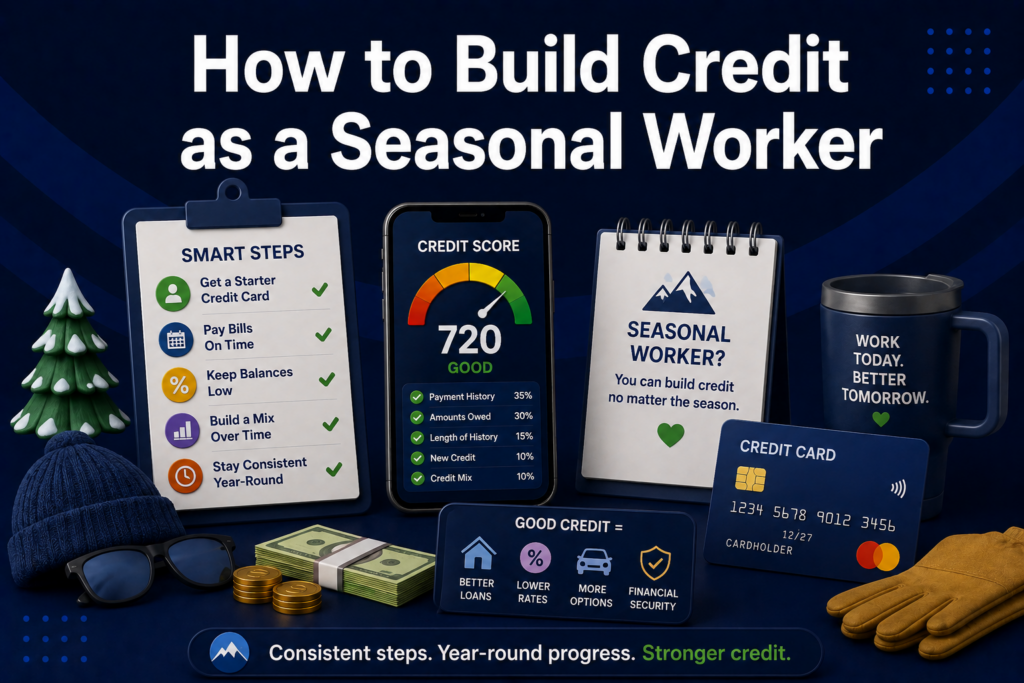
Seasonal work is one of the most common employment patterns in the United States. Ski resort workers, agricultural workers, construction crews, retail holiday staff, summer tourism workers, tax preparers, and countless others work intensively for part of the year and differently or not at all for the rest. The credit system was built around a paycheck that arrives every two weeks, all year long. Seasonal workers do not fit that mold and the credit challenges that result are real. The good news is that seasonal workers can build strong credit. It requires more deliberate planning than it does for year-round employees but the path is clear. Here is how to do it. Understanding the seasonal worker credit challenge Your credit score itself is not affected by whether your income is seasonal. Employment status and income do not appear on your credit report. The score is calculated entirely from your credit behavior: payment history, utilization, account age, credit mix, and inquiries. The challenge shows up in two places. First, applying for credit products that require income documentation during the off-season when your income may be zero or minimal. Second, managing credit obligations through a period of reduced or no income without missing payments, which would damage your credit score. Both challenges are manageable with the right approach. Time your credit applications strategically The single most practical credit tip specific to seasonal workers is this: apply for credit products during your peak earning season, not during the off-season. When you apply for a credit card, personal loan, or other credit product that requires income documentation, apply while you are actively working and can show strong recent income. Lenders evaluate your income at the time of application. An application submitted in October by a resort worker earning 5,000 dollars a month through the ski season looks very different from the same application submitted in April when that person has minimal income. The credit score may be identical but the approval odds and the terms offered can differ significantly. Build your credit product portfolio during high-earning months. Avoid new applications during the off-season unless necessary. Build an off-season credit reserve The biggest credit risk for seasonal workers is missing payments during the off-season when income is low or absent. A missed payment is one of the most damaging credit events you can experience and it stays on your report for seven years. During your high-earning season, set aside enough money to cover minimum payments on all your credit accounts for the duration of your off-season. If you have a credit card with a 35 dollar minimum payment and a 25 dollar credit builder loan payment and your off-season runs six months, you need 360 dollars set aside specifically for those payments. This is a small amount relative to seasonal earnings but it provides complete protection for your payment history, which is the most important factor in your credit score, during the period when your income is most vulnerable. Set up autopay before the off-season starts Set up autopay for the minimum payment on every credit account before your season ends. This ensures payments are made automatically even if your attention shifts during a transitional period. The minimum is enough to protect your payment history. Combined with the off-season reserve described above, autopay for minimums means your credit score is protected from income variability entirely passively. You do not have to think about it every month during the off-season. Report your rent Many seasonal workers rent housing, often in resort towns, agricultural areas, or other seasonal employment centers. That monthly rent payment is an opportunity to add verified payment history to your credit file regardless of how your income is structured. Credit Genius reports rent payments to Experian with backdating of up to 24 months. For a seasonal worker with a thin credit file, this can create an immediate foundation of positive payment history without any change to your monthly budget or any requirement to document your employment type or income seasonality. Even short-term or seasonal housing arrangements, if they involve a formal lease or rental agreement, can be eligible for rent reporting. Check the requirements when enrolling. Document your income across the full year When applying for credit products, lenders want to assess your ability to repay. For seasonal workers, this means documenting income in a way that reflects the reality of your annual earnings rather than just your current month. Tax returns are the most credible form of income documentation for seasonal workers. A tax return showing 45,000 dollars of income for the year tells a more complete story than a recent pay stub showing zero because you are between seasons. File your taxes accurately and on time every year. Keep the last two years of returns accessible when applying for credit. Bank statements showing the pattern of high deposits during peak season followed by lower activity in the off-season can also help lenders understand your income cycle. Some lenders, particularly credit unions familiar with agricultural or resort communities, are more comfortable with seasonal income documentation than large national banks. Keep utilization low during the off-season The off-season is when credit card utilization is most likely to creep up. With lower income and existing expenses, it is tempting to rely on available credit to bridge the gap. This is understandable but it has a direct negative impact on your credit score. Try to enter the off-season with credit card balances as low as possible. Pay down balances aggressively at the end of peak season so you have maximum available credit and minimum utilization going into the period when you are least likely to be able to pay them down. Think of it like winterizing a house. Prepare your credit profile for the lean months before they arrive rather than trying to manage it reactively once income has stopped. Consider a credit builder loan timed to your season A credit builder loan with monthly payments that align with your peak earning season is
How to Get Your First Apartment After College With Limited Credit History

Getting your first apartment after college puts you in a frustrating position. Landlords want to see credit history to prove you are a reliable tenant. But you have spent the last four years living in dorms or student housing that did not require a credit check or build any credit history. The system expects experience you were never given the chance to build. This is a solvable problem. Here is a practical guide to getting approved for your first apartment even with limited or no credit history. Understand what landlords are actually evaluating Landlords are not just looking at a credit score number. They are trying to answer one question: will this person pay rent on time every month? Your credit score is one input into that question but it is not the only one. Income, references, rental history, and the overall picture of your application all factor in. This matters because it means a thin credit file is not automatically a dealbreaker. It means you need to build a compelling case through other parts of your application that compensates for what the credit file cannot yet show. Know your credit situation before you apply Pull your credit reports from annualcreditreport.com before you start applying. You may have more credit history than you think. Student loans appear on your credit file. If you were added as an authorized user on a parent’s credit card at some point, that account history may appear on your report. If you had a credit card in college, that history is there. Knowing exactly what is in your file lets you speak to it confidently in conversations with landlords and avoid surprises when they run a check. Prove income clearly and compellingly Most landlords want to see monthly income of at least two to three times the rent. If you have a job offer or have already started working, your offer letter, first pay stub, or employment verification letter is powerful documentation. If you are freelancing or starting a business, bank statements showing regular income deposits can supplement. If your income meets the threshold clearly, many landlords are willing to look past a thin credit file. Lead with the income documentation rather than waiting for them to ask. Get a co-signer A co-signer with strong credit agrees to be legally responsible for the rent if you fail to pay. For a landlord worried about a thin credit file, a co-signer eliminates the risk they are concerned about. Most landlords will approve an applicant with limited credit if the co-signer has a strong profile. This is a significant ask of the co-signer, typically a parent or close family member, because they are taking on real legal and financial exposure. Have an honest conversation about what you are asking them to do before making the request. Offer a larger security deposit A larger upfront deposit directly addresses the risk a landlord is concerned about. If you can offer two or three months of rent as a security deposit instead of one, many landlords will approve an application that might otherwise give them pause. This requires having the cash available, which not everyone does immediately after college. If you have some savings from a summer job or a signing bonus from a new employer, allocating a portion to a larger deposit can be the difference between getting the apartment and not. Provide strong references A reference letter from a previous landlord, even a dorm RA, resident advisor, or university housing office, confirming that you paid on time and took care of your space carries real weight. If you lived off campus at any point, a reference from that landlord is even more valuable. Personal references from employers, professors, or mentors who can speak to your reliability and character are also useful. A well-rounded application with strong references humanizes what a credit report cannot yet show. Consider different types of landlords Large corporate property management companies tend to have stricter, more standardized credit requirements with less flexibility for individual circumstances. Independent landlords renting one or a few units are often more willing to consider the full picture of an applicant rather than applying a hard cutoff score. This does not mean avoiding large buildings, but it does mean that a direct conversation with a smaller landlord about your situation may be more productive than an online application to a large complex with automated screening. Start building credit before you apply If you have any lead time before your apartment search, use it. Even two to three months of credit building can make a meaningful difference. If you have student loans, they are likely already on your credit file. Make your payments on time from the first payment due. Open a secured credit card and use it for one small purchase per month, paying the full balance each time. If you have a parent willing to add you as an authorized user on a long-standing account, that can immediately give your file more substance. And once you are in your first apartment, enroll in rent reporting through Credit Genius immediately. That monthly rent payment is the largest financial obligation most people your age have. Getting it on your credit file from day one means you start building a real credit history from the moment you move in rather than losing months of positive data. The bottom line Getting your first apartment after college with limited credit is harder than it should be but it is absolutely achievable. Know your credit situation, lead with strong income documentation, consider a co-signer or larger deposit, choose the right type of landlord, and build as much credit as you can in the time available before you apply.Once you are in, report your rent from day one. The credit history you build in your first apartment sets the foundation for every housing application, loan, and financial decision that follows.
Credit Builder Loan vs Secured Card: A Side by Side Comparison
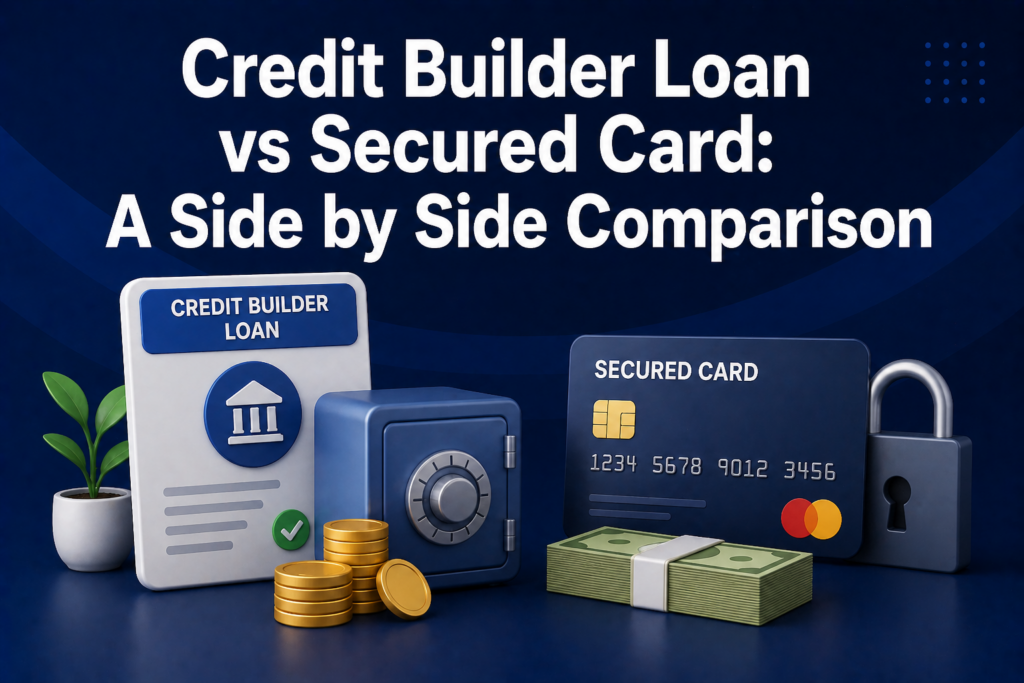
If you are starting to build credit from scratch or rebuilding after a setback, two products come up more than any others: credit builder loans and secured credit cards. Both are designed for people with thin or no credit history. Both report to the credit bureaus. Both are accessible without a strong existing credit profile. But they work differently, build your credit file in different ways, and suit different situations. Here is a clear side by side breakdown so you can decide which one makes sense for you, or whether you need both. How each one works You apply for a small loan, typically between 300 and 1,500 dollars, but you do not receive the money upfront. Instead, the lender holds the funds in a locked savings account while you make fixed monthly payments. At the end of the loan term, usually six to twenty-four months, you receive the accumulated balance minus any fees. The lender reports your monthly payments to the credit bureaus throughout. You provide a cash deposit, typically between 200 and 500 dollars, which becomes your credit limit. You use the card for purchases like a normal credit card and make monthly payments on the balance. The card issuer reports your payment history and utilization to the credit bureaus. When you close the account or graduate to an unsecured card, your deposit is returned. What each one builds on your credit file Credit builder loan: An installment account. Installment accounts have a fixed payment schedule and a defined end date. Having an installment account on your file contributes to payment history and credit mix. If your file currently only has revolving accounts or no accounts at all, adding an installment account diversifies your credit profile. Secured credit card: A revolving account. Revolving accounts have a credit limit and a variable balance that changes based on how much you spend and pay. A secured card contributes to payment history and credit utilization, which is the second biggest factor in your FICO score at 30%. Managing utilization well on a revolving account can produce faster score movement than an installment loan in many cases. Speed of credit building Secured cards generally produce faster score movement in the early months. The reason is utilization. As soon as your first statement closes with a low balance, your utilization factor updates and your score reflects it. A credit builder loan builds more gradually because the benefit accumulates payment by payment over the loan term. For someone who needs to build a credit profile quickly, a secured card used with low utilization and full monthly payoffs is typically the faster tool. For someone focused on long-term, steady credit history building, a credit builder loan is a reliable and low-risk option. Cost comparison Credit builder loan costs: Most credit builder loans charge interest on the loan balance even though you do not have access to the funds. Rates vary widely, from around 6% to over 20% depending on the lender. Some also charge an administrative fee. The total cost over a 12-month loan at a modest interest rate on a 500 dollar loan might be 30 to 60 dollars. You get the principal back at the end, so the net cost is just the interest and fees. Secured card costs: Many secured cards have no annual fee, particularly those from credit unions and some banks. If you pay your balance in full every month, you pay no interest at all. The main cost is the opportunity cost of your deposit sitting as collateral rather than earning returns elsewhere. Cards with annual fees ranging from 25 to 50 dollars are common but avoidable if you shop around. Winner on cost: secured card, assuming you pay the balance in full each month and choose a no-fee product. Risk comparison Credit builder loan risk: Lower behavioral risk. The payment is fixed and predictable. You know exactly what you owe each month and the temptation to overspend does not exist because you do not have access to a credit line. The main risk is missing a fixed monthly payment, which would create a derogatory mark on your report. Secured card risk: Higher behavioral risk. Having a credit line that you can spend up to creates the possibility of carrying balances, paying interest, or missing a payment. For people who are disciplined about spending, this is manageable. For people who struggle with impulse spending, a secured card requires more self-control than a credit builder loan. Winner on risk: credit builder loan for people who prefer structure and predictability. Access and approval Both products are specifically designed for people with thin or no credit history and both have relatively accessible approval requirements. Credit builder loans from credit unions and community banks are often available to anyone who can make the monthly payment and has a bank account. Secured cards are available from numerous banks and fintech companies with minimal requirements. Neither typically requires a strong existing credit profile, which is precisely the point. They are entry-level credit products designed to help people build the history that makes better products accessible later. Which one should you choose? Choose a secured card if: you want faster score movement, you can commit to paying the full balance every month, you want a no-fee option, and you are comfortable managing a revolving credit line responsibly. you prefer a fixed, predictable monthly commitment, you want to build savings alongside your credit history, you are concerned about overspending on a credit line, and you are comfortable with a slower but steady credit-building process. Consider both if: you want to build credit as efficiently as possible and diversify your credit mix from the start. Having one revolving account and one installment account gives scoring models more positive data to work with and builds your credit mix simultaneously. What about rent reporting? Both secured cards and credit builder loans are stronger when combined with rent reporting. If you are renting and paying on time, that monthly payment
How to Build Credit When You Are Paid in Cash

Millions of Americans get paid in cash. Restaurant workers, contractors, cleaners, caregivers, day laborers, and small business owners operating on a cash basis all share the same frustrating credit reality: the income they earn every day is essentially invisible to the financial system. Cash income does not automatically flow through a bank account. There is no pay stub. No W-2. No direct deposit history. And without that paper trail, applying for credit products that require income verification becomes significantly harder. But here is the thing: your credit score itself is not based on your income. It is based on your credit behavior. That means the path to building credit when you are paid in cash is more accessible than most people in this situation realize. You just need to know where to start. Why cash income creates credit challenges Your income does not appear on your credit report and does not directly affect your credit score. The credit system only sees your payment history, your balances, your account age, your credit mix, and your inquiries. A person earning 80,000 dollars a year in cash and a person earning 80,000 dollars on a paycheck both build credit the same way. The challenge shows up when you try to apply for credit products that require income verification. Many credit cards, personal loans, and even some secured products ask for income documentation as part of the application. Without pay stubs or bank statements showing regular deposits, this can create friction. The solution is twofold: start with credit products that have low or no income verification requirements, and simultaneously build a paper trail around your cash income so that future applications are smoother. Open a bank account and deposit your cash income consistently This is the foundational step that unlocks everything else. If you are not already banking your cash income, start now. Open a checking account at a bank or credit union, deposit your cash earnings regularly, and maintain that account consistently over time. Bank statements showing regular cash deposits are a form of income documentation that many lenders accept alongside or instead of pay stubs. Three to six months of consistent deposit history begins to create the paper trail that makes credit applications easier. If you have had banking issues in the past, look into second-chance checking accounts offered by many banks and credit unions specifically for people who have been denied traditional accounts. Online banks and fintech platforms also often have lower barriers to account opening. Report your rent payments If you are renting and paying on time, your rent payment is your most powerful credit-building tool regardless of how you earn your income. Rent reporting services do not require documentation of your employment type or income source. They verify your rent payment history and submit it to the credit bureaus. Credit Genius reports rent payments to Experian with backdating of up to 24 months. For someone paid in cash who has been renting responsibly for a year or more, this can create an immediate foundation of verified payment history on their credit file without any reference to how their income is earned. This is one of the cleanest entry points into the credit system for cash-paid workers because the barrier is your rent payment behavior, not your employment documentation. Apply for a secured credit card Secured credit cards are one of the most income-agnostic credit products available. Because you provide a cash deposit that covers your credit limit, the lender’s risk is minimal. Income verification requirements are typically lower than for unsecured products, and some secured cards require very minimal income documentation. When applying, you can often report self-employment income or cash income on the application without needing to provide documentation upfront. The key is to be accurate about what you earn. Many applications allow you to include any income you have regular access to, including cash earnings, tips, and freelance work. Use the card for one or two small purchases each month and pay the full balance before the due date. The credit-building value comes from the consistent monthly payment record, not from how much you spend. Try a credit builder loan Credit builder loans at credit unions and community banks are specifically designed for people with thin or no credit history. Many have minimal income documentation requirements because the loan is secured by the savings account into which payments are deposited. The risk to the lender is low regardless of how you earn your income. Monthly payments are fixed and typically small, which makes them manageable even on irregular cash income. The payments are reported to the credit bureaus and build your payment history over the loan term. At the end of the term you receive the accumulated payments back minus any fees. For someone with no banking history and no credit file, a credit builder loan from a local credit union that accepts cash deposits is a practical starting point. Become an authorized user Being added as an authorized user on a family member or trusted friend’s credit card does not require any income documentation on your part. The primary cardholder applies for and manages the account. You simply benefit from their credit history appearing on your report. If you have a family member with a long-standing account in good standing, this is one of the fastest ways to go from no credit to a scoreable profile without navigating any income documentation requirements at all. Document your income for future applications While you are building your credit profile, work in parallel on creating documentation of your cash income. This makes future credit applications significantly smoother. File your taxes accurately and on time, including all cash income. Self-employed individuals file a Schedule C. Tax returns are one of the most widely accepted forms of income documentation by lenders and they establish a credible, official record of what you earn. Keep records of your work: invoices, receipts, client payments, or any documentation that supports the income you report.
How Veterans Can Use VA Benefits to Build Credit

Veterans face a unique set of credit challenges. Frequent relocations during service, deployments that disrupt financial routines, and the transition back to civilian life can all create gaps or complications in a credit history. At the same time, veterans have access to a set of financial benefits that, when used strategically, are among the most powerful credit-building tools available to anyone. Here is how veterans can use their benefits to build and strengthen their credit in 2026. The VA home loan: the most powerful credit-building tool available to veterans The VA home loan benefit is one of the most valuable financial tools available to any American, and it doubles as one of the most effective credit-building instruments available to veterans. VA loans require no down payment and no private mortgage insurance, two major barriers that prevent many non-veterans from accessing homeownership. They also tend to have competitive interest rates even for borrowers with lower credit scores than conventional loans require. From a credit-building perspective, a mortgage is an installment account that reports to all three credit bureaus every month. Every on-time payment adds to your payment history, the most important factor in your credit score. A veteran who uses their VA home loan benefit and makes consistent mortgage payments is building one of the most credible credit profiles possible. To use a VA loan, you must obtain a Certificate of Eligibility from the Department of Veterans Affairs. Your lender can often help you obtain this as part of the application process. Individual lenders set their own minimum credit score requirements for VA loans, typically between 580 and 620, though some lenders are more flexible. VA-backed credit products Several financial institutions offer credit products specifically designed for veterans and military members. These often have more favorable terms, lower minimum credit score requirements, and more flexibility in how income is evaluated compared to standard consumer products. Pentagon Federal Credit Union, Navy Federal Credit Union, and USAA are among the institutions known for veteran-friendly credit products. These include credit cards, personal loans, and auto loans with terms designed around the financial realities of military service and veteran status. Credit cards through these institutions used responsibly and paid in full each month add revolving credit history to your file. Personal loans add installment history. Both contribute to a more diverse and robust credit profile. Veteran-specific financial assistance programs The VA offers several financial assistance programs that, while not directly credit-building tools, can prevent the kinds of financial hardships that damage credit. Veterans in financial difficulty should explore these before missing payments on existing obligations. The VA’s financial counseling program provides free access to HUD-approved housing counselors who can help veterans navigate debt, budgeting, and credit challenges. The Servicemembers Civil Relief Act provides protections including interest rate caps on debts incurred before active duty, which can prevent debt from spiraling during deployment. Veterans experiencing financial hardship should contact the VA directly or reach out to veteran-focused nonprofits like the National Foundation for Credit Counseling, which offers free or low-cost credit counseling services. Using GI Bill housing allowances to build credit Veterans using the Post-9/11 GI Bill receive a monthly housing allowance when attending school more than half-time. This allowance is a predictable, regular income source that can support credit-building activities during the transition to civilian life. If you are renting while using GI Bill benefits, your housing allowance is covering a monthly payment that should be working for your credit. Rent reporting services submit that payment history to credit bureaus. Credit Genius reports rent to Experian and includes backdating, meaning if you have been renting during your educational period you can submit that history at once rather than starting from zero. Addressing credit gaps from service Many veterans return from service with thin credit files or gaps in their history. Deployments where financial activity was minimal, periods of on-base housing that did not require credit applications, and frequent moves that disrupted banking relationships can all create a credit file that does not reflect the discipline and reliability of military service. The solution is to start building immediately and use the tools available to you. If you have been renting since returning to civilian life, get that payment on your credit file through rent reporting. If you have not yet opened any credit accounts, a secured card or a credit builder loan from a veteran-friendly institution is a low-risk starting point. Veterans with thin files who enroll in rent reporting through Credit Genius and backdate their rental history can go from a limited credit profile to one with years of verified payment history in a matter of weeks rather than years. Protecting credit during financial hardship The transition from military to civilian employment is one of the highest-risk periods for credit damage. Income may be interrupted, new employment may not start immediately, and the cost structure of civilian life can be different from what was expected. Contact creditors proactively if you anticipate difficulty making payments. Many lenders have hardship programs that can defer or reduce payments temporarily without reporting a negative event to the bureaus. The key is to reach out before you miss a payment, not after. The Servicemembers Civil Relief Act provides additional protections for active-duty members, including the ability to reduce interest rates on pre-service debts to 6% and protections against certain types of legal action during deployment. The bottom line Veterans have access to some of the most powerful credit-building tools available in the US financial system. The VA home loan benefit alone is a credit-building instrument that most Americans cannot access. Combined with veteran-friendly credit products, GI Bill housing allowances, and rent reporting to capture the housing payments you are already making, veterans have a clear path to building a strong credit profile.The credit gaps that sometimes come with military service are real but they are fixable. Start with the payments you are already making, use the benefits you have earned, and build from there.
How to Build Credit as a College Student With No Income

College is one of the best times to start building credit, even if you have no income. The options available to students are genuinely accessible, the amounts involved are small so the risk is manageable, and every year of credit history you build now is a year you will not have to build later when the stakes are higher. Here is a practical guide to building credit as a student with little to no income. Why starting in college matters Credit scoring rewards account age. The average age of your accounts is a factor in your score, and the oldest account on your file is particularly valuable. A credit account opened at 19 that you manage responsibly throughout college gives you a four-year head start on the peer who waits until 23 to start. When you graduate and start applying for apartments, car loans, or eventually a mortgage, you will be competing with people who have been building credit for years. Starting in college means you can enter that competition already ahead. Become an authorized user on a parent’s account This is the easiest and most immediate credit-building move available to most college students. Ask a parent or family member with good credit and a long-standing account to add you as an authorized user on one of their credit cards. You do not need to use the card or even receive a physical copy. Their payment history on that account can appear on your credit report immediately and give you an instant boost in payment history and account age. If the primary cardholder has a ten-year-old account with perfect payment history, you benefit from that history the moment you are added. This only works if the primary cardholder has a clean record and low utilization. If they have missed payments or carry high balances, the authorized user status can hurt rather than help. Have an honest conversation about their credit habits before asking. Apply for a student credit card Student credit cards are specifically designed for people with limited or no credit history, and many of them do not require income from a job. Some allow you to count financial aid, scholarships, or parental support as income on the application. Start with a card that has no annual fee, a low credit limit, and ideally one that reports to all three major credit bureaus. Use it for one or two small recurring purchases each month, like a streaming subscription or a coffee, and pay the full balance before the due date every single month. The goal is not spending power. The goal is a monthly positive payment data point on your credit file. Report your rent if you live off campus If you are renting an apartment or a room off campus, that monthly payment can be one of your most powerful credit-building tools. Most students who rent off campus make their payment on time every month and receive zero credit recognition for it. Rent reporting services submit that payment history to credit bureaus. Credit Genius reports to Experian and includes backdating, which means if you have been in your apartment for a year you can submit that entire year of history at once rather than starting from zero. For a student with a thin or nonexistent credit file, this can produce meaningful score improvement quickly. Consider a secured credit card If you cannot get approved for a student card and are not eligible for the authorized user option, a secured card is the next best alternative. A secured card requires a cash deposit, typically 200 to 500 dollars, which becomes your credit limit. Because the bank’s risk is covered by your deposit, approval is accessible even with no credit history. Use it the same way you would a student card: small purchases, full balance paid every month, on time without exception. After six to twelve months of consistent activity, many secured card issuers will upgrade you to an unsecured card and return your deposit. Let your student loans work for you If you have federal student loans, they are almost certainly already being reported to the credit bureaus. Once you enter repayment, every on-time monthly payment is adding positive payment history to your file. This does not mean you should take on unnecessary student debt for the credit benefit. It means that if you already have student loans, treat the repayment period as a credit-building opportunity and prioritize on-time payments from day one. What to avoid Opening too many accounts at once. Every application is a hard inquiry. Multiple applications in a short window signals financial stress and lowers your average account age. Pick one or two options and focus on managing them well. Missing payments. A missed payment stays on your credit report for seven years. Set up autopay for the minimum on every account so this never happens accidentally. Carrying high balances. Credit utilization is the second biggest factor in your score. Keeping balances low relative to your limit matters even on a small student card. Closing accounts you no longer use. Old accounts contribute to your credit history length. Even if you stop using a card, leaving it open protects that account age. The bottom line Building credit in college does not require a full-time income or a complicated strategy. It requires opening one or two accessible accounts, making every payment on time, keeping balances low, and being patient. The students who start this process at 18 or 19 graduate with a credit file that opens doors their peers are still trying to unlock. That advantage compounds for the rest of their financial lives.
10 Ways to Build Credit Without a Credit Card in 2026
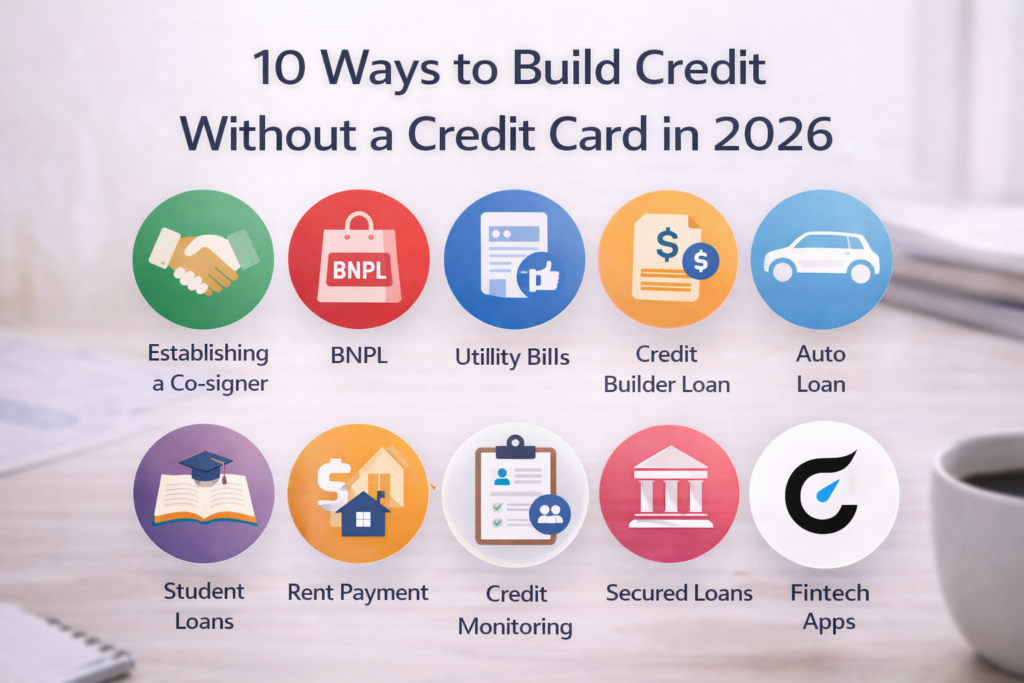
The most common credit-building advice starts and ends with credit cards. Get a card, use it responsibly, pay it off. That advice works, but there are several assumptions made when giving such advice. Most importantly, many people don’t have a desire for a credit card, or have trouble getting approved for one, or may simply prefer not to carry revolving debt. The good news is that credit cards are not the only path. Here are ten legitimate ways to build credit in 2026 without ever opening one. 1. Report your rent payments If you are renting and paying on time, you are already doing the most credit-worthy thing most people do every month. The problem is the credit system cannot see it unless someone reports it. Rent reporting services submit your monthly rent payments to credit bureaus where they are treated as positive payment history. Credit Genius reports rent to Experian and includes a backdating feature that allows you to submit up to 24 months of prior history at once. A 2021 TransUnion study found that rent reporters saw an average score increase of 60 points. For someone building from scratch, this is the single fastest option on this list. 2. Take out a credit builder loan A credit builder loan works differently from a regular loan. You do not receive the money upfront. Instead you make monthly payments into a locked savings account and the lender reports those payments to the credit bureaus. At the end of the term you get the money back minus fees. It is a low-risk way to build payment history because you are essentially saving money while establishing a credit record. Many credit unions and community banks offer these products specifically for people with no or limited credit history. 3. Become an authorized user on someone else’s account Asking a trusted family member or close friend who has excellent credit and an active long-term account to place you as an authorized user on one of their accounts will be beneficial to your file. It doesn’t matter whether you intend to use the account – you don’t need to get a card or even receive a physical copy. Their payment history on that account will appear on your credit report and give your file an immediate boost in both payment history and account age. This only works positively if the primary cardholder has a clean payment history and low utilization. If they have missed payments or carry high balances, it could work against you. Choose carefully. 4. Add utility and phone payments Some services allow you to add on-time utility, phone, and select streaming service payments to your Experian credit file. If you are already paying these bills on time every month, adding them to your file creates additional positive payment data points at no extra cost. The credit impact of utility reporting is generally smaller than rent reporting or a credit builder loan, but it contributes to a fuller credit file and can be particularly useful for people with very thin files who need any positive data they can get. 5. Take out a personal loan and repay it responsibly A personal loan is an installment account, which means it contributes to payment history and credit mix on your credit file. If you need financing for something specific, a personal loan from a bank or credit union can serve a dual purpose: funding the purchase and building credit at the same time. The key is to borrow only what you need, make every payment on time, and not use this as a reason to take on debt you would not otherwise take on. Borrowing money for the sake of credit building comes with real financial costs. 6. Get a credit-builder account Some fintech platforms offer small credit accounts specifically designed for people with no credit history. You get a limited credit line to make purchases within a specific platform and on-time payments are reported to the major bureaus. These products are accessible to people with no credit history and no credit check required. The credit line is typically small and the purchasing options are limited, but the purpose is credit building rather than actual spending power. For a true beginner, it is one of the simplest possible entry points. 7. Report your student loan payments If you have student loans, they are almost certainly already being reported to the credit bureaus. Every on-time payment is building your payment history. Every month of consistent repayment is adding to the length and strength of your credit file. Many people with student loans do not realize how much positive credit history they are already building. Check your credit report to confirm your loans are reporting correctly and that your on-time payments are being recorded accurately. 8. Take out an auto loan If you need a car and finance it through a loan, the monthly payments are reported to the credit bureaus and contribute to your payment history and credit mix. Some lenders specialize in working with borrowers who have limited credit history, though the interest rates may be higher as a result. As with personal loans, the credit building benefit is a byproduct of a decision you are making anyway. Do not take out an auto loan purely to build credit. Do it because you need the car and use the credit benefit as an added advantage. 9. Apply for a secured loan There are some banks and credit unions that offer secured loans. These loans will allow you to pledge savings accounts (or other forms of liquid assets) as collateral. Because the bank’s risk is low they can approve most applicants for a secured loan regardless of whether or not you have any credit history. Each month when you make your payment on your secured loan those payments are reported to the Bureaus which will build your credit file over Time. Secured loans are very similar to credit builder loans, except instead of using
Why Most Lenders Pull Your Experian Report and What That Means for You
If you’ve ever applied for a credit card, car loan, or mortgage, then you probably wondered which credit report the lender would look at. The short version is most lenders use Experian, but not always. In reality, Experian is the most commonly used reporting bureau for lenders making lending decisions. This will help you make better decisions about managing your credit. The three bureaus are not the same The three main credit reporting agencies (CRAs), namely Experian, TransUnion, and Equifax, provide similar services; they do not operate equally. In theory, each CRA collects information from lenders regarding consumers’ financial transactions and creates a credit report based on this information. However, in reality, each CRA provides a slightly different service depending on who is using their product. As such, many lenders prefer one CRA over another. Experian currently has the largest amount of data furnishers reporting to them compared to either TransUnion or Equifax. Therefore, Experian reports are generally considered to contain more comprehensive and reliable information for making lending decisions. Additionally, Experian is typically preferred by a large number of credit card issuers, auto lenders and personal loan providers. TransUnion tends to be used by landlords, telecommunications companies and a select few auto lenders. Equifax is usually preferred by mortgage lenders alongside Experian, however is frequently utilized in various regions of the country more than in other areas. What this means when you apply for credit Experian credit reports are often used by lenders during the loan application process. There are several implications related to the use of these reports: Firstly, errors on your Experian report that do not show up on your TransUnion and/or Equifax reports will be visible to the lender evaluating your application. Assuming that all three reports are accurate, and only monitoring one bureau, can leave you blindsided. Errors such as: late payments or collections that should not be reported on your Experian file may result in denial or higher interest rates, regardless of how good your other reports are. Secondly, it is possible to have accounts that only report to one or two of the major bureaus. Therefore, while your Experian report may be thin compared to your TransUnion and/or Equifax reports (or vice versa), knowing which accounts are reporting to each of the bureaus provides you with a better understanding of what the lender’s view is. Lastly, any improvements made to your credit will only affect a lender’s decision if those changes are recorded in the bureau that the lender pulled for their review. For example, adding positive credit history that is only reflected in your TransUnion report will be irrelevant if the lender reviewing your credit pulled your Experian report. Experian and rent reporting The most significant aspect of Experian’s influence on renters comes down to how Experian’s influence relates to rent reporting. When renters submit reports on their rent payments to Experian (via services such as Credit Genius), these reported payments will then be included in the file used by many of the lenders that will review them. This is a meaningful difference. Rent payments submitted to a credit reporting agency that few lenders access are almost useless for renters applying for credit. Rent payments submitted to Experian provide the opportunity for the renter to have this positive payment history included in the file accessed by the decision-makers at lending institutions. Therefore, one important consideration for renters who are attempting to create or enhance their credit profiles is ensuring that the historical data included in their Experian file is accurate. Why your Experian score might be different from the others Due to differences in the data available at each credit reporting bureau, it is possible that your Experian credit score could be higher or lower than your Equifax or TransUnion credit score. The primary reasons for differing credit scores include: Accounts that report to some credit reporting agencies, but do not report to others,Hard inquiries from loan applications that only appear at the bureau selected by the lender,Timing differences in when information is updated across the three separate credit files. If your Experian credit score is lower than your Equifax and/or TransUnion credit scores, consider ordering a full copy of your Experian report. A review of your report may indicate whether there is a negative account reporting on your Experian file which does not appear on either of your other two credit files, or if there is a positive account that you have had open during the past year and reporting positively on both Equifax and TransUnion files, but is not being reported on your Experian file. How to monitor your Experian file specifically Since Experian is often used in a lender’s credit check, keeping track of your Experian credit file in real time will probably be much more practical for you than using a generic credit monitoring service without specifying which credit bureau they are tracking. Using Credit Genius’s real-time Experian credit monitoring service allows you to see all updates to your Experian credit file. Any time something occurs on your Experian credit file (new account, new inquiry, a payment made or missed), you will receive an immediate notification via email. The ability to receive these notifications before applying for credit is especially important during those last few weeks prior to making a credit request when you want to ensure your Experian credit report accurately reflects all the work you have put into improving your credit file and ensuring there are no issues on your Experian credit report. The bottom line While not the only bureau that matters, Experian is almost always the primary bureau upon which lenders rely. Therefore, knowing this fact should impact how you think about your credit file. In other words, keep your Experian report clean. Ensure that all of your positive accounts are showing up on your Experian report. First, dispute any errors you find on your Experian report. Lastly, ensure that any credit-building activities you pursue are reflected on the versions of your credit
How to Build Credit From Scratch With No Credit History in 2026

The system views “no credit history” (and therefore “bad”) in the exact same light. You attempt to obtain a credit card and get rejected. You seek to rent an apartment, and the landlord demands additional deposits. You want to obtain a vehicle loan, and the interest rates are oppressive. This is not because you have made any financial mistakes; it is because the system has no information about you. And the absence of information always appears to be a red flag. You can solve that issue without creating any unnecessary debt: Why starting from zero is harder than it sounds The Catch-22 of beginning to create credit history when there is none is well-documented. You need a history of credit to get credit, but you cannot develop a history of credit without first getting credit. For example, the typical recommendation for creating a new credit history is to obtain a secured credit card, utilize it for small purchases, and then wait. While it will eventually work, it is a slow process. In addition, it will require a deposit that you may not currently possess. Additionally, it does not accurately represent how many consumers handle their finances. In 2026, there are quicker and more intelligent ways to begin. Use rent reporting as your foundation Rent Reporting Through Credit Genius, If You Are Renting, Is One of the Fastest Methods to Create a Credit File Without Creating Any Debt. Credit Genius submits your monthly rent payments to the credit bureaus, which treat your rental payments as if they were any other recurring payment obligation. What is so particularly advantageous for individuals who have no credit history is the backdating element. If you have rented for 12 months or 24 months, Credit Genius can submit that complete history to the bureaus immediately. You do not begin at zero. On the very first day of your membership, you begin with up to two years of clean payment history on file. That is a substantial revision for an individual with no credit history whatsoever. That is the distinction between being unscorable and having a legitimate, established credit profile. Try a credit builder loan Credit Builder Loans Work Differently Than Regular Loans. You do not obtain access to the money at the outset. Instead, you create monthly payments to a locked savings account, and at the conclusion of the term, the funds are released to you. The lender will report those payments to the credit bureaus over the course of your loan, thus developing your payment history along the way. This is a low-risk method to establish credit since you are simply saving money while generating a record of payments. Banks, credit unions, and fintech firms provide this product to customers building from scratch. A rapid search for credit builder loans will reveal a number of alternatives worth evaluating. Consider a secured credit card A secured card requires a cash deposit that becomes your credit limit. You can utilize a secured card in the same manner as a standard card. You must pay the balance in full each month. As long as you have timely payments, the activity will be reported to the bureaus. It is one of the earliest credit-building tools available and it still functions. The secret is to maintain utilization low, preferably under 30 percent of your limit. The objective is not to hold a balance. The purpose is to generate a positive monthly data point on your credit file. If you are looking for a secured card, look for one with no annual charge, no minimum deposit required, and one that reports to all three significant bureaus. All three of these characteristics combined will provide you the most benefit at the lowest expense. Become an authorized user If you have a family member or close friend with excellent credit and a long-standing account, ask them to add you as an authorized user on one of their credit cards. You don’t even have to use the card. The payment history for that account will display on your credit report and may give you an instant boost. Only works if the primary cardholder has a spotless payment record. If they have failed to make payments or have large amounts of outstanding debt, they may damage your credit instead of assisting it. What to focus on first If you are completely beginning from zero, this is the best sequence to follow in 2026. First, enroll in rent reporting via Credit Genius if you are currently renting, it adds no additional cost and utilizes payments you are currently making. Second, after you have created a credit file and have a score to build on, add a secured card or credit builder loan. Eventually, adding various forms of credit to your file will further enhance your credit profile. The most common error most consumers make is delaying. Each month you wait for your first on time payment is a month when the credit industry will have nothing to report or consider. The tools are available today to prevent that from continuing. How long does it actually take? Credit reporting by landlords, combined with backdating, will allow you to go from having no credit file to a credit profile that scores in as little as thirty to sixty days after your credit file has been processed. A secured credit card usually takes effect and reports your positive payment history, as well as affects your credit score, within one to two billing cycles. Credit Builder loans report their positive effects on your credit profile over a longer period of time; six to twelve months. Most consumers who begin using Rent Reporting and an additional product, such as a secured credit card, will see some level of positive credit movement within ninety days. After that point, it’s simply a matter of consistency.