
How to Build Credit as a Non-US Citizen on a Visa
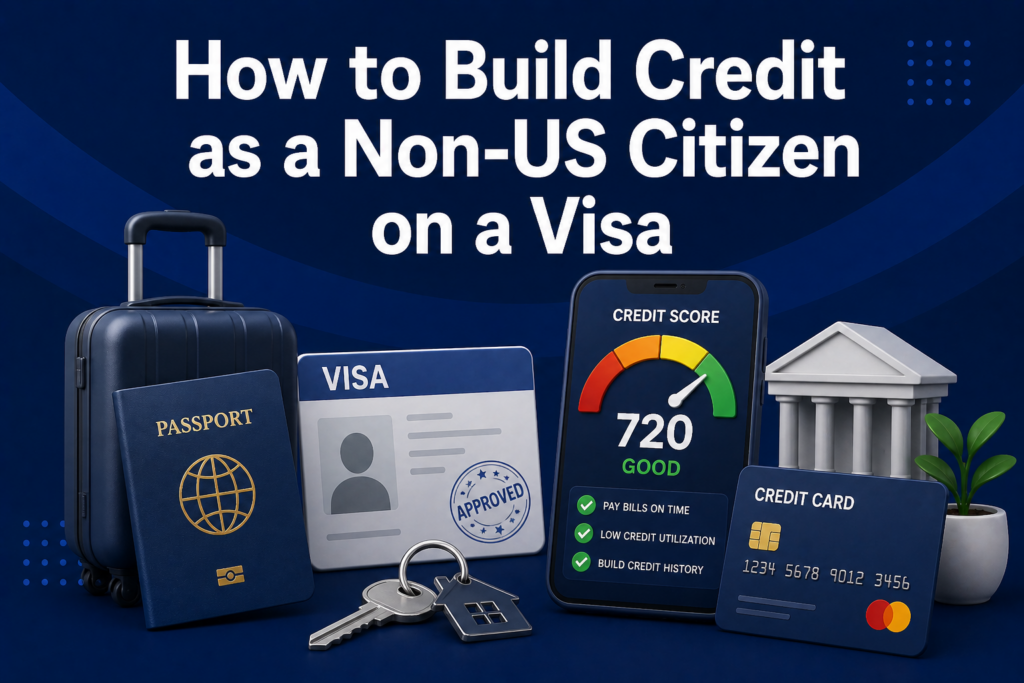
Living in the United States on a visa and trying to build credit is one of the more frustrating financial catch-22s out there. You need credit history to access financial products. You need financial products to build credit history. And unlike permanent residents or citizens, you may also face questions about visa status, Social Security Number availability, and how long you plan to stay. The good news is that visa holders can absolutely build US credit. It takes a bit more navigation than it does for citizens but the path is clear and the options are more accessible than most people in this situation realize. Do you need a Social Security Number to build credit? Not necessarily. Many visa holders do not have a Social Security Number, or SSN, and this is often the first barrier people run into. The good news is that several credit-building options are accessible without one. An Individual Taxpayer Identification Number, or ITIN, is issued by the IRS to individuals who need to file US taxes but are not eligible for an SSN. Getting an ITIN is a straightforward process that does not require citizenship or a specific visa type. Many credit products including some credit cards, credit builder loans, and rent reporting services accept an ITIN in place of an SSN. If you are on an employment-based visa such as an H-1B or L-1, you may already have an SSN through your employer. If so, the full range of credit-building options is available to you from day one. Start with rent reporting If you are renting in the US, you are already making one of the most powerful credit-building payments available to you every single month. The challenge is that most landlords do not report rent payments to the credit bureaus, which means years of on-time payments may be completely invisible to the credit system. Rent reporting services submit your payment history to credit bureaus and some accept an ITIN in addition to an SSN. Credit Genius reports rent payments to Experian, the bureau most commonly checked by US lenders, and includes a backdating feature that allows you to submit up to 24 months of prior rent payment history at once. For a visa holder who has been in the US for a year or more and paying rent on time, this can create an immediate credit foundation rather than starting from zero. It is one of the fastest legitimate paths to a scoreable credit profile for anyone without existing US credit history. Apply for a secured credit card Secured credit cards are one of the most accessible credit products for visa holders because the approval requirements are lower. You provide a cash deposit that becomes your credit limit, which reduces the lender’s risk regardless of your immigration status or credit history. Some financial institutions specifically market secured cards to non-citizens and accept ITIN applications. Others require an SSN. It is worth checking the requirements before applying to avoid unnecessary hard inquiries on applications you are unlikely to be approved for. Use the card for one or two small recurring purchases each month and pay the full balance before the due date. The credit-building value comes from the consistent payment record, not from how much you spend. Check whether your home country credit transfers A service called Nova Credit translates credit history from certain countries into a format that US lenders can use. It currently supports credit reports from a limited number of countries including India, Mexico, Australia, Canada, the UK, Brazil, the Dominican Republic, Kenya, Nigeria, and several others. If your home country is on the list and you have a strong credit history there, Nova Credit can provide US lenders and landlords with a translated version of your foreign credit report. Not every lender or landlord accepts Nova Credit reports but the number that do is growing, particularly among larger financial institutions and property management companies. This is not available for all nationalities, but for those it covers it can provide a meaningful head start over starting from scratch. Open a US bank account A US bank account is not a credit-building tool on its own, but it is a prerequisite for almost everything else. Most credit card applications, credit builder loans, and rent reporting services require a US bank account. Many banks will open accounts for visa holders with a passport, visa documentation, and sometimes an ITIN. Some fintech banks and online financial institutions have more flexible account opening requirements for non-citizens than traditional banks. Bank statements showing regular activity over time also serve as supplemental income documentation when applying for credit products. Explore credit cards designed for non-citizens A small number of financial institutions have developed credit card products specifically designed for immigrants and visa holders. Some of these use alternative underwriting criteria that take into account education, employment, and income rather than relying exclusively on US credit history. These products are worth researching if you have strong income but no US credit history. They are not universally available and terms vary, but for visa holders who qualify they can be a faster path to an unsecured credit card than waiting to build enough history through a secured card. Consider a credit builder loan Some credit unions and community banks offer credit builder loans to individuals with ITINs. These work by making fixed monthly payments into a locked savings account while the lender reports those payments to the credit bureaus. At the end of the term you receive the accumulated balance back minus fees. For visa holders who prefer a structured, debt-free approach to credit building, a credit builder loan is a reliable option. The fixed monthly payment is predictable, the risk to the lender is low, and the credit benefit accumulates steadily over the loan term. What about visa expiration? Some visa holders worry that a short visa validity period will make lenders reluctant to extend credit. In practice, most consumer credit products do not require long-term residency
How to Build Credit in the US as an Immigrant or New Resident: A Practical Guide
Perhaps the least-discussed challenge of immigrating to the United States is beginning with no credit history. Your previous U.S. financial experience means nothing. Whether you paid off a mortgage perfectly, maintained a spotless payment record in your home country, or had a high credit score (no matter what was used), none of that is recorded in the U.S. by American credit agencies. You are not starting from a negative credit history. You are starting from nothing. And when it comes to the U.S., invisible is almost just as difficult to deal with as bad credit. Why your home country credit history does not transfer In the United States, there are independent credit bureaus collecting information from U.S.-based lenders, landlords, and service providers. These agencies (Experian, TransUnion, and Equifax) cannot draw payment history from a bank in a different country. Most international financial organizations do not have a relationship with any of the three major U.S. credit agencies. There are some limited exceptions. A few banks have programs in place for certain nationalities that allow for partial transfer of a credit history. However, for the majority of new residents, the starting point remains the same: no account = no report = no credit score. The catch-22 new residents face The typical credit Catch-22 is difficult enough for virtually everyone. But new residents are uniquely challenged. In order to obtain a credit card, you need a credit history. In order to establish a credit history, you need to obtain a credit card. In order to rent an apartment without a significant security deposit, you need a credit score. In order to receive a credit score, you need open accounts. For many new residents, obtaining a Social Security Number (SSN) is also delayed. Many traditional credit products will not allow you to apply for credit until you have obtained an SSN. Fortunately, the options have become much clearer for new residents. There are now multiple practical methods to begin establishing a U.S. credit history as a new resident, some of which do not even require an SSN. Start with rent reporting As a new resident, if you are currently renting, then you are already making the single largest monthly payment that most people ever make. This may be the quickest route to begin building a U.S. credit history for new residents since you don’t necessarily need a credit card, a loan, or an existing banking relationship with a U.S. bank. Many rent reporting companies, such as Credit Genius, will report your monthly rental payments to the credit bureaus. Credit bureaus consider these payments recurring obligations on your credit history. Credit Genius accepts an Individual Taxpayer Identification Number (ITIN) instead of an SSN to provide these services to new residents who have not yet received their SSN. The feature that allows Credit Genius to “backdate” reports is particularly useful for new residents. As long as you have made timely rental payments for several months or more than a year, those payments can be reported immediately upon enrollment. Therefore, you will be able to create an initial foundation for your credit history instantly, and not from scratch. Apply for an ITIN if you do not have an SSN A taxpayer identification number, known as an ITIN, is assigned to you by the Internal Revenue Service and can be used instead of an SSN for many financial applications. Obtaining an ITIN is a relatively simple process that does not require either citizenship or residency status. Having an ITIN provides you with greater access to additional credit products and financial services in the U.S. Whether you are working towards receiving an SSN or whether you continue to use the ITIN, the two can replace each other for most purposes. However, using an ITIN during this period will keep you moving forward, rather than waiting. Open a secured credit card Secured cards require a cash deposit (that becomes your credit limit)Since the risk to lenders is low, these cards are often available to people with no U.S. credit history, including those who have an ITIN rather than an SSN. You build payment history on your credit file over time using a secured card for small regular purchases and paying off the balance in full each month. Keep utilization low and do not carry a balance. The goal is record-keeping — not spending. Look into credit builder loans Credit unions and community banks may offer credit builder loans specifically designed for people with no credit history. As with secured cards, the risk to the lender is minimal because the money is held in a locked account until the loan is paid off. Monthly payments are reported to the bureaus and build your history as you go. These products are worth exploring if you want to build a mix of credit types on your file, which becomes more important once you have a score and are looking to strengthen it further. Use Nova Credit if your country is covered Nova Credit is a service that translates credit history from certain countries into a format U.S. lenders can use. Currently, it supports credit reports from only a limited number of countries including Mexico, India, Australia, Canada, the U.K., and several others. If your home country is on the list, it’s worth checking whether the lender or landlord you are working with accepts Nova Credit reports. This service isn’t available in all countries, nor for all nationalities; but for those that it is, it will be able to help create a foundation. What to prioritize in your first 12 months Your first year is about getting a file established and getting your first score. Begin with rent reporting through a service such as Credit Genius the moment you have a lease in place. Add a secured card or credit builder loan once you have an ITIN or SSN. Pay everything on time, every month, without exception. Check your credit report frequently at AnnualCreditReport.com to make sure your accounts are reporting correctly.