
7 Credit Moves to Make in Your 20s That Will Pay Off in Your 30s

Your 20s are when the credit habits you build have the most compounding value. The reason is simple: credit scoring rewards length of history, and every year you spend building a clean record in your 20s is a year of positive history that will still be working for you in your 30s when the stakes get higher. Here are seven specific credit moves that are worth making in your 20s and why each one pays dividends later. 1. Start building credit as early as possible Length of credit history accounts for 15% of your FICO score. Every year you delay starting is a year of history you can never get back. The person who opens their first credit account at 21 has four more years of history by 25 than the person who waits until 25 to start. That gap matters when you are trying to qualify for a mortgage in your early 30s. If you are renting, start with rent reporting. Credit Genius reports your rent payments to Experian and can backdate up to 24 months of prior history, giving you a head start on account history without requiring you to take on debt. If you want a credit account, a secured card used responsibly is the lowest-risk entry point. 2. Report your rent payments from day one Most people in their 20s are renting. Most of them are making that payment on time every month and getting absolutely no credit recognition for it. That is one of the biggest structural unfairnesses in the credit system and it is fixable. Signing up for rent reporting the moment you move into your first apartment means every on-time payment from that point forward is building your credit file. If you have been renting for a year or more and have not started yet, backdating lets you submit that prior history immediately. The sooner you start, the more history you accumulate before you need it for something important. 3. Never miss a payment Payment history is 35% of your FICO score. One missed payment in your 20s stays on your credit report for seven years, which means it could still be affecting your score when you apply for a mortgage in your early 30s. The stakes are higher than they seem. Set up autopay for the minimum on every account immediately. You can always pay more manually. But autopay ensures you never miss a payment simply because you forgot. This one habit, maintained consistently through your 20s, does more for your 30s credit score than almost anything else. 4. Keep utilization low even when you do not have to When you are in your 20s and money is tight, it is tempting to use your full credit limit as a financial buffer. Resist this where possible. High utilization hurts your score in real time, and the habit of running high balances is hard to break. Try to keep your credit card balances below 30% of your limit at all times, and below 10% when you are preparing for any significant credit application. A person who develops this habit in their 20s enters their 30s with a clean utilization record that reflects disciplined financial behavior, which is exactly what mortgage lenders are looking for. 5. Do not open accounts you do not need Retail store cards, promotional financing deals, and credit cards opened for a one-time discount are tempting in your 20s when every dollar feels significant. But each application is a hard inquiry and each new account lowers your average account age. Be intentional about every account you open. Ask whether you actually need it or whether you are just reacting to an offer. A smaller number of well-managed, long-standing accounts in your 30s is worth far more than a dozen accounts opened impulsively in your 20s. 6. Check your credit report regularly and dispute errors fast Errors on credit reports are common and they do not fix themselves. A Federal Trade Commission study found that one in five Americans has at least one error on their credit report. The earlier you catch an error, the less damage it does and the simpler the dispute process tends to be. Pull your reports from annualcreditreport.com at least once a year, or use a monitoring tool like Credit Genius that alerts you the moment anything changes on your Experian file. Getting into this habit in your 20s means you enter your 30s with a clean, accurate credit file rather than discovering a years-old error right before a major loan application. 7. Treat credit as infrastructure, not just a score The biggest mindset shift that pays off later is this: stop thinking about your credit score as a number and start thinking about your credit file as financial infrastructure. The score is an output. The file is what you are actually building. People who think about credit this way in their 20s make decisions differently. They keep old accounts open because account age is infrastructure. They pay on time every month because payment history is infrastructure. They monitor their file because knowing what is in it is infrastructure. By the time they reach their 30s, when credit matters most for mortgages, business loans, and major purchases, the infrastructure is already in place. The person who builds credit deliberately in their 20s does not have to scramble to fix it in their 30s. That is the whole point. The bottom line Your 20s are the highest-leverage decade for credit building because every year of positive history you accumulate now compounds in value for the rest of your financial life. The moves are not complicated: start early, report your rent, never miss a payment, keep utilization low, be selective about new accounts, monitor your file, and think long term. None of these require significant money or financial sophistication. They just require consistency. And consistency in your 20s is exactly what your 30s self will thank you for.
How Many Credit Cards Should You Have for a Good Credit Score?

This is one of those questions that sounds like it should have a clean answer. It does not. The right number of credit cards for your credit score is not a fixed number. It depends on where you are starting from, how you manage the cards you have, and what you are trying to achieve. That said, there are some clear patterns in the data and some practical principles that can guide your decision. Here is what you actually need to know. The number itself matters less than you think Credit scores do not have a built-in preference for any specific number of credit cards. Having two cards is not inherently better or worse for your score than having five. What matters is how those cards are being managed, specifically whether payments are being made on time and how much of the available credit is being used. People with excellent credit scores, 750 and above, tend to have an average of three to four credit card accounts according to FICO data. But that is a correlation, not a prescription. Those people did not get high scores by opening three cards. They got high scores by managing their accounts well over time, and they happen to have an average of three to four cards. What opening more cards can help with Lower overall utilization. This is the most concrete credit benefit of having multiple cards. Credit utilization, the percentage of your available credit you are currently using, accounts for 30% of your FICO score. If you have one card with a 1,000 dollar limit and carry a 400 dollar balance, your utilization is 40%. If you open a second card with a 1,000 dollar limit and carry no balance on it, your utilization drops to 20% on the same spending. More available credit with the same or lower balances means lower utilization. Credit mix. Having both revolving accounts like credit cards and installment accounts like loans contributes positively to credit mix, which accounts for 10% of your score. However, the difference between having one card and two cards in terms of credit mix is minimal. You do not need multiple cards to demonstrate revolving credit experience. What opening more cards can hurt Every new credit card application results in a hard inquiry on your credit report, which has a small temporary negative impact on your score. Opening multiple cards in a short window compounds this. Multiple hard inquiries in quick succession can signal financial stress to lenders and scoring models. Average account age. The length of your credit history accounts for 15% of your score, including the average age of all your accounts. Every new card you open lowers your average account age. If you have been building credit for five years and open three new cards, your average account age drops noticeably. Management complexity. More cards mean more payments to track, more statement dates to monitor, and more opportunities to accidentally miss something. The credit risk is not in having the cards. It is in failing to manage them all consistently. The real answer by situation If you have no credit history: Start with one card, ideally a secured card, and focus on using it consistently and paying it off every month. Adding a second card before you have established a track record adds complexity without meaningful benefit. Consider rent reporting through a service like Credit Genius as a parallel credit-building move that adds payment history without requiring another card application. If you have one or two cards and a fair score: You probably do not need more cards to improve your score. Focus on paying down balances to reduce utilization and building a longer, cleaner payment history. Adding a card for the sole purpose of improving your score is rarely the right move at this stage. If you have good credit and are managing cards well: An additional card can make sense if it lowers your overall utilization meaningfully or if the rewards structure justifies it. Space out applications and do not open more than one or two new accounts per year. If you are preparing for a major loan application: Do not open any new cards in the six to twelve months before applying for a mortgage or major loan. New accounts lower your average account age and add hard inquiries at exactly the wrong time. The utilization principle is the most actionable takeaway If there is one number-related principle that genuinely applies across situations it is this: keep your total credit utilization below 30%, and ideally below 10%, regardless of how many cards you have. Whether you achieve that with one card or five cards is secondary. A person with two cards both nearly maxed out has worse credit than a person with one card kept at 5% utilization. The number of cards is not the variable that matters. The behavior is. The bottom line There is no magic number of credit cards that will give you a good credit score. Two to four is a reasonable range for most people who are actively managing their credit, but even that is a guideline rather than a rule.What actually determines your score is not how many cards you have. It is whether you pay on time, how much of your available credit you use, and how long you have been doing both consistently. Get those things right and the number of cards becomes almost irrelevant.
How Long Does It Take to Rebuild Credit After a Missed Payment?
A missed payment is the single most damaging thing you can do to your credit score in a short period of time. Payment history accounts for 35% of your FICO score, making it the largest factor by a significant margin. So when a payment is missed and reported to the credit bureaus, the impact is immediate and can be substantial. But here is what most people do not know: how long recovery takes depends less on the missed payment itself and more on a combination of factors you can actually influence. Here is what you need to understand. What actually happens when you miss a payment Missing a payment does not automatically trigger a negative mark on your credit report. Lenders typically do not report a payment as late until it is at least 30 days past due. If you miss a payment but catch it within that window, you may incur a late fee from the lender but your credit score is likely unaffected. Once a payment is 30 days past due and reported to the bureaus, it becomes a derogatory mark on your credit file. From that point it stays on your report for seven years from the date of the original delinquency, regardless of whether you pay it off. The damage scale runs in stages. A 30-day late payment is the least severe. A 60-day late is more serious. A 90-day late is significantly damaging. Beyond 90 days the account may be charged off or sent to collections, which adds an additional layer of negative information to your file. How many points can you lose from one missed payment? The impact varies significantly depending on your starting score. This is one of the most counterintuitive aspects of credit scoring: the higher your score, the more a single missed payment will cost you. Someone with a score around 780 who misses one payment can see their score drop by 90 to 110 points according to FICO data. Someone with a score around 680 might see a drop of 60 to 80 points from the same event. The reason is that a high score signals a long, clean history, and a missed payment is a much more dramatic departure from that pattern than it is for someone whose file already contains some negative information. Either way, a single missed payment can move you from one credit tier to another, with real consequences for the rates and approvals you receive. How long does recovery actually take? The honest answer is that a single missed payment typically takes between 12 and 24 months to fully recover from if you maintain a perfect payment record from that point forward. Some people recover faster, some slower, depending on several factors. How strong your file was before the miss. A thick file with years of clean history will rebound faster than a thin file because there is more positive data to outweigh the single negative mark. The missed payment becomes a smaller proportion of your overall history over time. Whether you have additional negative marks. One missed payment in an otherwise clean file is a very different situation from one missed payment alongside collections, high utilization, and other derogatory marks. Recovery timelines lengthen significantly when multiple negative factors are present simultaneously. How quickly you brought the account current. A 30-day late that was immediately paid when noticed is less damaging in its long-term impact than one that progressed to 60 or 90 days before being addressed. The sooner you catch and resolve a missed payment, the less damage compounds. What positive actions you take after the miss. Recovery is not passive. The speed at which your score recovers depends heavily on what you do next. Continuing to build positive payment history on all remaining accounts is the most direct lever available. What you should do immediately after a missed payment Bring the account current as fast as possible. Every additional month the account sits unpaid adds another derogatory mark to your file. A 30-day late becomes a 60-day late, which becomes a 90-day late. Each stage is incrementally more damaging and takes longer to recover from. Contact the lender directly. Some lenders, particularly if you have a strong prior history with them, will agree to a goodwill adjustment. This is a request to remove the late payment mark from your credit report as a one-time courtesy. It is not guaranteed and lenders are not obligated to agree, but it costs nothing to ask and occasionally works. Set up autopay immediately. The most common cause of missed payments is not financial hardship. It is forgetting. Autopay for the minimum payment on every account eliminates that risk entirely. Check your credit report for accuracy. Confirm that the late payment is being reported correctly, including the date and the stage of delinquency. Errors in how late payments are recorded are not uncommon and can be disputed if inaccurate. How to accelerate recovery Recovery after a missed payment is largely a matter of consistently adding positive data to your credit file to dilute the impact of the negative mark over time. Here is what moves the needle fastest. Pay everything else on time, every time. This is the most important thing. Each on-time payment after the miss starts rebuilding your payment history record. The more consistent you are, the faster the missed payment becomes a smaller part of your overall picture. Reduce your credit utilization. If you are carrying high balances on credit cards, paying them down improves the utilization factor of your score, which accounts for 30% of the total. This can produce noticeable score improvement within one to two billing cycles. Add positive payment history. The more positive payment data your file contains, the less weight the single missed payment carries relative to your overall history. Rent reporting through Credit Genius is one of the most effective ways to add verified positive payment history quickly, especially if backdating is available to add months of prior
10 Ways to Build Credit Without a Credit Card in 2026
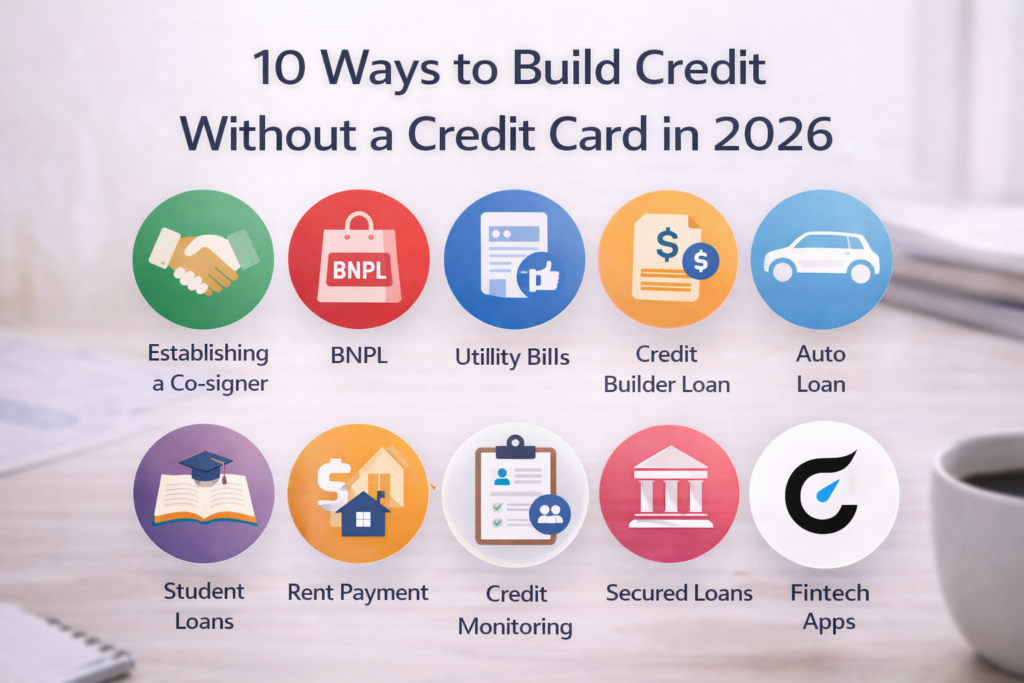
The most common credit-building advice starts and ends with credit cards. Get a card, use it responsibly, pay it off. That advice works, but there are several assumptions made when giving such advice. Most importantly, many people don’t have a desire for a credit card, or have trouble getting approved for one, or may simply prefer not to carry revolving debt. The good news is that credit cards are not the only path. Here are ten legitimate ways to build credit in 2026 without ever opening one. 1. Report your rent payments If you are renting and paying on time, you are already doing the most credit-worthy thing most people do every month. The problem is the credit system cannot see it unless someone reports it. Rent reporting services submit your monthly rent payments to credit bureaus where they are treated as positive payment history. Credit Genius reports rent to Experian and includes a backdating feature that allows you to submit up to 24 months of prior history at once. A 2021 TransUnion study found that rent reporters saw an average score increase of 60 points. For someone building from scratch, this is the single fastest option on this list. 2. Take out a credit builder loan A credit builder loan works differently from a regular loan. You do not receive the money upfront. Instead you make monthly payments into a locked savings account and the lender reports those payments to the credit bureaus. At the end of the term you get the money back minus fees. It is a low-risk way to build payment history because you are essentially saving money while establishing a credit record. Many credit unions and community banks offer these products specifically for people with no or limited credit history. 3. Become an authorized user on someone else’s account Asking a trusted family member or close friend who has excellent credit and an active long-term account to place you as an authorized user on one of their accounts will be beneficial to your file. It doesn’t matter whether you intend to use the account – you don’t need to get a card or even receive a physical copy. Their payment history on that account will appear on your credit report and give your file an immediate boost in both payment history and account age. This only works positively if the primary cardholder has a clean payment history and low utilization. If they have missed payments or carry high balances, it could work against you. Choose carefully. 4. Add utility and phone payments Some services allow you to add on-time utility, phone, and select streaming service payments to your Experian credit file. If you are already paying these bills on time every month, adding them to your file creates additional positive payment data points at no extra cost. The credit impact of utility reporting is generally smaller than rent reporting or a credit builder loan, but it contributes to a fuller credit file and can be particularly useful for people with very thin files who need any positive data they can get. 5. Take out a personal loan and repay it responsibly A personal loan is an installment account, which means it contributes to payment history and credit mix on your credit file. If you need financing for something specific, a personal loan from a bank or credit union can serve a dual purpose: funding the purchase and building credit at the same time. The key is to borrow only what you need, make every payment on time, and not use this as a reason to take on debt you would not otherwise take on. Borrowing money for the sake of credit building comes with real financial costs. 6. Get a credit-builder account Some fintech platforms offer small credit accounts specifically designed for people with no credit history. You get a limited credit line to make purchases within a specific platform and on-time payments are reported to the major bureaus. These products are accessible to people with no credit history and no credit check required. The credit line is typically small and the purchasing options are limited, but the purpose is credit building rather than actual spending power. For a true beginner, it is one of the simplest possible entry points. 7. Report your student loan payments If you have student loans, they are almost certainly already being reported to the credit bureaus. Every on-time payment is building your payment history. Every month of consistent repayment is adding to the length and strength of your credit file. Many people with student loans do not realize how much positive credit history they are already building. Check your credit report to confirm your loans are reporting correctly and that your on-time payments are being recorded accurately. 8. Take out an auto loan If you need a car and finance it through a loan, the monthly payments are reported to the credit bureaus and contribute to your payment history and credit mix. Some lenders specialize in working with borrowers who have limited credit history, though the interest rates may be higher as a result. As with personal loans, the credit building benefit is a byproduct of a decision you are making anyway. Do not take out an auto loan purely to build credit. Do it because you need the car and use the credit benefit as an added advantage. 9. Apply for a secured loan There are some banks and credit unions that offer secured loans. These loans will allow you to pledge savings accounts (or other forms of liquid assets) as collateral. Because the bank’s risk is low they can approve most applicants for a secured loan regardless of whether or not you have any credit history. Each month when you make your payment on your secured loan those payments are reported to the Bureaus which will build your credit file over Time. Secured loans are very similar to credit builder loans, except instead of using
Is Credit Genius Legit? What You Should Know Before Downloading

If you found Credit Genius through a search and are trying to figure out whether it is a real, trustworthy platform before you download it, this article is written specifically for you. We will cover what Credit Genius is, what it is not, who it is built for, and a few important clarifications to make sure you are looking at the right product. First: a quick disambiguation When you search for Credit Genius online, you may come across several other results that are not us. There is a similarly named UK-based credit app that serves consumers in the United Kingdom. There is a US cash advance app with a similar name that provides short-term advances and budgeting tools. There is a US non-profit focused on credit restoration and debt education. And there is a Canadian credit card comparison website. None of these are affiliated with us in any way. Credit Genius, the app described in this article, is a US-based consumer credit-building platform available on the App Store and Google Play. It is designed for everyday Americans who want to build, improve, or optimize their credit score. We do not offer cash advances, credit card comparisons, debt counseling, or services for non-US residents. Credit Genius is currently available to users in the United States only. If you are outside the US, this is not the right product for you at this time. So what exactly is Credit Genius? Credit Genius is an AI-powered credit-building app founded on November 7, 2023, and headquartered in the United States with primary operations in California. It was founded by Antoine Sallis (CEO) and Pat Brady (Co-Founder). The platform is built around a straightforward premise: millions of Americans have credit files that do not accurately reflect their financial behavior. Credit Genius is designed to fix that by combining AI-powered credit guidance, rent reporting, financial education, and credit monitoring into a single platform that actively works to improve a user’s credit standing rather than just displaying it. Its core features include Genius Rent Boost for rent reporting with backdating of up to 24 months, an AI-powered credit optimization engine that analyzes your specific credit profile and delivers personalized recommendations, Credit Games for gamified financial education, real-time Experian credit monitoring, identity protection integration, and access to a growing marketplace of credit-building financial products. The platform is designed to work as a complete credit-building ecosystem, not just a single-feature tool. Is Credit Genius a legitimate company? Yes. Credit Genius is a registered US company founded in November 2023 and based in California. It completed a pilot launch reaching 10,000 users before its official public launch. The platform processes rent reporting through established credit bureau integrations via partners including Array, a regulated financial data infrastructure company. Credit bureau integrations of this kind require compliance with credit reporting regulations including the Fair Credit Reporting Act. The app is available on the App Store and Google Play, both of which have their own review and compliance requirements for financial applications. Is Credit Genius safe to use? Credit Genius accesses credit data through regulated integrations with established financial data partners. The platform does not sell user data to third parties. Identity protection is integrated into the platform as part of its monitoring features. As with any financial app, it is good practice to review the privacy policy and terms of service before signing up. You can find these at credit-genius.com or within the app itself. Does Credit Genius actually work? The core mechanism behind Credit Genius, rent reporting, is supported by independent research. A 2021 TransUnion study found that consumers who had rent reported to credit bureaus saw an average score increase of 60 points. The backdating feature accelerates this by allowing users to submit months of prior payment history at once rather than accumulating it slowly from the date of enrollment. During Credit Genius’s pilot launch, users who combined Genius Rent Boost enrollment with active engagement in the platform’s AI guidance and Credit Games features showed stronger credit score improvement over the pilot period than users who used the app passively. Results vary by user depending on their starting credit profile, how much prior rent history is available to backdate, and how consistently they engage with the platform’s recommendations. Who is Credit Genius built for? Credit Genius is designed for US-based consumers who are actively trying to build or improve their credit. Its primary user groups include renters who have been paying on time but are not receiving credit recognition for those payments, people with thin or no credit history, immigrants and new US residents building a credit profile from scratch, and people recovering from past financial setbacks. It is not designed for people who already have strong, established credit files and primarily want passive monitoring. It is also not designed for non-US residents, business credit building, LLC formation, or credit card rewards optimization. If those are what you are looking for, Credit Genius is not the right product. How is Credit Genius different from other credit apps? Most credit apps are monitoring tools. They show you your score, track changes, and send alerts. Credit Genius is built around actively improving your score rather than just displaying it. The combination of rent reporting with backdating, personalized AI credit guidance, and gamified education in a single platform is what distinguishes it from both pure monitoring apps and standalone rent reporting services. No other app on the market combines all four of these features in one place. How do I download Credit Genius? Credit Genius is available on the App Store for iOS users and on Google Play for Android users. Search for Credit Genius and look for the app published by Credit Genius. The app is free to download and available to users in the United States. If you have questions before downloading, you can reach the team at contact@credit-genius.com. The bottom line Credit Genius is a legitimate, US-based credit-building app founded in November 2023 and built for American consumers who
How Buy Now Pay Later Is Affecting Credit Scores in 2026

Buy Now Pay Later has gone from a niche checkout option to one of the most widely used payment methods in the United States. Tens of millions of Americans now use services like Affirm, Klarna, Afterpay, and Zip to split purchases into installments. What most of them do not know is that the credit implications of these products are changing fast, and in 2026 the rules are meaningfully different from what they were two years ago. Here is what you need to know about how Buy Now Pay Later is affecting credit scores right now. Buy Now Pay Later was mostly invisible to credit bureaus. That is changing. The majority of time in its history, there was no credit reporting for Buy Now Pay Later activities. If you got a dozen installment plans and paid each one back, your credit score will likely not budge. It worked similarly when you failed to make your payments. Credit reporting agencies simply didn’t receive this information. That is changing. Experian, TransUnion, and Equifax have all been developing frameworks for incorporating Buy Now Pay Later data into credit files. Several major providers have begun reporting to one or more bureaus, and the trend is accelerating. The result is that Buy Now Pay Later is becoming a two-edged instrument: used responsibly it can build credit, used carelessly it can damage it. How Buy Now Pay Later can hurt your credit score The risk side of Buy Now Pay Later on credit is more developed than the benefit side in 2026. Here is where it can cause damage. Missed payments. As more providers begin reporting to credit bureaus, missed or late Buy Now Pay Later payments are increasingly likely to show up as derogatory marks on your credit report. A missed payment on a 40 dollar installment plan can carry the same weight as a missed credit card payment. It gets reported as a delinquency and stays on your report for seven years. Hard inquiries. Some Buy Now Pay Later providers run a hard credit inquiry when you apply for a larger purchase plan. Hard inquiries have a small temporary negative impact on your score and remain on your credit report for two years. If you are applying for multiple Buy Now Pay Later plans in a short period, the cumulative effect of multiple hard inquiries can add up. Utilization complexity. As scoring models evolve to incorporate Buy Now Pay Later data, there is ongoing uncertainty about how outstanding installment balances will affect utilization calculations. Carrying multiple open Buy Now Pay Later plans simultaneously could affect how scoring models assess your debt load, though the specifics vary by model and are still being standardized across the industry. Overextension. The ease and accessibility of Buy Now Pay Later makes it particularly easy to take on more payment obligations than your budget comfortably supports. Missing one plan because you forgot about another is one of the most common ways Buy Now Pay Later users end up with unexpected derogatory marks. How Buy Now Pay Later can help your credit score The positive side is real but less consistent across providers and scoring models. Building payment history. For providers that report on-time payments to credit bureaus, Buy Now Pay Later can add positive payment history to your credit file. For someone with a thin file who is making small, consistent installment payments, this can be a legitimate credit-building tool. The key is confirming that your specific provider reports to bureaus and that they report positive payments, not just negative ones. Credit mix. Installment accounts contribute to credit mix, which accounts for 10% of a FICO score. If your file currently only has revolving accounts like credit cards, adding an installment account can marginally improve this factor. Does your Buy Now Pay Later provider report to credit bureaus? This is the most important question to answer before using any Buy Now Pay Later service in 2026. The answer varies significantly by provider and is changing as the industry evolves. Some providers report to all three bureaus. Some report only to one. Some report negative information only. And some do not report at all. It would be wise to check your provider’s current credit reporting policy (which is typically located in their terms of service or FAQs) before making use of a Buy Now Pay Later service for anything greater than an immediate, low dollar repayment obligation. The CFPB has been actively examining the Buy Now Pay Later industry and has indicated that further regulatory guidance on credit reporting requirements is likely. The landscape in late 2026 may look different from what it does early in the year. What this means for your credit strategy Treat Buy Now Pay Later like any other credit obligation. The informal, frictionless nature of these services can make them feel less serious than a credit card or loan, but that framing is increasingly inaccurate as bureaus incorporate more of this data. Track every active Buy Now Pay Later plan you have open. Set payment reminders. Do not assume that missing a small installment will not affect your credit just because the purchase was inexpensive. And if you are actively trying to build or improve your credit, prioritize credit-building tools that have well-established, consistent reporting relationships with the bureaus. Rent reporting through a service like Credit Genius, for example, has a clear and consistent reporting relationship with Experian. The payments you are submitting are verified and the credit impact is predictable. That is a different situation from the still-evolving and inconsistent world of Buy Now Pay Later credit reporting. The bottom line Buy Now Pay Later is no longer credit-neutral. As bureau reporting becomes more widespread across providers, the same payment discipline that matters for credit cards and loans is increasingly relevant for installment plans at checkout. Pay on time. Track what you owe. Know whether your provider reports to bureaus. And if you are actively building credit, do not rely on Buy Now Pay
How Credit Genius Works and Makes Money
Editorial note: This overview was prepared by the Credit Genius team for readers who want to understand how our platform works and how we operate as a business. We have written it in a straightforward, third-person format to give you an honest and transparent picture of what Credit Genius is, what it does, and how it makes money. Key Takeaways Credit Genius is an AI-powered financial reputation platform and personal finance company founded on November 7, 2023 that helps consumers optimize credit decisions and unlock better financial opportunities. The company operates at the intersection of artificial intelligence, credit building, and financial education, and is headquartered in the United States with primary operations in California. It is led by founder and CEO Antoine Sallis and co-founder Pat Brady. Unlike traditional credit monitoring tools that passively display a user’s existing credit data, Credit Genius functions as a real-time decision engine. The platform combines behavioral data, machine learning, and financial education to guide users through credit optimization, funding readiness, and long-term financial growth. The company’s stated mission is to become the AI layer for financial reputation, helping millions of users make smarter financial decisions and qualify for better opportunities across lending, housing, and entrepreneurship. The app is available on the App Store and Google Play. Credit Genius is currently available to users in the United States only. What Credit Genius Offers Credit Genius provides a suite of tools built around active credit optimization rather than passive monitoring. Its key product features include the following. Genius Rent Boost Genius Rent Boost is Credit Genius’s proprietary rent reporting feature. It allows users to submit their monthly rent payment history to credit bureaus, turning a payment most renters make every month into a credit-building asset. A distinguishing feature of Genius Rent Boost is backdating, which enables users to submit up to 24 months of prior rent payment history at once rather than beginning to accumulate history only from the date of enrollment. For users with thin or nonexistent credit files, this can produce meaningful score improvement within 30 to 60 days of data processing. A 2021 TransUnion study found that consumers who had rent reported to credit bureaus saw an average score increase of 60 points. Credit Genius processes rent reporting through credit bureau integrations via partners including Array. AI-Powered Credit Optimization Engine The platform’s AI credit optimization engine analyzes each user’s specific credit profile and provides personalized recommendations for the actions most likely to improve their score. Rather than offering generic credit advice, the engine prioritizes guidance based on the individual factors present in a user’s actual credit data. This might include flagging a specific credit card balance that is pushing utilization above an optimal threshold, identifying an error worth disputing, or recommending a credit-building action that would have outsized impact given the user’s current file composition. The AI layer is designed to guide users toward better financial outcomes before key financial decisions rather than after. Credit Games Credit Games is Credit Genius’s gamified financial education product. It applies behavioral design principles including progress tracking, rewards, streaks, and challenges to financial literacy content, with the goal of improving both knowledge retention and follow-through on credit-building actions. The underlying insight behind Credit Games is that the gap between knowing what to do with credit and actually doing it is not primarily an information problem. It is a motivation and habit problem. Gamified learning is designed to close that gap by making financial education engaging enough to build the habits that lead to better credit outcomes. Credit Monitoring and Identity Protection Credit Genius provides real-time credit monitoring that alerts users when changes occur on their credit file. The platform also integrates identity protection services, giving users visibility into potential fraud or unauthorized account activity. Financial data integrations through Plaid are planned or ongoing, which would expand the platform’s ability to incorporate a user’s broader financial picture into its AI-powered recommendations. How Credit Genius Makes Money Subscription Revenue Credit Genius generates revenue through subscription fees for access to its credit-building platform. As an early-stage company, Credit Genius is in the initial monetization phase of its business development, with pricing structured to reflect the value delivered through its AI-powered features and credit-building tools. Financial Product Marketplace Credit Genius is expanding into lending and financial product marketplace integrations, which would enable the platform to generate referral revenue when users connect with appropriate financial products through the platform. This is a common revenue model in the personal finance technology space and complements the subscription base. Credit Genius Founding and Leadership Credit Genius was founded on November 7, 2023 by Antoine Sallis, who serves as the company’s CEO, and Pat Brady, who serves as co-founder. The company operates with a core team of five to ten employees supplemented by contractors, reflecting its early-stage status. Credit Genius does not currently have a formal board of directors. Funding and Valuation Credit Genius completed a Friends and Family funding round of approximately 500,000 dollars in 2025. The company carries an internal post-money valuation of approximately 10 million dollars based on its growth trajectory. The company is currently classified as pre-seed and early traction stage. It has not made any acquisitions or investments to date and has no IPO timeline. Funding has come from private individual investors. Who Credit Genius Is Built For Credit Genius targets three primary user segments. Consumers looking to improve or optimize credit.People who have a credit file but want actionable, personalized guidance on how to move their score most efficiently. Individuals preparing for major financial decisions. People approaching a home purchase, business funding application, or other significant financial event who want to optimize their credit profile before applying. Underserved and credit-building markets. Renters, immigrants, young adults, and credit-invisible consumers whose existing financial behavior is not accurately captured in their current credit files. The Consumer Financial Protection Bureau estimates that approximately 26 million Americans are credit invisible and another 19 million have files too thin or outdated to generate a reliable
What Is a Thin Credit File and What Can You Do About It
A thin credit file is not like having a bad credit score. In fact, there are differences that make dealing with a thin file sometimes worse than a bad credit score. A bad credit score means that the system has information about you, but the information isn’t good. A thin file means that the system doesn’t have nearly enough information about you to create a picture of you at all. Understanding what a thin credit file is, why it happens, and how to fix it is one of the most practically useful things anyone in this situation can know. What a thin credit file actually means A thin credit file typically means you have fewer than five accounts on your credit report, or that your credit history is very short, usually less than two years. In some cases it means you have no credit file at all, which is referred to as being credit invisible. The Consumer Financial Protection Bureau estimates that around 26 million Americans are credit invisible, meaning they have no credit history with the major bureaus at all. Another 19 million have files that are too thin or too outdated to generate a reliable credit score. That is roughly 45 million people who either cannot be scored or are scored with very limited data. For these individuals, the credit system does not say you have bad credit. It says it does not know enough about you to make a judgment. Lenders often treat this the same way they treat bad credit, which means higher deposits, higher rates, and more rejections. Who tends to have a thin credit file Thin credit files are most common among several specific groups. Young adults who have not yet opened any credit accounts. If you have been paying rent, utilities, and other bills on time for years but never opened a credit card or taken out a loan, your credit file may be thin or nonexistent despite responsible financial behavior. Recent immigrants and new US residents. Credit history does not transfer across borders. Someone who had a strong credit profile in another country starts from zero in the US regardless of their financial track record. People who have avoided credit by choice. Some people pay for everything in cash or debit and have never taken on debt. From a credit bureau’s perspective, this person is nearly invisible even if they are financially disciplined. People who have not used credit recently. If all your accounts have been closed for years and you have had no new activity, your file can become stale enough that it is difficult to generate a reliable score. Why a thin file causes real problems A thin credit file creates practical obstacles in several areas of life. Renting an apartment becomes harder. Many landlords and property management companies have minimum credit requirements and either cannot generate a score from a thin file or treat the absence of a score as a risk signal. Getting approved for a credit card is more difficult. Most mainstream credit cards require at least some credit history. Without it, your options are limited to secured cards or cards specifically designed for thin file applicants. Borrowing costs more. When you can get approved, lenders charge higher rates to compensate for the uncertainty. You are not being charged for bad behavior. You are being charged for the absence of a track record. Some employers run credit checks as part of background screening, particularly for roles involving financial responsibility. A thin file can create friction even in that context. How to fix a thin credit file The good news is that a thin credit file is one of the most fixable credit problems there is. Unlike a file full of missed payments and collections, a thin file just needs data. Here is how to add it. Report your rent payments. If you are renting and paying on time, you are already doing the most important thing. The problem is the credit system cannot see it. Rent reporting services like Credit Genius submit your payment history to Experian, where it is treated as a positive payment tradeline. The backdating feature means you can submit months or years of history you have already built rather than starting from zero. For someone with a thin file, this is often the single fastest way to establish meaningful credit history. Open a secured credit card. A secured card requires a cash deposit that becomes your credit limit. Because the risk to the lender is minimal, approval is generally accessible even with a thin file. Use it for small purchases and pay it off in full each month. After six to twelve months of consistent activity, you will have a payment history that starts to fill out your file. Become an authorized user. Ask a family member or close friend with good credit and a long-standing account to add you as an authorized user. Their payment history on that account can appear on your credit report and give you an immediate boost in account age and payment history. Try a credit builder loan. These are specifically designed for people with thin files. You make monthly payments into a locked savings account and the lender reports those payments to the bureaus. At the end of the term you get the money back minus fees. It builds history while also building a small savings habit. Add utility and phone payments. Some services allow you to add on-time utility, phone, and streaming payments to your Experian file. This is a lower-impact option than rent reporting or a credit account but it contributes additional positive data points to a file that needs them. How long does it take to go from thin to scoreable Credit Genius’ backdate feature allows applicants to get backdated rental history on their report immediately. It can take anywhere from 30-60 days to go from a thin file to being able to score. This is because the entire backdated history is sent
7 Facts About Credit Reports Most Americans Get Wrong
Most people know they have a credit report. Far fewer understand how it actually works. And the gaps between what people think they know and what is actually true can cost real money, real opportunities, and real credit score points. Here are seven facts about credit reports that most Americans have wrong, and what the truth actually means for you. 1. You do not have one credit report. You have three. Experian, TransUnion, and Equifax each maintain their own independent credit file on you. They do not automatically share information with each other. This means your credit report at one bureau can look meaningfully different from your report at another. An account that appears at Experian might not appear at TransUnion. An error that shows up at Equifax might not exist at the others. A collections account that was reported to two bureaus but not the third will affect two of your reports but not the one that missed it. This is why checking one report and assuming all three are identical is a mistake. Pull all three at annualcreditreport.com and review each one separately. 2. Your credit report and your credit score are not the same thing. Your credit report is the raw document. It lists every account on your file, your payment history on each one, any public records like bankruptcies, hard inquiries from lenders, and your personal information. Your credit score is a number calculated from that raw data using a specific mathematical model. Different models, including the many versions of FICO and the VantageScore model, produce different numbers from the same report. Your score is not in your report. It is derived from it. When you check your score on a free app and then apply for a mortgage and get a different number from your lender, this is why. They are both real numbers, just calculated from possibly different bureau files using different models. 3. Negative items do not stay on your report forever. One of the most demoralizing misconceptions about credit is that bad financial history is permanent. It is not. Most negative items have a legal expiration date. Late payments, collections, charge-offs, and most other derogatory marks fall off your credit report after seven years from the date of the original delinquency. Chapter 13 bankruptcies fall off after seven years. Chapter 7 bankruptcies fall off after ten years. The impact of negative items also fades over time even before they drop off. A missed payment from six years ago has much less impact on your current score than one from six months ago. Your most recent behavior carries the most weight. 4. One in five Americans has an error on their credit report. A Federal Trade Commission study found that approximately 20% of Americans have at least one error on one of their three credit reports. Some of those errors are minor. Some are significant enough to affect loan approvals and interest rates. Common errors include accounts that do not belong to you, late payments recorded incorrectly, the same debt listed multiple times, outdated personal information, and accounts that should have fallen off the report but have not. The only way to catch these errors is to look at your reports. Most people who have errors on their reports do not know about them because they have never checked. Tools like Credit Genius that provide real-time Experian monitoring make it easier to catch anything unusual the moment it appears rather than discovering it when you apply for something. 5. Closing accounts can hurt your score, not help it. Many people believe that closing old or unused credit accounts tidies up their credit report and improves their score. The opposite is usually true. Closing an account reduces your total available credit, which increases your utilization ratio if you carry any balances elsewhere. It can also shorten your average account age, which is a factor in your score. Older accounts in good standing are assets to your credit profile, not liabilities. Unless an account carries an annual fee you cannot justify, the general advice is to leave old accounts open even if you are not actively using them. 6. Your income, employment, and savings are not on your credit report. Many consumers believe their credit report includes detailed financial information — such as income, work history and current bank balances. A consumer’s credit report does include a great deal of credit-related data, it simply doesn’t include much in the way of a consumer’s total financial situation (income, etc.). Credit reports contain information about credit accounts and debt obligations only. Your salary is not there. Your savings account balance is not there. Whether you have been employed for five years or five months is not there. This is why someone with a high income can have a poor credit score and someone with a modest income can have an excellent one. The score reflects credit behavior, not financial resources. Lenders do consider income separately when evaluating applications, but that information comes from documents you provide, not from your credit report. 7. Rent payments are not automatically on your credit report. This is the fact with the most practical consequence for the largest number of people. Millions of Americans pay rent every month, on time, year after year, and none of it appears on their credit report unless someone actively reports it. Unlike mortgage payments, which are automatically reported to the bureaus by the lender, renters typically don’t get their monthly rental payments reported on their credit report unless the landlord has submitted the data or if they use a rent reporting service. Most lenders will not report (rent) payments. In fact most renters aren’t even aware that there are services that can report rent payments. Credit Genius is one such service that sends your rent payment history to Experian. This data gets recorded as a positive payment tradeline on your credit report. It also has a backdating feature; so you can send all of your
Best Free Credit Building Apps in 2026: What They Do and What They Cost

Free is a word that gets used loosely in the credit app space. Some apps are genuinely free. Others are free to download but charge for the features that actually matter. And some apps that cost money deliver enough value that the fee is worth understanding before you dismiss them. This breakdown covers the best credit building apps available in 2026, what each one actually does, and what it actually costs so you can make a clear-eyed decision about which one fits your situation. 1. Credit Genius Credit Genius is the most feature-complete credit building app on this list. It combines rent reporting with backdating, an AI-powered credit assistant, gamified financial education through Credit Games, and real-time Experian credit monitoring. The rent reporting with backdating feature is the standout. Renters can submit up to 24 months of prior payment history to Experian at once, turning payments they have already made into immediate credit history. A 2021 TransUnion study found that rent reporters saw an average score increase of 60 points. For someone with a thin file, that kind of improvement can happen within 30 to 60 days of enrollment. The AI credit assistant analyzes your specific Experian file and tells you exactly which actions will move your score the most, making it more useful than generic credit tips. What it costs: Visit credit-genius.com for current pricing. Core features are accessible without a large upfront commitment. Best for: Renters, people building credit from scratch, and anyone who wants personalized guidance on what to do next. 2. Experian Experian’s app is free to download and includes your Experian FICO score, your full Experian credit report, and Experian Boost. Boost lets you add on-time utility, phone, and select streaming service payments to your Experian file, which can produce a small score improvement for people with thin files. The free tier is genuinely useful. A paid subscription adds three-bureau monitoring, more detailed score breakdowns, and identity theft protection features. What it costs: Free for core features. Paid plans start at around 24.99 per month for premium features. Best for: People who want their real FICO score and the ability to add utility payment history to their Experian file. 3. Credit Karma Credit Karma is completely free and gives you access to your TransUnion and Equifax VantageScores, alerts when something on your report changes, and personalized product recommendations. It does not directly build your credit but it is a useful monitoring tool and the product marketplace can help you find accounts that are appropriate for your current score level. Credit Karma makes money through referral fees when users sign up for recommended financial products, which is how it keeps the core product free. What it costs: Completely free. Best for: People who want free two-bureau monitoring alongside product recommendations. 4. CreditWise by Capital One CreditWise is free and open to anyone, not just Capital One customers. It provides your TransUnion VantageScore, dark web monitoring, and a credit simulator that lets you model how different financial decisions might affect your score before you make them. The simulator is particularly useful for planning credit moves in advance. What it costs: Completely free. Best for: People who want free monitoring with a credit simulator tool for planning ahead. 5. Self Self offers a credit builder loan where monthly payments go into a locked savings account and the payments are reported to all three credit bureaus. At the end of the term you receive the money back minus fees. It is not free but it is structured so that you are essentially saving money while building credit history. The timeline is slower than rent reporting, typically six to twelve months before meaningful score improvement, but the savings component means the fees are partially offset by the money you get back. What it costs: Monthly payments range from around 25 to 150 depending on the plan. Fees are deducted from your final payout. Best for: People with no credit history who want to build a payment record while saving money at the same time. 6. Kikoff Kikoff offers a small credit account specifically designed for people with no credit history. You get a limited credit line to make purchases in the Kikoff store and on-time payments are reported to major credit bureaus. It is one of the simplest entry points available for credit invisible consumers. The credit line is small and the Kikoff store is limited, but the purpose is credit building rather than actual shopping. It does that job at a low cost. What it costs: Around 5 per month for the credit account. Best for: People with no credit history at all who want the simplest possible starting point. 7. Cleo Cleo is an AI-powered financial assistant with budgeting tools, spending tracking, and a credit builder option. The conversational interface makes it less intimidating for younger users who find traditional financial apps off-putting. Credit building is one feature within a broader personal finance platform rather than the primary focus. What it costs: Free tier available. Cleo Plus, which includes the credit builder feature, is around 14.99 per month. Best for: Younger users who want budgeting and basic credit building in a conversational, low-pressure format. How to choose between them The right app depends on where you are starting from and what you need most. If you are a renter with months or years of on-time payments that have never been recognized by the credit system, Credit Genius and its backdating feature is the fastest path to meaningful score improvement. If you want to add utility payment history quickly and for free, Experian Boost is worth trying alongside whatever else you are doing. If you have no credit history and want the simplest possible entry point without a monthly commitment, Kikoff is a low-friction starting place. If you want to build credit while also saving money over time, Self’s credit builder loan structure makes the cost feel less like a fee and more like a savings plan.Most people