
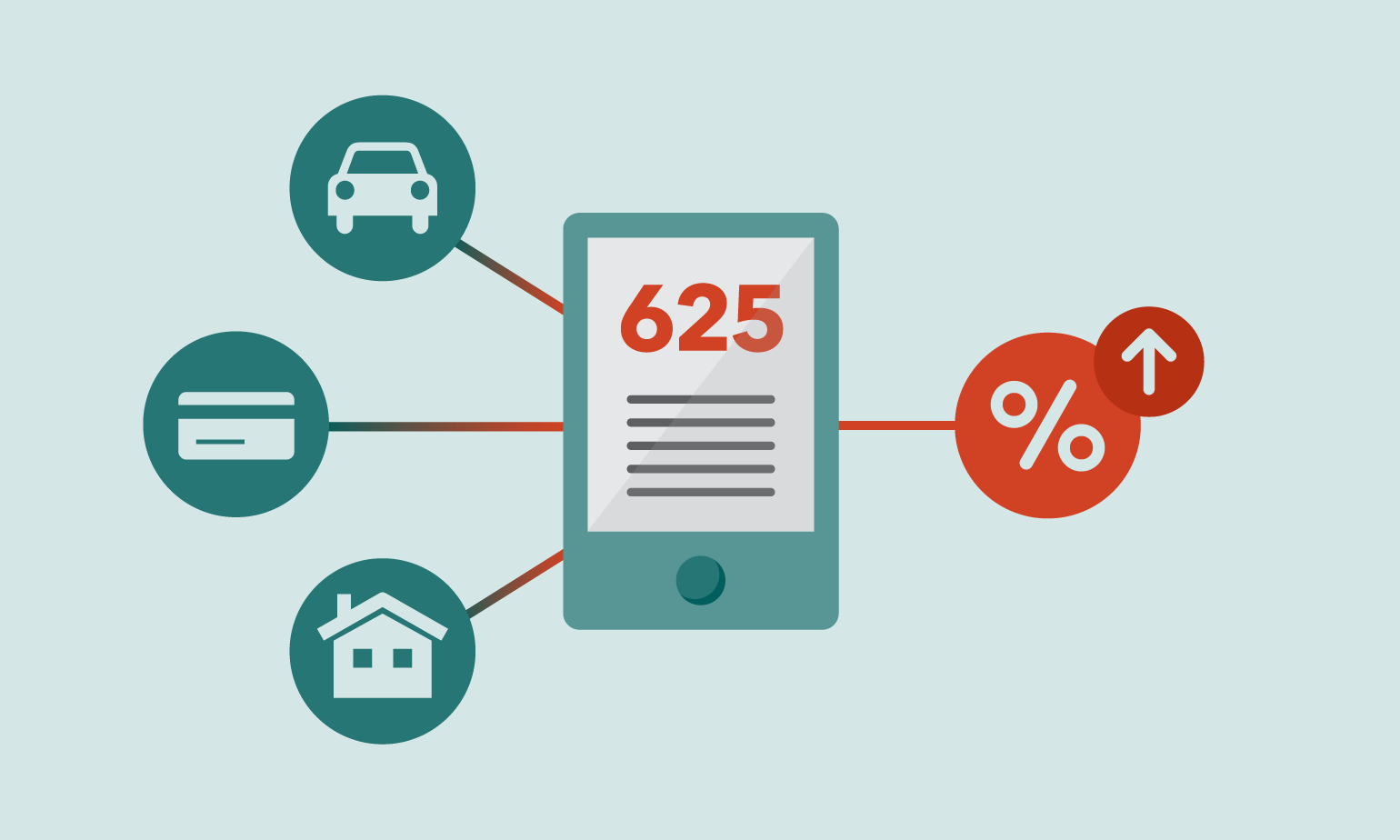
Bad credit advice will spread further than good credit advice because it is past down generationally and discussed in groups through social media etc. But acting on the credit myths above does not help your credit score – most often it will hurt it.
Below is a list of four of the most common credit myths that are believed today. I have also included the truth about each myth as well as some recommendations for how you can avoid spreading these myths.
Myth 1: Carrying a small balance on your credit card helps your score
This is probably the most damaging of all personal finance myths. This belief stems from the misconception that having a small amount of debt indicates that you are proactively utilizing your credit. On the contrary, having even a small amount of debt on your card costs you money in interest and has NO positive effect on your credit score.
In reality, what matters is that your bank reports that you utilize your card (i.e., you make a purchase) AND that the amount reported to the bureau is relatively low compared to your credit limits. To create these conditions simply buy something on occasion and then pay off the entire amount prior to the end of the billing cycle. If your bank reports $0.00, and your utilization ratio is 0%, then you have created the optimal environment for that particular element of your credit score.
Paying interest on your credit card for the sole purpose of improving your credit score is essentially foolishness!
Myth 2: Checking your own credit score lowers it
Monitoring your own credit is completely the opposite of what individuals should be doing. Checking your own credit score or reviewing your credit report constitutes a “soft” inquiry. A soft inquiry will NOT harm your credit score in ANY WAY. Lenders see soft inquiries as invisible and will NOT incorporate them into any of their various scoring models.
Hard inquiries occur when a lender reviews your credit profile in order to evaluate your creditworthiness for a loan or line of credit. While a hard inquiry WILL cause a slight temporary reduction in your credit score, you will never incur a hard inquiry while merely monitoring your own credit. In fact, reviewing your credit report frequently will likely become one of the healthiest routines you adopt.
Myth 3: Closing old credit cards improves your score
While this might seem logical, closing an old account will generally hurt your score in two ways.
First, closing an old account will decrease your overall available credit and increase your utilization ratio if you continue to carry balances on other cards. Secondly, closing an old account will reduce your average length of accounts established which also counts towards your credit score. The longer the average age of your accounts, the higher the likelihood of you maintaining excellent credit.
Closing an old account with an annual fee you wish to avoid and cannot waive may temporarily lower your credit score slightly. Closing a fee-free account that you have held for years is rarely advisable due to its potential negative effects on your credit score. Close the card if necessary; leave the account open otherwise.
Myth 4: You only have one credit score
You don’t have just one credit score. There are literally dozens of scores currently being used by various lending institutions around the world, each based upon a unique version of either FICO or VantageScore. Various lenders will choose different models for different types of loans/products.
One major consequence of this myth is that consumers often confuse or are disappointed when their credit score appears differently on their mobile app vs. what a lender communicates about their score. Consumers are usually comparing apples to oranges because they’re viewing different versions/models. Focus on trends and behavior patterns rather than obsessing over the numerical value.
Myth 5: Income affects your credit score
Your income is not included in your credit report. As such it will have no influence on your Credit Score. Someone with an annual income of $30,000 may have a credit score of 800; someone with an annual income of $200,000 may have a credit score of 550.
The important factor is how well you utilize your available credit, as opposed to how high your income is. The five major factors that affect your credit score include payment history, credit utilization, age of accounts, type of credit (credit mix) and number of inquiries made about you.
While income plays a role in determining whether or not a lender will offer you a loan, this decision process is independent of your credit score.
Myth 6: Paying off a collection account removes it from your report
Many people believe that if they settle with a collector, the collection account will disappear from their credit report. While it is possible for a paid collection to be removed from your credit report, it is unlikely. Typically, once you pay off a collection account, it remains on your report for 7 years from the date of first delinquency. What does change is that it will show as “paid” instead of “unpaid,” which might look slightly better to some lenders but still will remain on your credit report.
However, there is a way to possibly get a collection account removed. Sometimes collectors will offer what is called a “pay-for-delete agreement”. There are certain times when you can make an agreement with a collections company that they will take the account off of your credit reports if you make a payment for the debt owed. However most do not have the authority to take accounts off of your credit reports. Additionally, many creditors will automatically mark a collection account as “paid” after 180 days, even if you don’t request removal.
As part of newer FICO credit scoring models, paid collections will have less of an impact on your credit score than unpaid collections. Furthermore, medical collections below $500 are now exempted from inclusion in your credit reports due to recent regulatory changes.
Myth 7: You need to be in debt to build credit
While this is the biggest misconception about credit scores and may be why many people never start trying to build their own credit, it is simply untrue.
What you really need is a history of timely payments on any credit obligations. These obligations do not necessarily need to involve outstanding balances or interest charges. For example, a credit card that is paid in full each month provides the same benefit in terms of establishing a good credit score as would a revolving line of credit with a monthly balance remaining. Even a credit-builder loan which holds the borrowed funds in a savings account allows individuals to establish credit while avoiding any significant burden of additional debt.
For renters, services like Credit Genius provide opportunities for renters to turn their rent payments into positive data on their credit reports. As long as renters are consistently paying rent on time each month, reporting these payments to the three major credit reporting agencies converts this recurring responsibility into a form of positive action toward improving their overall credit profile.
Myth 8: A bad credit score is permanent
Unfortunately, this is probably the biggest misconception related to credit scores and likely results in the greatest damage. Because people tend to feel that their bad credit scores are forever and therefore become discouraged from doing anything else to try to repair them. However, negative information on your credit reports does eventually expire. Most derogatory marks — including late payments, collections and charge offs — drop off your report after 7 years. Bankruptcies drop off after 10 years — depending on the bankruptcy type.
What is also important is that good behavior begins creating offsetting positive history as soon as it occurs. Therefore, someone with a long history of poor financial performance can see his/her credit score increase significantly in 1-2 years by continuing to make timely payments, reducing his/her utilization rate and adding other positive tradelines.
It is the direction of movement — i.e., upward vs. Downward — that matters nearly as much as the actual score value. An individual with a 580 score that has improved for 6 months will appear differently to a sophisticated lender than someone with the exact same 580 score that has remained flat or declined over the past few months.
The common thread
Many of the most common Credit Myths will cause people to do nothing at all. Others will have a consumer doing something that ultimately hurts their credit score. It’s really simple and it doesn’t take magic. Pay on time. Use as little credit as possible. Don’t close old accounts. Check your credit report from time to time. Make legitimate additions to your credit history.
That’s it. There isn’t one single “trick” to fooling the system. That’s simply consistent action, over a long period of time, with the proper tools in place so that when you act you are getting an accurate record.