
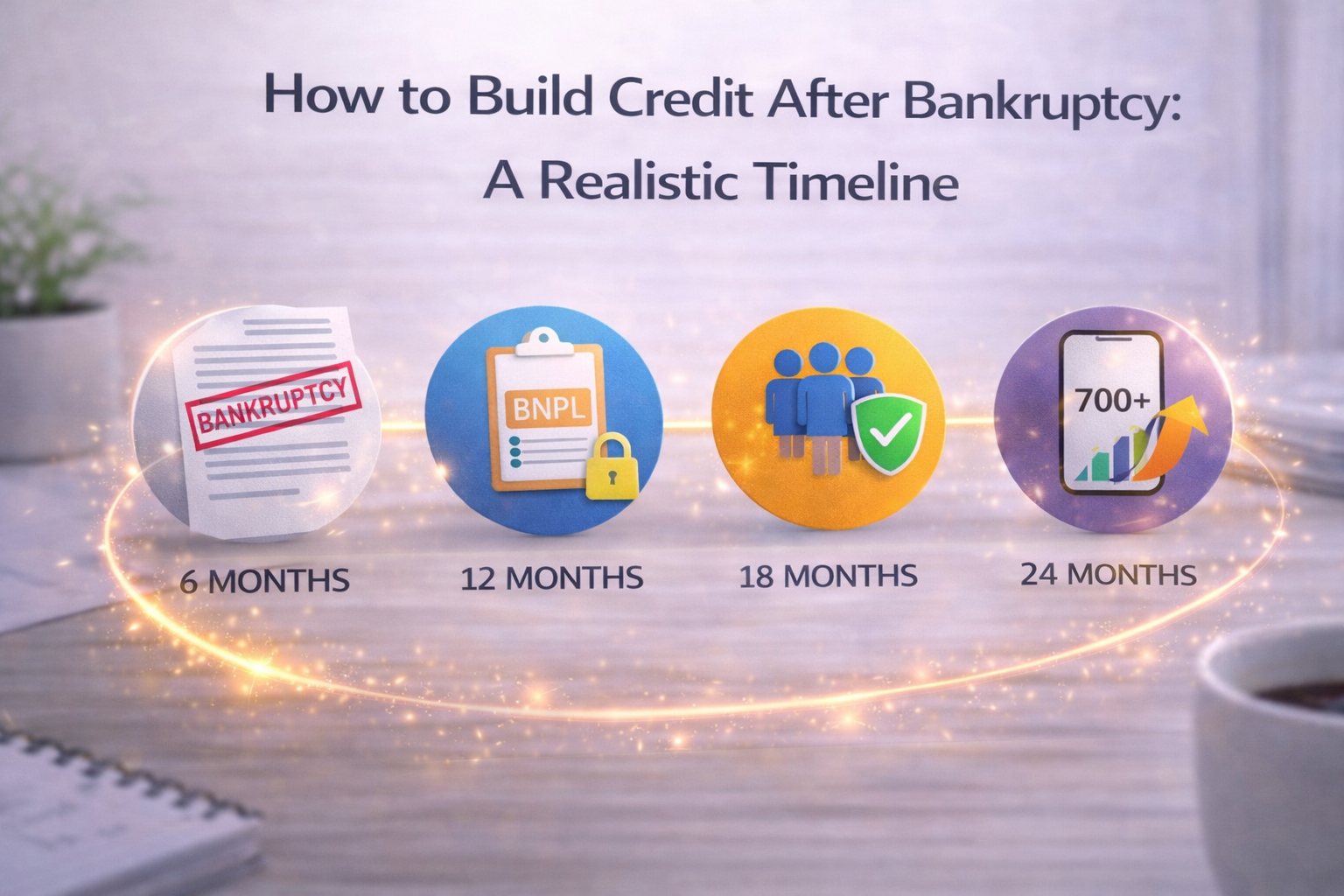
Bankruptcy is one of the most significant negative events that can appear on a credit report. It signals to lenders that your debts became unmanageable to the point where legal discharge was necessary. The credit damage is real and it is serious. But it is not permanent, and the path back is clearer than most people in this situation are led to believe.
Here is an honest, realistic timeline for rebuilding credit after bankruptcy and what to focus on at each stage.
First: understand what you are dealing with
There are two main types of consumer bankruptcy and their credit implications differ. Chapter 7 bankruptcy, which discharges most debts, stays on your credit report for ten years from the filing date. Chapter 13 bankruptcy, which involves a repayment plan, stays on your report for seven years.
During the time it appears on your report, a bankruptcy is one of the most significant derogatory marks a lender can see. It will affect your ability to get approved for credit and the rates you are offered. But its impact on your score decreases over time, particularly as you add positive information to your file.
The accounts included in the bankruptcy will also appear on your report, marked as discharged or included in bankruptcy. These will fall off your report at seven years from the original delinquency date, which is often before the bankruptcy itself drops off.
Months 1 to 6: stabilize and assess
The first priority after bankruptcy is not rebuilding credit. It is stabilizing your financial situation so that whatever you build next does not collapse again.
Pull all three of your credit reports from annualcreditreport.com and review them carefully. Confirm that the accounts included in the bankruptcy are accurately marked. Errors in how bankruptcy is recorded are not uncommon and any inaccuracies should be disputed immediately.
Set a realistic monthly budget. Understand exactly what you can afford to pay on any new credit obligations before you open anything. The worst outcome after bankruptcy is running into the same problems again.
If you are renting, this is a good time to enroll in rent reporting through Credit Genius. You are already making that payment and adding it to your credit file starts building positive history immediately without requiring any new debt.
Months 6 to 12: open your first new account
Once you have stability, it is time to start adding positive credit history. A secured credit card is the most accessible entry point after bankruptcy. Because you provide a cash deposit as collateral, approval is possible even with a bankruptcy on your file.
Choose a card with no annual fee that reports to all three credit bureaus. Use it for one small recurring purchase and pay the full balance every month without exception. The goal is a positive payment data point, not spending power.
Some lenders offer credit builder loans specifically for people rebuilding after bankruptcy. These work by making monthly payments into a locked savings account, with the payments reported to bureaus. At the end of the term you receive the money back. It adds payment history and a savings habit simultaneously.
Year 1 to 2: build momentum
By the end of your first year of consistent positive activity, you should have a secured card with twelve months of on-time payments, potentially rent reporting history adding additional positive data, and a credit score that has begun recovering from its post-bankruptcy low.
Many people are surprised by how much their score can recover in this period if they are consistent. The scoring models are forward-looking as well as backward-looking. They weight your most recent behavior more heavily than older history, which means consistent positive activity in year one has a real, measurable impact.
At the 12-month mark, check whether your secured card issuer offers an upgrade to an unsecured card. Many do after a year of responsible use. An unsecured card with a returned deposit and a credit limit increase is a meaningful sign of progress.
Year 2 to 4: expand carefully
With two or more years of clean post-bankruptcy history, your score should be in a range where more options become available. You may qualify for unsecured credit cards, better loan rates, and more favorable apartment terms.
Expand your credit profile carefully. Adding a second account with a different credit type, for example adding a credit builder loan if you only have cards, or adding a card if you only have installment loans, improves your credit mix without taking on unnecessary risk.
Space out new account applications. Every hard inquiry has a small negative impact and every new account lowers your average account age. Open one new account at a time and wait at least six months between applications.
Year 4 to 7: approach pre-bankruptcy levels
By four to seven years after bankruptcy, many people who have maintained consistent positive behavior have credit scores in the Good range, 670 to 739, and some reach Very Good territory. This is the range where mortgage applications become realistic, better loan rates are available, and the bankruptcy is becoming a progressively smaller part of your overall credit story.
The accounts from the bankruptcy are beginning to fall off your report at the seven-year mark. As they disappear, the remaining picture of your credit file becomes increasingly clean.
What not to do after bankruptcy
Do not apply for multiple accounts immediately. You will face higher rejection rates and multiple hard inquiries compound the damage.
Do not pay a credit repair company to remove the bankruptcy. An accurately reported bankruptcy cannot be legally removed before its expiration date. Companies that promise otherwise are not being honest with you.
Do not avoid credit entirely. Some people respond to bankruptcy by swearing off credit completely. This is understandable but counterproductive. The only way to rebuild your credit file is to add positive credit activity to it. Avoiding credit means the bankruptcy sits on your report with nothing positive being built around it.
The bottom line
Rebuilding credit after bankruptcy is a multi-year process and anyone who tells you otherwise is not being straight with you. But it is also a process with a clear path: stabilize, add one accessible credit product, pay everything on time, expand carefully, and let time do its work.
The bankruptcy does not define where your credit ends up. Your behavior from this point forward does.