
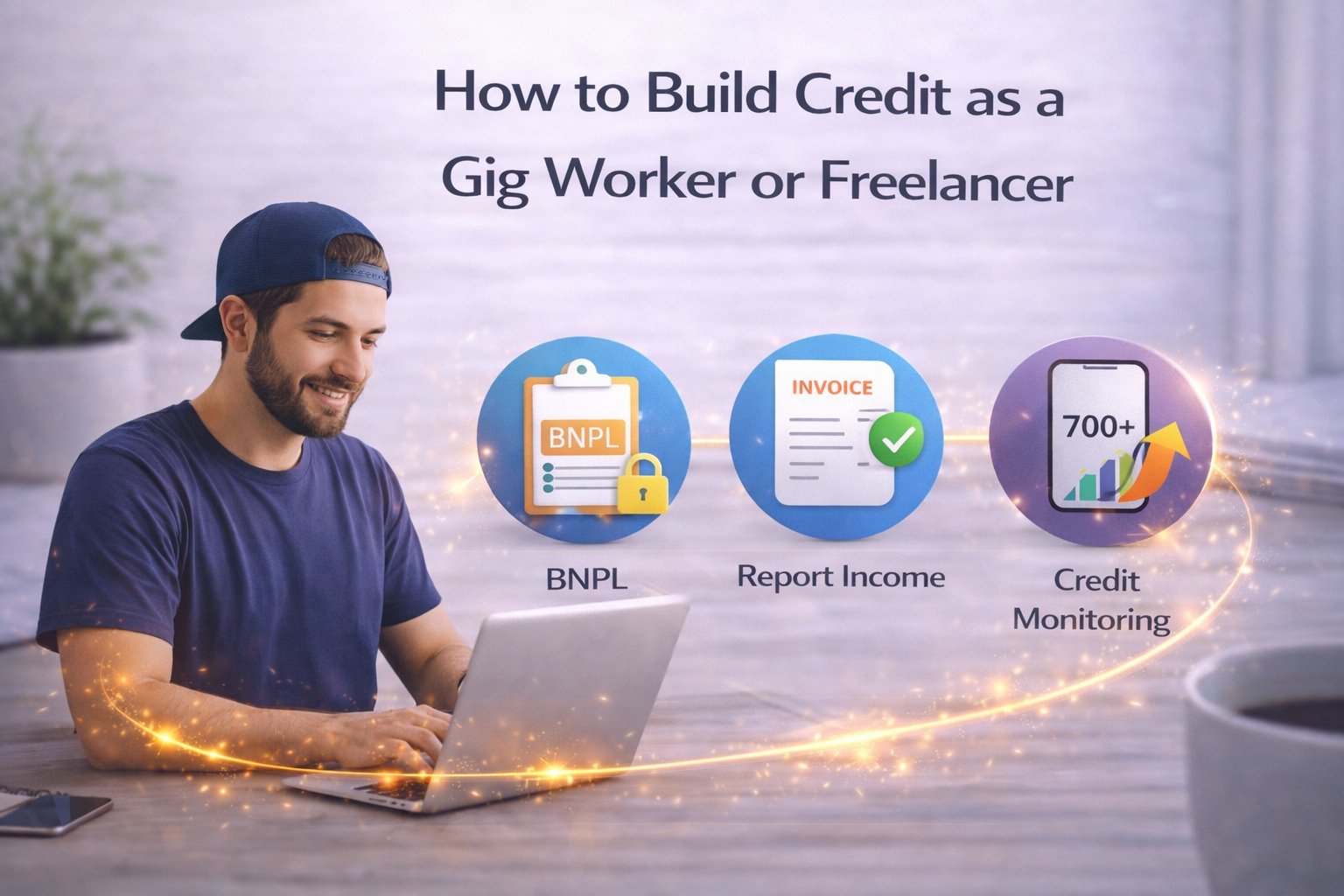
The credit system was designed around a paycheck. Consistent employment, a predictable income, and a W-2 at the end of the year. Gig workers and freelancers do not fit that mold. Irregular income, self-employment, and multiple income streams can make the credit landscape feel like it was built for someone else.
It was. But that does not mean credit is out of reach. Here is how to build a strong credit profile when your income does not look the way the system expects.
Why gig workers face unique credit challenges
Your credit score itself is not affected by how you earn your income. Employment status and income do not appear on your credit report. The score is based purely on your credit behavior: payment history, utilization, account age, credit mix, and new inquiries.
The challenge for gig workers and freelancers shows up in two places: getting approved for credit products in the first place, and proving income stability when applying for loans or apartments. Lenders want to see predictable income when they evaluate applications. Irregular or self-employed income is harder to document and often scrutinized more heavily.
But once you are approved and the account is open, your credit score is built exactly the same way as anyone else’s: by paying on time and managing balances responsibly.
Start with what you are already paying
Most gig workers and freelancers are renting. That monthly rent payment is almost certainly your largest and most consistent financial obligation. If it is not being reported to the credit bureaus, you are missing one of the most accessible credit-building opportunities available to you.
Credit Genius reports rent payments to Experian, including up to 24 months of prior history through backdating. For a freelancer with a thin credit file, adding a verified record of consistent rent payments can be one of the fastest ways to establish meaningful credit history without taking on any new debt.
Build a documented income history
Even though income does not appear on your credit report, it matters when you apply for new credit. Lenders evaluating a freelancer’s application want to see that your income is real, consistent, and documented.
File your taxes consistently and on time, including Schedule C if you are self-employed. Keep organized records of your invoices and payments. A year or two of tax returns showing stable self-employment income is the most credible documentation you can provide. Bank statements showing regular deposits can supplement this.
The stronger your income documentation, the more confidently you can apply for credit products that require income verification.
Open a secured credit card
A secured card is one of the most accessible credit products for someone with limited credit history or irregular income. Because you provide a cash deposit as collateral, approval requirements are generally lower and income documentation requirements are lighter.
Use it for predictable small purchases, the kind you know you can pay off in full every month regardless of what your income looks like that month. Consistency is more important than volume. One small purchase paid off every month is better than large purchases that strain your cash flow in a slow month.
Manage utilization carefully given income variability
Variable income makes utilization management more complex. In a strong month you might be tempted to put larger expenses on a card. In a slow month, paying those balances off becomes harder.
The safest approach is to keep credit card balances low regardless of your current income level. Treat your credit utilization target, ideally below 30% and better below 10% of your limit, as a fixed constraint rather than something you adjust based on how the month went. This protects your score from the volatility that naturally comes with self-employment.
Consider a credit builder loan
Credit builder loans are particularly well-suited to gig workers because the fixed monthly payment is small, predictable, and easy to budget for even in irregular income months. The payment goes into a savings account that you receive at the end of the term. The loan builds your payment history and your savings simultaneously.
For a freelancer trying to demonstrate payment reliability to scoring models, a credit builder loan with twelve consecutive on-time payments is compelling evidence.
Keep an emergency fund specifically for credit payments
This is credit advice specific to gig workers that most general credit articles do not cover. Because your income is variable, your ability to make credit payments can fluctuate. A slow month that coincides with a large credit card balance is exactly the situation that produces missed payments.
Maintaining a small dedicated reserve, even just enough to cover minimum payments on all accounts for two or three months, protects your payment history from the natural income variability of freelance work. Your credit score should not suffer because a client paid late. A reserve prevents that.
Separate business and personal credit eventually
As your freelance income grows, building a separate business credit profile becomes worthwhile. Business credit is built under your business’s EIN rather than your personal Social Security Number, and strong business credit can help you access financing for your business without it affecting your personal credit score.
In the early stages of freelancing, focus on your personal credit first. Once your business is generating consistent revenue and you are thinking about business financing, tools, or equipment purchases, explore business credit as a parallel track.
The bottom line
Being a gig worker or freelancer does not prevent you from building excellent credit. It just means you need to be more intentional about it than someone with a predictable paycheck.
Start with the payments you are already making, particularly rent. Add one accessible credit product and manage it conservatively. Document your income consistently. Protect your payment history with a small reserve. The credit system was not designed with you in mind, but it responds to the same behaviors regardless of how you earn your living.