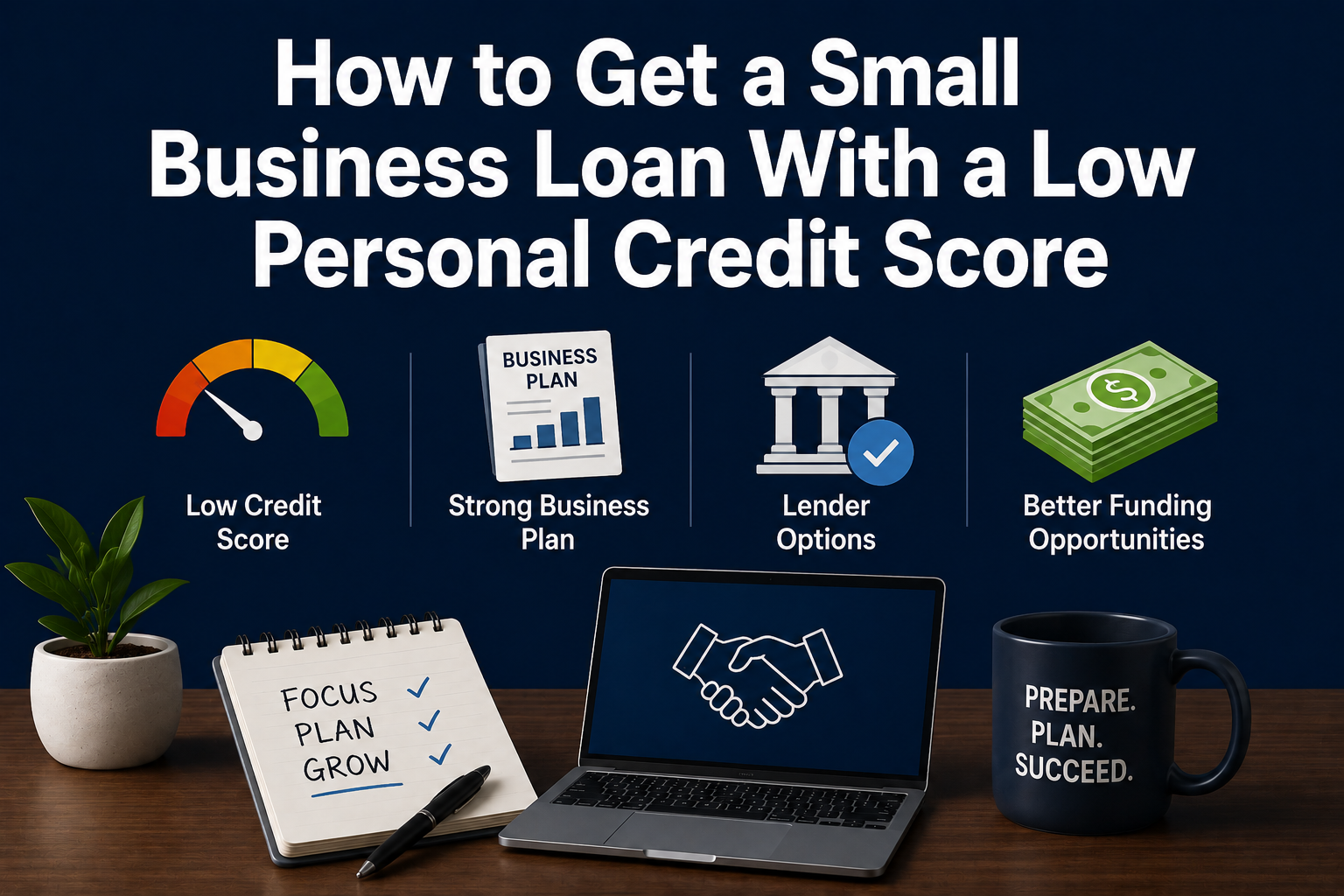
Starting or growing a business with a low personal credit score is genuinely harder than doing it with good credit. Most small business lenders, particularly traditional banks, rely heavily on the owner’s personal credit score when evaluating a loan application, especially for newer businesses that do not yet have an established business credit profile.
But low personal credit does not make small business financing impossible. It changes which options are available, what they cost, and what documentation you need to make a compelling case. Here is a practical guide to navigating small business lending with a low personal credit score.
Why personal credit matters for business loans
Most small business lenders, particularly banks and SBA-backed lenders, check the owner’s personal credit score as part of the application process. For businesses with less than two to three years of operating history, the owner’s personal credit is often the primary indicator of financial reliability because the business itself does not have a long enough track record to evaluate independently.
Traditional bank loans and SBA 7a loans typically require a personal credit score of 680 or above. Some lenders set the bar at 700 or higher. Below those thresholds, the application becomes significantly harder and the available options shift toward alternative lenders who accept lower scores but charge higher rates.
Know your minimum score requirements by loan type
The SBA does not set a minimum credit score requirement but most SBA-approved lenders require at least 650 to 680. The SBA microloan program, which offers loans up to 50,000 dollars through nonprofit intermediary lenders, generally has more flexible credit requirements and is worth exploring for smaller funding needs.
Online business lenders: Alternative online lenders like Kabbage, OnDeck, and Fundbox have lower minimum credit score requirements, sometimes accepting scores as low as 500 to 550. The tradeoff is significantly higher interest rates and shorter repayment terms. These are viable for short-term needs but expensive for long-term financing.
Nonprofit lenders and Community Development Financial Institutions, known as CDFIs, offer microloans specifically designed for underserved business owners including those with limited or poor credit history. Accion Opportunity Fund, Kiva US, and local CDFI networks are worth researching. These lenders often look at the full picture of your business rather than relying primarily on credit score.
Equipment financing: If you need funding specifically to purchase equipment, equipment financing uses the equipment itself as collateral, which reduces the lender’s reliance on your personal credit score. Approval requirements can be more flexible than for unsecured business loans.
If your business has outstanding invoices from clients, invoice financing allows you to borrow against those receivables. The creditworthiness of your clients matters more than your personal score in many of these arrangements.
Strengthen your application beyond the credit score
A low personal credit score makes the application harder. A strong application in every other dimension can partially offset that disadvantage.
Business revenue and cash flow. Strong business bank statements showing consistent revenue and healthy cash flow are compelling evidence of creditworthiness that your personal score cannot provide. Many alternative lenders weight revenue-based metrics heavily alongside or even above personal credit.
Time in business. The longer your business has been operating successfully, the more evidence you have of its viability. Even two years of solid operating history can significantly improve your chances with many lenders.
Collateral. Offering collateral, whether business assets, equipment, or in some cases personal assets, reduces the lender’s risk and can overcome credit score concerns. Secured loans are generally more accessible than unsecured ones for borrowers with lower scores.
For newer businesses with limited revenue history, a detailed, credible business plan that demonstrates market understanding, realistic financial projections, and a clear repayment strategy can make a meaningful difference, particularly with CDFI and microloan lenders who evaluate applications more holistically.
Build business credit separately
Business credit, tracked by Dun and Bradstreet, Experian Business, and Equifax Business, is separate from personal credit. Building a business credit profile reduces your reliance on personal credit for future financing.
Start by incorporating your business or forming an LLC, opening a dedicated business bank account, and getting an EIN from the IRS. Then open trade credit accounts with suppliers who report to business credit bureaus. Net-30 accounts with vendors who report payment history are a common starting point.
A business credit profile with even six to twelve months of positive payment history makes future lending conversations significantly easier and reduces the weight placed on your personal score.
Work on your personal credit in parallel
If your personal credit score is genuinely a barrier to the financing you need, improving it should be a parallel priority alongside running your business. The most impactful short-term actions are paying down credit card balances to reduce utilization, disputing any errors on your credit report, and ensuring all payments are made on time going forward.
If you are renting your home or business space, rent reporting through Credit Genius adds positive payment history to your Experian file without requiring any new debt or significant time investment. Every point gained on your personal score opens more business financing options at better rates.
The bottom line
A low personal credit score narrows your small business lending options and increases your cost of capital. It does not eliminate your options entirely. Alternative lenders, microloans, CDFIs, equipment financing, and invoice financing all offer paths to business capital with lower credit requirements.The best strategy combines pursuing the financing options available to you now with actively improving your personal credit and building a business credit profile in parallel. Better credit means better options and lower costs for every future financing need your business has.