
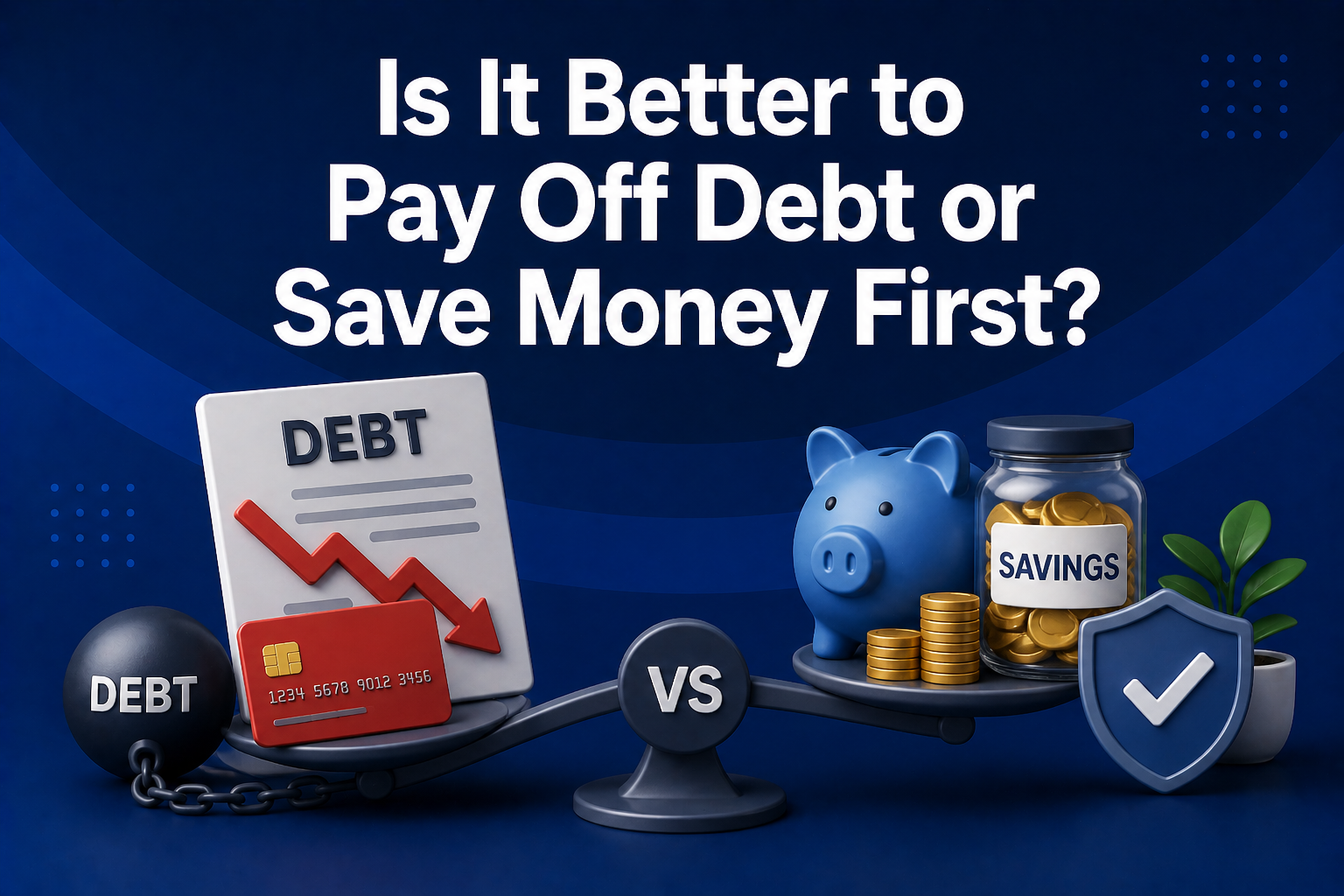
This is one of the most searched personal finance questions and one of the most genuinely nuanced ones. The honest answer is that it depends on the type of debt, the interest rate, your savings situation, and where your credit score is right now. Anyone who gives you a simple universal answer is leaving out important context.
Here is how to think through it for your specific situation, including how your decision affects your credit score.
The case for paying off debt first
From a pure math perspective, paying off high-interest debt is almost always the better financial move. If you are carrying credit card debt at 22% interest and your savings account earns 5%, every dollar you put into savings is costing you 17 cents in net interest every year. The debt is growing faster than the savings.
Paying off revolving debt like credit cards also directly improves your credit score by reducing your credit utilization ratio, the second most important factor in your FICO score at 30% of the total. If you have a card with a 5,000 dollar limit and a 4,000 dollar balance, your utilization on that card is 80%. Paying it down to 1,000 drops utilization to 20% and will likely produce a noticeable score improvement at your next statement close date.
The credit score benefit of paying down revolving debt is one of the fastest credit improvements available to anyone who is carrying balances. It is measurable, it happens quickly, and it does not require opening any new accounts.
The case for saving first
The math of paying down high-interest debt is compelling, but math is not the only variable. Life is unpredictable. If you put every spare dollar toward debt and then face an unexpected car repair, medical bill, or job disruption, you have two choices: go back into debt at high interest rates or miss payments. Either outcome hurts your credit and your finances.
This is why most financial guidance suggests building a small emergency fund before aggressively paying down debt. The standard recommendation is one to three months of essential expenses. This reserve protects your payment history, the most important factor in your credit score, from being disrupted by unexpected events.
Missing a payment on a credit card because you used all your cash for debt payoff is a worse outcome than carrying a balance for a few more months while you build a buffer. Payment history is 35% of your FICO score. Protecting it matters more than optimizing the math on your debt paydown in most circumstances.
The type of debt matters enormously
High-interest revolving debt (credit cards at 15% or above): Pay this down aggressively after building a small emergency fund. The interest cost is high, the credit score benefit of reducing utilization is significant, and there is no good reason to carry these balances longer than necessary.
Moderate interest installment debt (car loans, personal loans at 6 to 12%): Make your scheduled payments on time. Paying these off early has a smaller credit benefit than paying down revolving debt and the interest cost is more manageable. Directing extra cash to an emergency fund or high-interest debt paydown is usually the better move.
Low interest debt (student loans, mortgages at 3 to 6%): Make scheduled payments and do not rush to pay these off at the expense of savings or investing. The interest cost is low and the credit benefit of paying them off early is minimal. Money directed toward savings or investments may generate better returns over time.
How this connects to your credit score
The debt-versus-savings decision intersects with your credit score in three specific ways.
Utilization. Paying down credit card balances reduces your utilization ratio and improves your score. This is the most direct credit benefit of debt paydown and it shows up quickly, often within one to two billing cycles.
Payment history protection. Maintaining a savings buffer protects your ability to make all minimum payments on time, preserving your payment history. A missed payment can cost 50 to 100 points and stays on your report for seven years. A few months of emergency savings prevents that outcome.
Paying off and closing an installment loan can slightly reduce your credit mix, which accounts for 10% of your score. This is a minor factor but worth knowing if you are close to a score threshold for a major loan application.
The practical framework
Here is a simple decision framework that works for most situations.
Build one month of essential expenses as an emergency fund before doing anything aggressive with debt. This protects your payment history from unexpected disruptions.
Step two: Pay the minimum on all accounts on time, every month, without exception. This is non-negotiable regardless of what else you are doing.
Step three: Direct any extra money toward high-interest revolving debt, starting with the highest rate or the account closest to its limit. This produces the fastest credit score improvement and the highest interest savings simultaneously.
Step four: Once high-interest debt is cleared, build your emergency fund to three months of expenses before aggressively paying down lower-interest installment debt.
Step five: Continue building credit in parallel. If you are renting and your rent is not being reported to the credit bureaus, adding rent reporting through a service like Credit Genius runs alongside this process without requiring you to redirect any debt paydown money.
The bottom line
The question of whether to pay off debt or save first does not have a single right answer. But for most people carrying high-interest revolving debt with little savings, the order is: small emergency fund first, then aggressive debt paydown, then savings expansion.
The credit score implications reinforce this order. High-interest debt paydown reduces utilization and improves your score. A small emergency fund protects your payment history from disruption. Both outcomes serve your credit and your financial health simultaneously.The worst financial decision is not choosing one over the other. It is ignoring both because the question feels too complicated to answer.