
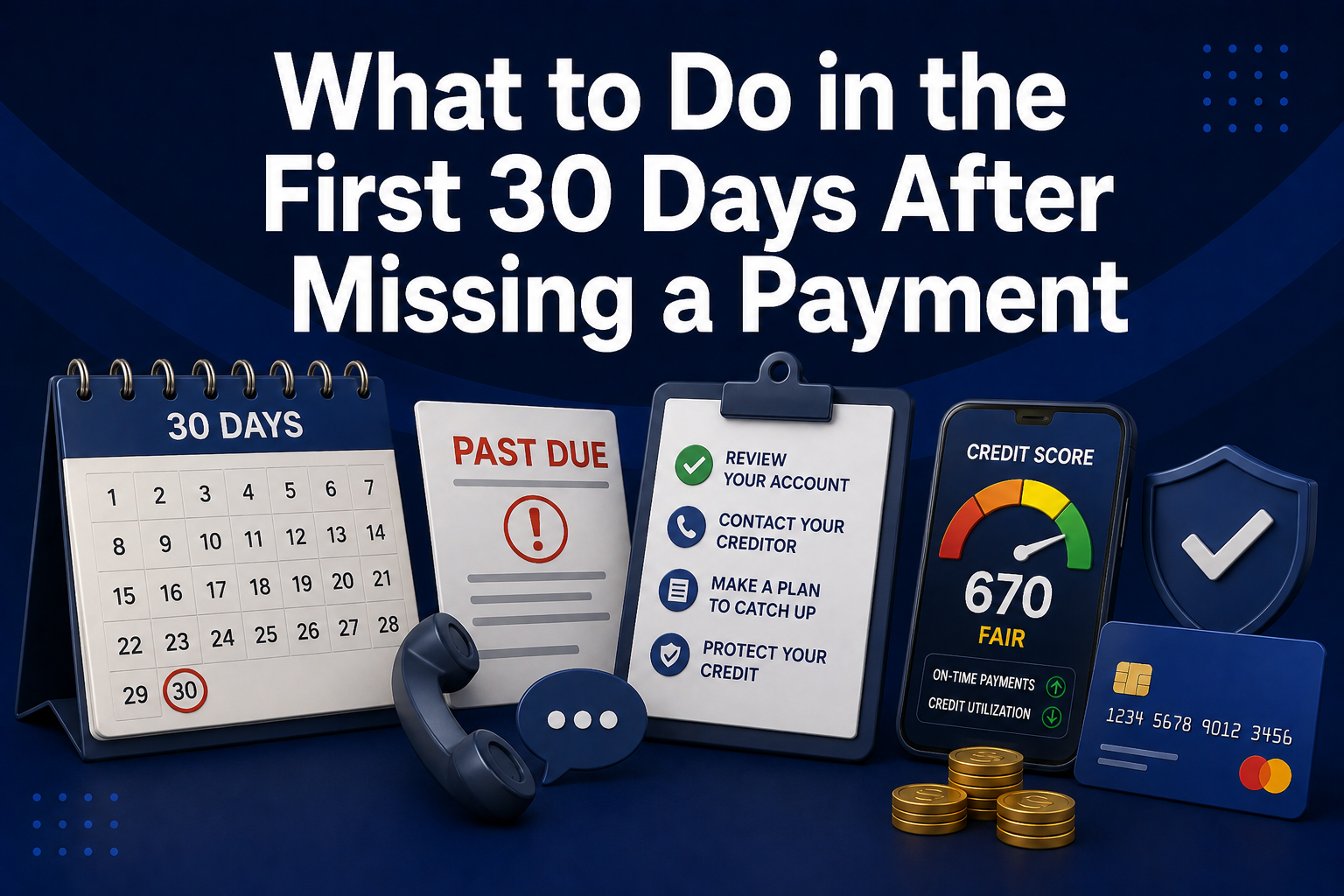
Missing a payment feels bad. The instinct for most people is to avoid thinking about it and hope it sorts itself out. That is exactly the wrong response. The first 30 days after a missed payment are the most important window you have to limit the damage, and the actions you take or do not take in that window determine how bad the outcome actually is.
Here is exactly what to do, in order.
Day 1 to 3: Understand where you stand
The first thing to know is that a missed payment does not automatically appear on your credit report. Lenders typically do not report a payment as late until it is at least 30 days past due. If you missed a payment this week and you pay it today, your credit score is likely unaffected, though you may still owe a late fee to the lender.
This 30-day window is critical. It is your opportunity to fix the situation before it becomes a permanent mark on your credit file. Do not waste it.
Pull up the account and find out exactly how much is overdue, when the 30-day mark falls, and what the lender’s policy is on late reporting. Some lenders report at exactly 30 days. Others give a grace period of a few extra days. Knowing the deadline tells you how much time you have.
Day 1 to 7: Pay the overdue amount immediately if you can
If you have the money, pay the missed payment right now. Do not wait. Every day you delay is a day closer to the 30-day reporting threshold. Even if you cannot pay the full balance, paying at least the minimum due stops the delinquency from compounding and may prevent the account from being reported as late.
Once you have paid, confirm with the lender whether the payment was received and processed before their reporting cutoff. Get confirmation in writing or take a screenshot of the payment confirmation.
Day 1 to 7: Call the lender if you cannot pay
If you cannot pay the overdue amount right now, call the lender directly. This is the step most people skip and it is one of the most valuable things you can do.
Many lenders have hardship programs, payment deferral options, or goodwill policies for customers who reach out proactively before the situation escalates. A lender who has not yet reported you as late may agree to defer the payment, waive the late fee, or give you additional time to pay if you explain your situation honestly.
Calling before the 30-day mark is much more effective than calling after. Once a payment has been reported as late, the options narrow significantly. Before reporting, the lender still has full discretion over how they handle the situation.
When you call, be direct. Tell them you missed a payment, explain briefly why, and ask what options are available. Ask specifically whether they will agree not to report the payment as late if you pay by a certain date or make alternative arrangements. Document who you spoke to and what was agreed.
Day 7 to 14: Set up autopay immediately
The most common cause of missed payments is not financial hardship. It is forgetting. If a forgotten due date is what caused this, fix the root problem right now.
Set up autopay for the minimum payment on every account you have. Today. Not after you sort out the current situation. Now. The minimum payment is enough to protect your payment history even if you cannot pay the full balance. A missed minimum payment is a credit event. A minimum payment made on time while you carry a balance is not.
If the reason you missed the payment was genuinely financial rather than forgetfulness, autopay for the minimum still helps ensure you never compound a difficult situation by missing additional payments while managing the first one.
Day 14 to 30: Monitor your credit file closely
As you approach the 30-day mark, watch your credit file for any changes. If you are enrolled in real-time credit monitoring through a tool like Credit Genius, you will receive an immediate alert if anything changes on your Experian file. This lets you know right away whether the lender has reported the late payment.
If the payment was made within the 30-day window and the account still shows a late mark, it may be an error that can be disputed. Document everything: the date of the original missed payment, the date you paid, and any confirmation of payment you received.
If the late payment is reported: request a goodwill adjustment
If the 30-day window passed and the late payment appears on your credit report, your next move is a goodwill letter. This is a written request to the lender asking them to remove the late payment mark as a one-time courtesy.
Goodwill adjustments are not guaranteed but they work more often than people expect, particularly for customers with a strong prior payment history with that lender. Keep the letter brief, acknowledge what happened, explain the circumstances honestly, and highlight your otherwise clean record with them.
Send it by certified mail so you have proof of delivery. Follow up if you do not hear back within 30 days.
Start rebuilding immediately regardless of outcome
Whether or not the late payment ends up on your report, start rebuilding positive credit history as soon as possible. The impact of a single late payment fades over time as positive data accumulates around it. The faster you build positive history, the faster the late payment becomes a smaller proportion of your overall credit story.
Pay every remaining account on time from this point forward without exception. If you are renting and your rent payments are not being reported to the credit bureaus, adding rent reporting through Credit Genius puts verified positive payment data on your Experian file, which helps offset the impact of the late mark over time.
The bottom line
The first 30 days after a missed payment are your best opportunity to limit or eliminate the credit damage. Pay the overdue amount as fast as possible. Call the lender if you cannot. Set up autopay immediately. Monitor your file. Request a goodwill adjustment if the mark is reported.Do not ignore it. Do not wait. The credit system gives you a 30-day window before a missed payment becomes a reportable event. Use every day of it.