
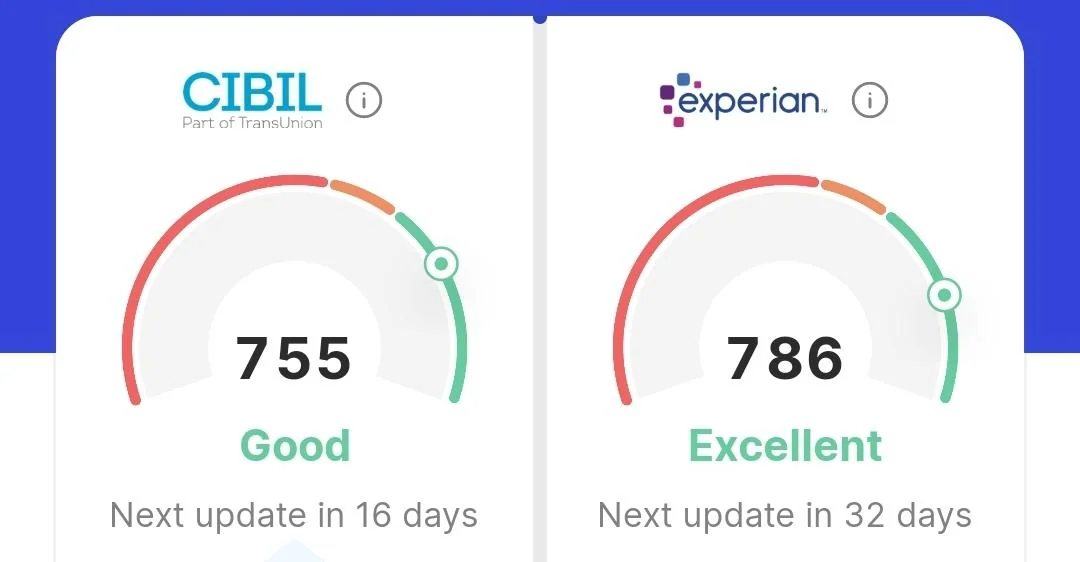
Your credit score is 712 when you check it on one app; 698 on another; 724 at your bank; 681 when you apply for a car loan at a dealer. This creates confusion. “Is the system messed up? Are they lying to me?”
Nobody is misleading you. However, the system does create confusion. Once you understand how this happens, you will have less stress and fewer poor financial decisions.
There is no single credit score
The surprise for many people is that there is no one credit score that all lenders use. In addition to the FICO score, there are dozens of active credit scoring models in the U.S. and each lender uses a different model based on what they are assessing you for.
The FICO score is the best-known credit scoring model. Developed by the Fair Isaac Corporation, it also has multiple versions. FICO Score 8 is the most commonly applied version of the FICO score. However, there is a newer version called FICO Score 9 which has been adopted by some of the larger lenders. Industry-specific versions include FICO Auto Score 8 (auto loan) and FICO Bankcard Score 8 (credit card). Mortgage lenders use FICO Score 2, 4 and 5.
VantageScore is another model developed by the three major credit bureaus. VantageScore 3.0 and 4.0 are the versions of VantageScore used by many of the free credit monitoring apps and services.
Each of the above models evaluates the same credit data differently. Therefore, even if you are using the exact same credit file, you could receive a different number as a result of the different models used.
Three bureaus, three different files
Another reason you may have different credit scores is because there are three separate credit bureaus (Experian, TransUnion, and Equifax) and each maintains its own independent credit file on you. They do not share information automatically.
When a lender or credit card company reports your payment history, they may report to all three credit bureaus, two of them, or just one. Accounts on your credit file may show up on one of your credit bureau reports, but not on the others. For example, an account opened in January may show up on Experian before it appears on TransUnion.
Since the underlying data is different at each of the three credit bureaus, and since each of the credit models evaluate the data differently, the resulting credit score at each credit bureau will typically differ. And, in some cases, the difference will be very significant (i.e., a 30-point or 40-point difference).
Why free apps often show you a different score than lenders see
Most of the free credit monitoring apps use VantageScore 3.0. VantageScore 3.0 is a perfectly good credit scoring model and is very useful for tracking your overall credit health. Most major lenders do not use VantageScore to make lending decisions.
Instead, when an applicant applies for a home mortgage, they will usually obtain FICO Score 2 from Experian, FICO Score 4 from TransUnion and FICO Score 5 from Equifax. When making the decision on whether to lend, they will frequently take the middle score. None of those are the scores that were shown to you on your free app.
This is why people are often shocked when they apply for a loan and the lender uses a significantly different credit score than the one they thought would be used. The number shown on your app was legitimate. It was simply not the same number that the lender saw.
Which score should you actually care about?
That depends. If you are simply tracking your credit health over time, any consistently scored model is sufficient. Trends are more important than actual numbers. If your VantageScore increases from 640 to 700 over a period of 6 months, it is safe to say that your FICO scores are improving as well.
If you are planning to apply for a mortgage, then check your FICO scores. You can view your FICO scores at MyFICO.com. Knowing which FICO versions the mortgage lenders use and viewing the specific FICO scores prior to applying will give you a much better idea of what the lender will see.
FICO Auto Score versions are used for auto loans. FICO Bankcard scores are used for credit cards. FICO 8 is the most widely used across lenders for general purposes.
How Credit Genius approaches this
Credit Genius uses real-time Experian credit monitoring. This will give you access to an Experian report (one of the three major reporting agencies) and an Experian credit score. The AI-based credit assistant within Credit Genius allows you to see both your current Experian score as well as the actions most likely to impact that score, based on what is reported in your Experian file.
Understand that different versions of your score are caused by different models and different reporting bureaus. The next step is to identify the factors affecting your score across all bureaus. Credit Genius offers this understanding.
The bottom line
Your scores are not manipulated by the creditors or the bureaus. Instead, your scores vary because there is no single standard. There are multiple scoring models, three separate bureaus, and multiple creditors using their own selection of bureau data. Your responsibility is not to memorize all of the various scoring models. Your responsibility is to determine which version of your score is relevant to the creditor’s decision regarding lending to you. Additionally, your responsibility is to develop the habits and behaviors that positively impact all versions of your credit score.
Pay your bills on time. Maintain low utilization. Avoid opening unnecessary accounts. Document your rental payments. These actions positively affect every version of your credit score because they positively affect the common data upon which every version of your credit score is calculated.