
What to Do in the First 30 Days After Missing a Payment
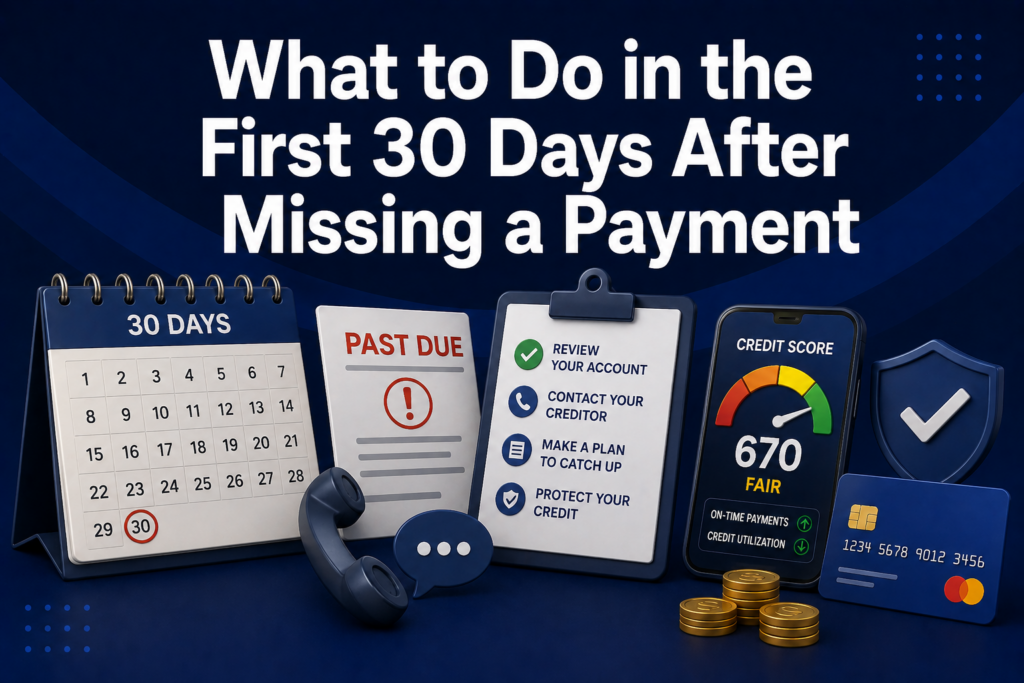
Missing a payment feels bad. The instinct for most people is to avoid thinking about it and hope it sorts itself out. That is exactly the wrong response. The first 30 days after a missed payment are the most important window you have to limit the damage, and the actions you take or do not take in that window determine how bad the outcome actually is. Here is exactly what to do, in order. Day 1 to 3: Understand where you stand The first thing to know is that a missed payment does not automatically appear on your credit report. Lenders typically do not report a payment as late until it is at least 30 days past due. If you missed a payment this week and you pay it today, your credit score is likely unaffected, though you may still owe a late fee to the lender. This 30-day window is critical. It is your opportunity to fix the situation before it becomes a permanent mark on your credit file. Do not waste it. Pull up the account and find out exactly how much is overdue, when the 30-day mark falls, and what the lender’s policy is on late reporting. Some lenders report at exactly 30 days. Others give a grace period of a few extra days. Knowing the deadline tells you how much time you have. Day 1 to 7: Pay the overdue amount immediately if you can If you have the money, pay the missed payment right now. Do not wait. Every day you delay is a day closer to the 30-day reporting threshold. Even if you cannot pay the full balance, paying at least the minimum due stops the delinquency from compounding and may prevent the account from being reported as late. Once you have paid, confirm with the lender whether the payment was received and processed before their reporting cutoff. Get confirmation in writing or take a screenshot of the payment confirmation. Day 1 to 7: Call the lender if you cannot pay If you cannot pay the overdue amount right now, call the lender directly. This is the step most people skip and it is one of the most valuable things you can do. Many lenders have hardship programs, payment deferral options, or goodwill policies for customers who reach out proactively before the situation escalates. A lender who has not yet reported you as late may agree to defer the payment, waive the late fee, or give you additional time to pay if you explain your situation honestly. Calling before the 30-day mark is much more effective than calling after. Once a payment has been reported as late, the options narrow significantly. Before reporting, the lender still has full discretion over how they handle the situation. When you call, be direct. Tell them you missed a payment, explain briefly why, and ask what options are available. Ask specifically whether they will agree not to report the payment as late if you pay by a certain date or make alternative arrangements. Document who you spoke to and what was agreed. Day 7 to 14: Set up autopay immediately The most common cause of missed payments is not financial hardship. It is forgetting. If a forgotten due date is what caused this, fix the root problem right now. Set up autopay for the minimum payment on every account you have. Today. Not after you sort out the current situation. Now. The minimum payment is enough to protect your payment history even if you cannot pay the full balance. A missed minimum payment is a credit event. A minimum payment made on time while you carry a balance is not. If the reason you missed the payment was genuinely financial rather than forgetfulness, autopay for the minimum still helps ensure you never compound a difficult situation by missing additional payments while managing the first one. Day 14 to 30: Monitor your credit file closely As you approach the 30-day mark, watch your credit file for any changes. If you are enrolled in real-time credit monitoring through a tool like Credit Genius, you will receive an immediate alert if anything changes on your Experian file. This lets you know right away whether the lender has reported the late payment. If the payment was made within the 30-day window and the account still shows a late mark, it may be an error that can be disputed. Document everything: the date of the original missed payment, the date you paid, and any confirmation of payment you received. If the late payment is reported: request a goodwill adjustment If the 30-day window passed and the late payment appears on your credit report, your next move is a goodwill letter. This is a written request to the lender asking them to remove the late payment mark as a one-time courtesy. Goodwill adjustments are not guaranteed but they work more often than people expect, particularly for customers with a strong prior payment history with that lender. Keep the letter brief, acknowledge what happened, explain the circumstances honestly, and highlight your otherwise clean record with them. Send it by certified mail so you have proof of delivery. Follow up if you do not hear back within 30 days. Start rebuilding immediately regardless of outcome Whether or not the late payment ends up on your report, start rebuilding positive credit history as soon as possible. The impact of a single late payment fades over time as positive data accumulates around it. The faster you build positive history, the faster the late payment becomes a smaller proportion of your overall credit story. Pay every remaining account on time from this point forward without exception. If you are renting and your rent payments are not being reported to the credit bureaus, adding rent reporting through Credit Genius puts verified positive payment data on your Experian file, which helps offset the impact of the late mark over time. The bottom line The first 30 days after a missed
10 Signs You Are Ready to Apply for a Mortgage

Buying a home is one of the biggest financial decisions most people make and one of the most common mistakes is applying for a mortgage before you are actually ready. A rejected application damages your credit through hard inquiries and can lock you out of favorable rates for months. Knowing when you are genuinely prepared makes the difference between a smooth process and a frustrating one. Here are ten signs that you are ready to apply. 1. Your credit score is at least 620 and ideally 740 or above Most conventional lenders require a minimum score of 620. FHA loans can go as low as 580 with a 3.5% down payment. But meeting the minimum is not the same as being in the best position. A score of 740 or above typically qualifies you for the best available rates. On a 350,000 dollar 30-year mortgage, the difference between a 680 score and a 760 score can translate to more than 50,000 dollars in total interest paid over the life of the loan. If your score is between 620 and 700, it is worth asking whether six to twelve more months of credit building would meaningfully change your rate before you apply. Tools like Credit Genius can help you identify the specific actions that will move your Experian score most efficiently in the months leading up to an application. 2. You have at least two years of steady income history Lenders want to see stable, documented income. Most require two years of employment history in the same field, verified through W-2s, tax returns, and pay stubs. Self-employed borrowers need two years of tax returns showing consistent income. A recent job change is not automatically disqualifying, particularly if you moved into the same field at a higher salary. But gaps in employment or a recent career pivot into a new industry can complicate the application. If your income history is not clean and consistent, it is worth understanding how your specific situation will be evaluated before you apply. 3. Your debt-to-income ratio is below 43% Your debt-to-income ratio, or DTI, is the percentage of your gross monthly income that goes toward debt payments. Most conventional lenders cap DTI at 43% for approval, with better rates available at lower ratios. Some loan programs allow up to 50% but with stricter requirements elsewhere. Calculate your DTI by adding up all your monthly debt payments, including the projected mortgage payment, and dividing by your gross monthly income. If the number is above 43%, paying down existing debt before applying will improve both your approval odds and your rate. 4. You have a down payment ready The size of your down payment affects your loan options, your rate, and your monthly payment. Conventional loans require as little as 3% down but anything below 20% typically requires private mortgage insurance, or PMI, which adds to your monthly cost. FHA loans require 3.5% with a score of 580 or above. VA loans for eligible veterans require no down payment. USDA loans for qualifying rural properties also have no down payment requirement. Beyond the down payment itself, lenders also want to see reserves, meaning money left over after closing that covers several months of mortgage payments. Having the down payment ready is a prerequisite. Having reserves on top of it signals to lenders that you will not be stretched thin immediately after closing. 5. Your credit report is clean and accurate Pull all three of your credit reports from annualcreditreport.com before applying and review them carefully. One in five Americans has at least one error on their credit report. An error that goes unnoticed until a lender pulls your credit can derail an application or cost you a better rate. Look for accounts you do not recognize, late payments recorded incorrectly, collections that should have fallen off, and any public records that are outdated or inaccurate. Dispute anything that is wrong at least 60 to 90 days before you plan to apply so there is time for the correction to be processed and reflected in your score. 6. You have not opened any new credit accounts in the past six months New credit accounts lower your average account age and add hard inquiries to your file. Both have a negative impact on your score, even if small. In the six to twelve months before a mortgage application, stop opening new credit accounts entirely. This includes store credit cards opened for a discount, new auto loans, and any other credit products. Lenders also look at recent credit activity as a signal of financial stability. A flurry of new accounts shortly before a mortgage application can raise questions. 7. You have been at your current address for at least a year Residential stability is a signal lenders look at as part of the overall application picture. Frequent moves in the years before an application are not disqualifying but they can prompt additional questions. Having a stable address history alongside stable employment and stable credit is the profile that produces the smoothest mortgage applications. 8. You understand the full cost of homeownership Being financially ready for a mortgage means being ready for more than the monthly payment. Property taxes, homeowners insurance, HOA fees if applicable, maintenance costs, and repair reserves all add to the real cost of ownership. A common rule of thumb is to budget 1% of the home’s value per year for maintenance and repairs. On a 350,000 dollar home that is 3,500 dollars per year or roughly 290 dollars per month on top of your mortgage payment, taxes, and insurance. If your budget only works if nothing goes wrong, you are not ready. 9. You have been pre-approved, not just pre-qualified Pre-qualification is an informal estimate based on self-reported information. Pre-approval involves a lender actually reviewing your income documentation, credit report, and assets to confirm how much they are willing to lend. In competitive markets, sellers increasingly require pre-approval letters before considering offers. Getting pre-approved before you start
How to Build Credit as a Non-US Citizen on a Visa

Living in the United States on a visa and trying to build credit is one of the more frustrating financial catch-22s out there. You need credit history to access financial products. You need financial products to build credit history. And unlike permanent residents or citizens, you may also face questions about visa status, Social Security Number availability, and how long you plan to stay. The good news is that visa holders can absolutely build US credit. It takes a bit more navigation than it does for citizens but the path is clear and the options are more accessible than most people in this situation realize. Do you need a Social Security Number to build credit? Not necessarily. Many visa holders do not have a Social Security Number, or SSN, and this is often the first barrier people run into. The good news is that several credit-building options are accessible without one. An Individual Taxpayer Identification Number, or ITIN, is issued by the IRS to individuals who need to file US taxes but are not eligible for an SSN. Getting an ITIN is a straightforward process that does not require citizenship or a specific visa type. Many credit products including some credit cards, credit builder loans, and rent reporting services accept an ITIN in place of an SSN. If you are on an employment-based visa such as an H-1B or L-1, you may already have an SSN through your employer. If so, the full range of credit-building options is available to you from day one. Start with rent reporting If you are renting in the US, you are already making one of the most powerful credit-building payments available to you every single month. The challenge is that most landlords do not report rent payments to the credit bureaus, which means years of on-time payments may be completely invisible to the credit system. Rent reporting services submit your payment history to credit bureaus and some accept an ITIN in addition to an SSN. Credit Genius reports rent payments to Experian, the bureau most commonly checked by US lenders, and includes a backdating feature that allows you to submit up to 24 months of prior rent payment history at once. For a visa holder who has been in the US for a year or more and paying rent on time, this can create an immediate credit foundation rather than starting from zero. It is one of the fastest legitimate paths to a scoreable credit profile for anyone without existing US credit history. Apply for a secured credit card Secured credit cards are one of the most accessible credit products for visa holders because the approval requirements are lower. You provide a cash deposit that becomes your credit limit, which reduces the lender’s risk regardless of your immigration status or credit history. Some financial institutions specifically market secured cards to non-citizens and accept ITIN applications. Others require an SSN. It is worth checking the requirements before applying to avoid unnecessary hard inquiries on applications you are unlikely to be approved for. Use the card for one or two small recurring purchases each month and pay the full balance before the due date. The credit-building value comes from the consistent payment record, not from how much you spend. Check whether your home country credit transfers A service called Nova Credit translates credit history from certain countries into a format that US lenders can use. It currently supports credit reports from a limited number of countries including India, Mexico, Australia, Canada, the UK, Brazil, the Dominican Republic, Kenya, Nigeria, and several others. If your home country is on the list and you have a strong credit history there, Nova Credit can provide US lenders and landlords with a translated version of your foreign credit report. Not every lender or landlord accepts Nova Credit reports but the number that do is growing, particularly among larger financial institutions and property management companies. This is not available for all nationalities, but for those it covers it can provide a meaningful head start over starting from scratch. Open a US bank account A US bank account is not a credit-building tool on its own, but it is a prerequisite for almost everything else. Most credit card applications, credit builder loans, and rent reporting services require a US bank account. Many banks will open accounts for visa holders with a passport, visa documentation, and sometimes an ITIN. Some fintech banks and online financial institutions have more flexible account opening requirements for non-citizens than traditional banks. Bank statements showing regular activity over time also serve as supplemental income documentation when applying for credit products. Explore credit cards designed for non-citizens A small number of financial institutions have developed credit card products specifically designed for immigrants and visa holders. Some of these use alternative underwriting criteria that take into account education, employment, and income rather than relying exclusively on US credit history. These products are worth researching if you have strong income but no US credit history. They are not universally available and terms vary, but for visa holders who qualify they can be a faster path to an unsecured credit card than waiting to build enough history through a secured card. Consider a credit builder loan Some credit unions and community banks offer credit builder loans to individuals with ITINs. These work by making fixed monthly payments into a locked savings account while the lender reports those payments to the credit bureaus. At the end of the term you receive the accumulated balance back minus fees. For visa holders who prefer a structured, debt-free approach to credit building, a credit builder loan is a reliable option. The fixed monthly payment is predictable, the risk to the lender is low, and the credit benefit accumulates steadily over the loan term. What about visa expiration? Some visa holders worry that a short visa validity period will make lenders reluctant to extend credit. In practice, most consumer credit products do not require long-term residency
Credit Builder Loan vs Secured Card: A Side by Side Comparison
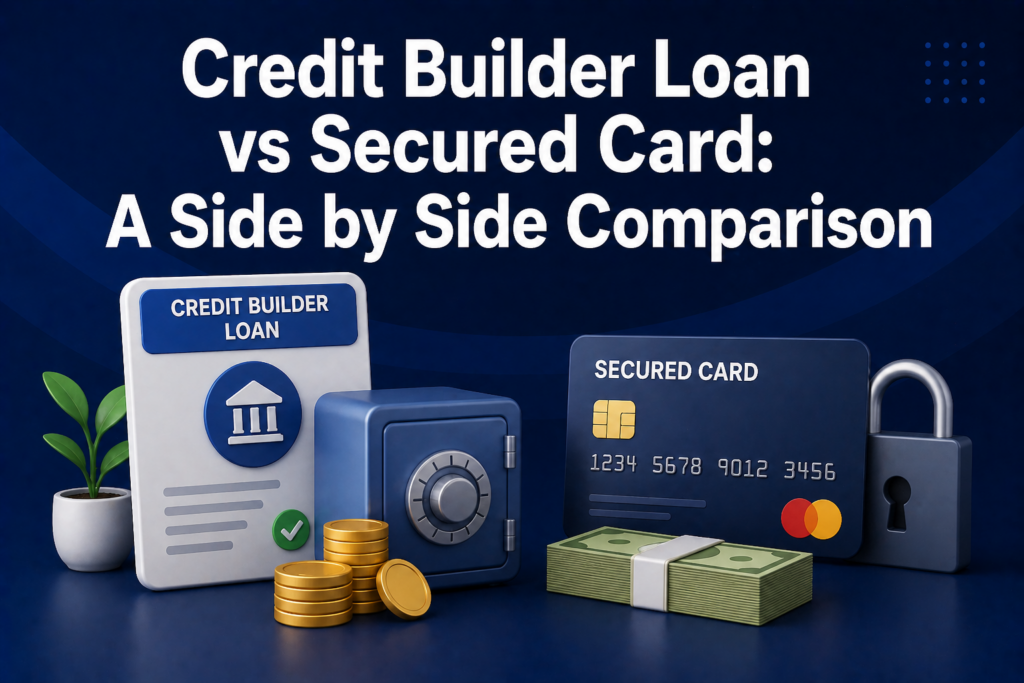
If you are starting to build credit from scratch or rebuilding after a setback, two products come up more than any others: credit builder loans and secured credit cards. Both are designed for people with thin or no credit history. Both report to the credit bureaus. Both are accessible without a strong existing credit profile. But they work differently, build your credit file in different ways, and suit different situations. Here is a clear side by side breakdown so you can decide which one makes sense for you, or whether you need both. How each one works You apply for a small loan, typically between 300 and 1,500 dollars, but you do not receive the money upfront. Instead, the lender holds the funds in a locked savings account while you make fixed monthly payments. At the end of the loan term, usually six to twenty-four months, you receive the accumulated balance minus any fees. The lender reports your monthly payments to the credit bureaus throughout. You provide a cash deposit, typically between 200 and 500 dollars, which becomes your credit limit. You use the card for purchases like a normal credit card and make monthly payments on the balance. The card issuer reports your payment history and utilization to the credit bureaus. When you close the account or graduate to an unsecured card, your deposit is returned. What each one builds on your credit file Credit builder loan: An installment account. Installment accounts have a fixed payment schedule and a defined end date. Having an installment account on your file contributes to payment history and credit mix. If your file currently only has revolving accounts or no accounts at all, adding an installment account diversifies your credit profile. Secured credit card: A revolving account. Revolving accounts have a credit limit and a variable balance that changes based on how much you spend and pay. A secured card contributes to payment history and credit utilization, which is the second biggest factor in your FICO score at 30%. Managing utilization well on a revolving account can produce faster score movement than an installment loan in many cases. Speed of credit building Secured cards generally produce faster score movement in the early months. The reason is utilization. As soon as your first statement closes with a low balance, your utilization factor updates and your score reflects it. A credit builder loan builds more gradually because the benefit accumulates payment by payment over the loan term. For someone who needs to build a credit profile quickly, a secured card used with low utilization and full monthly payoffs is typically the faster tool. For someone focused on long-term, steady credit history building, a credit builder loan is a reliable and low-risk option. Cost comparison Credit builder loan costs: Most credit builder loans charge interest on the loan balance even though you do not have access to the funds. Rates vary widely, from around 6% to over 20% depending on the lender. Some also charge an administrative fee. The total cost over a 12-month loan at a modest interest rate on a 500 dollar loan might be 30 to 60 dollars. You get the principal back at the end, so the net cost is just the interest and fees. Secured card costs: Many secured cards have no annual fee, particularly those from credit unions and some banks. If you pay your balance in full every month, you pay no interest at all. The main cost is the opportunity cost of your deposit sitting as collateral rather than earning returns elsewhere. Cards with annual fees ranging from 25 to 50 dollars are common but avoidable if you shop around. Winner on cost: secured card, assuming you pay the balance in full each month and choose a no-fee product. Risk comparison Credit builder loan risk: Lower behavioral risk. The payment is fixed and predictable. You know exactly what you owe each month and the temptation to overspend does not exist because you do not have access to a credit line. The main risk is missing a fixed monthly payment, which would create a derogatory mark on your report. Secured card risk: Higher behavioral risk. Having a credit line that you can spend up to creates the possibility of carrying balances, paying interest, or missing a payment. For people who are disciplined about spending, this is manageable. For people who struggle with impulse spending, a secured card requires more self-control than a credit builder loan. Winner on risk: credit builder loan for people who prefer structure and predictability. Access and approval Both products are specifically designed for people with thin or no credit history and both have relatively accessible approval requirements. Credit builder loans from credit unions and community banks are often available to anyone who can make the monthly payment and has a bank account. Secured cards are available from numerous banks and fintech companies with minimal requirements. Neither typically requires a strong existing credit profile, which is precisely the point. They are entry-level credit products designed to help people build the history that makes better products accessible later. Which one should you choose? Choose a secured card if: you want faster score movement, you can commit to paying the full balance every month, you want a no-fee option, and you are comfortable managing a revolving credit line responsibly. you prefer a fixed, predictable monthly commitment, you want to build savings alongside your credit history, you are concerned about overspending on a credit line, and you are comfortable with a slower but steady credit-building process. Consider both if: you want to build credit as efficiently as possible and diversify your credit mix from the start. Having one revolving account and one installment account gives scoring models more positive data to work with and builds your credit mix simultaneously. What about rent reporting? Both secured cards and credit builder loans are stronger when combined with rent reporting. If you are renting and paying on time, that monthly payment
Why Being Rich Does Not Mean Having Good Credit

There is a persistent assumption that wealth and good credit go hand in hand. That if someone earns a high income, has significant savings, or comes from money, their credit score must reflect that. It does not work that way. Credit scores and wealth are measuring completely different things, and the confusion between the two causes real problems for people on both ends of the income spectrum. Here is why financial wealth and a strong credit score are not the same thing and what that means practically. Your income is not on your credit report This is the foundational fact that most people do not know. Your salary, your investment income, your savings account balance, and your net worth do not appear anywhere on your credit report. A credit report contains information about credit accounts and debt obligations only: payment history, balances, account ages, inquiries, and public records. The credit bureaus, Experian, TransUnion, and Equifax, collect data from lenders and creditors. They do not collect data from employers, banks, or investment firms about how much money you have or earn. Your credit score is calculated entirely from the data in your credit file, none of which reflects your financial resources. How wealthy people end up with bad credit They pay for everything in cash. This is more common among high earners than most people realize. Someone who has always earned enough to buy cars outright, pay rent in cash, and never need a credit card may have a thin or nonexistent credit file. The credit system has no data on them. No data means no score, and no score is treated similarly to bad credit by most lenders and landlords. They have missed payments despite having money. High income does not prevent forgetfulness. A busy executive who forgets to pay a credit card bill, a wealthy landlord who lets an old debt slip through the cracks, or an entrepreneur who deprioritizes personal finance while building a business can all end up with derogatory marks that have nothing to do with their ability to pay. They have high utilization despite high income. Credit utilization is based on how much of your available credit you are using, not on how much you earn. Someone with a 50,000 dollar credit limit who regularly carries a 40,000 dollar balance has 80% utilization regardless of their income. High utilization is one of the fastest ways to damage a credit score. Wealthy young adults who have relied on family money or high starting salaries without building any credit history can have thin files despite significant financial resources. Length of credit history is a scoring factor that money cannot buy. It only comes with time. They have been through financial disruption. Business failures, divorce, legal judgments, and other financial disruptions can damage credit regardless of wealth. Someone who was wealthy and then went through a messy business bankruptcy may carry significant negative marks even if they have rebuilt their finances substantially. How people with modest incomes build excellent credit The inverse is equally true and equally instructive. People with modest incomes can and do achieve excellent credit scores, sometimes well above 800, by managing their credit behavior consistently over time. The formula is simple: pay every obligation on time, keep credit card balances low relative to the limit, keep accounts open over a long period, and avoid opening new accounts unnecessarily. None of these behaviors require high income. They require discipline and consistency, which are independent of how much money someone earns. A renter earning 35,000 dollars a year who has paid rent on time for five years, uses a secured card with low utilization, and has never missed a payment can have a higher credit score than a lawyer earning 250,000 dollars who pays cash for everything and has no credit history. What credit actually measures Credit scores measure one thing: the statistical likelihood that you will repay borrowed money on time based on your past behavior with borrowed money. That is it. They do not measure wealth. They do not measure character. They do not measure your financial stability in any holistic sense. This is why the system produces results that seem counterintuitive when you think about it from a wealth perspective. The system is not measuring wealth. It is measuring a specific kind of financial behavior, and that behavior is largely independent of income. Why this matters for renters and cash-paid workers The flip side of the wealth-credit disconnect is equally important. People who feel financially stable but have thin credit files are not being judged on their actual financial reliability. They are being judged on a system that has no data on them. A renter who has paid 1,200 dollars a month reliably for three years is demonstrating exactly the kind of financial behavior credit scores are supposed to capture. But if that rent is not being reported to the credit bureaus, the system sees nothing. The person is penalized not for bad behavior but for invisible behavior. This is precisely the problem that rent reporting through Credit Genius is designed to address. By submitting rent payment history to Experian, including backdated history of up to 24 months, Credit Genius makes visible the financial behavior that the credit system was otherwise ignoring. The renter’s actual reliability finally shows up where it matters. The practical implications If you have significant income or assets but a thin or poor credit file, the solution is not to wait for the credit system to recognize your wealth. It never will. The solution is to build a credit history deliberately, just like someone starting from scratch. Open a credit card if you do not have one. Use it for small purchases and pay it off monthly. Report your rent if you are renting. Keep any existing accounts in good standing. Over twelve to twenty-four months of consistent positive behavior, your credit file will catch up to your actual financial reliability. The credit system is indifferent to your
Is It Better to Pay Off Debt or Save Money First?
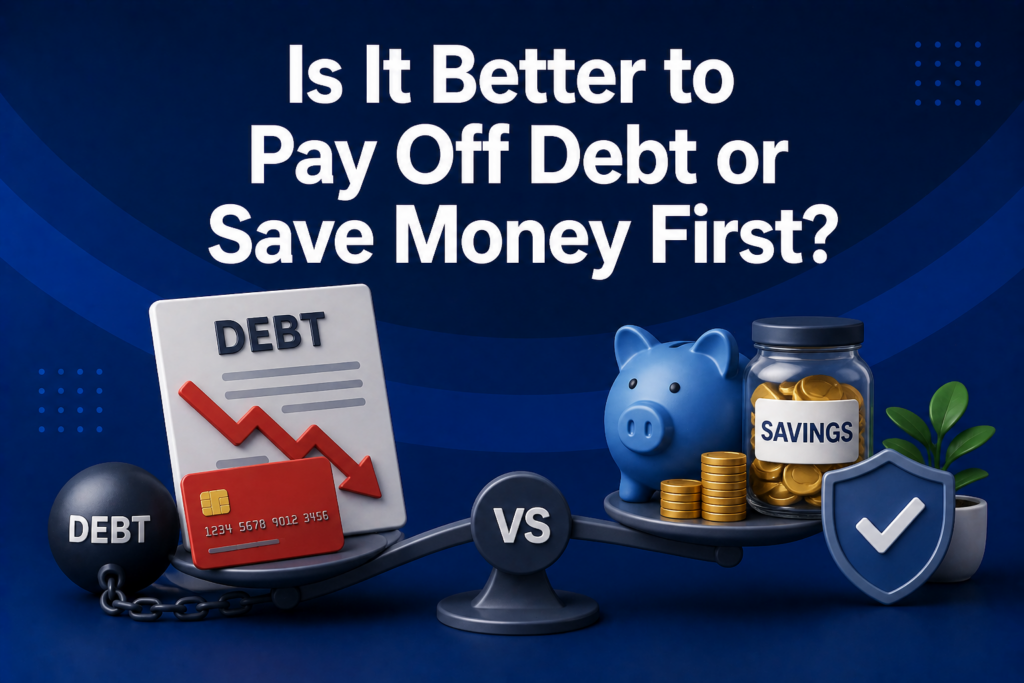
This is one of the most searched personal finance questions and one of the most genuinely nuanced ones. The honest answer is that it depends on the type of debt, the interest rate, your savings situation, and where your credit score is right now. Anyone who gives you a simple universal answer is leaving out important context. Here is how to think through it for your specific situation, including how your decision affects your credit score. The case for paying off debt first From a pure math perspective, paying off high-interest debt is almost always the better financial move. If you are carrying credit card debt at 22% interest and your savings account earns 5%, every dollar you put into savings is costing you 17 cents in net interest every year. The debt is growing faster than the savings. Paying off revolving debt like credit cards also directly improves your credit score by reducing your credit utilization ratio, the second most important factor in your FICO score at 30% of the total. If you have a card with a 5,000 dollar limit and a 4,000 dollar balance, your utilization on that card is 80%. Paying it down to 1,000 drops utilization to 20% and will likely produce a noticeable score improvement at your next statement close date. The credit score benefit of paying down revolving debt is one of the fastest credit improvements available to anyone who is carrying balances. It is measurable, it happens quickly, and it does not require opening any new accounts. The case for saving first The math of paying down high-interest debt is compelling, but math is not the only variable. Life is unpredictable. If you put every spare dollar toward debt and then face an unexpected car repair, medical bill, or job disruption, you have two choices: go back into debt at high interest rates or miss payments. Either outcome hurts your credit and your finances. This is why most financial guidance suggests building a small emergency fund before aggressively paying down debt. The standard recommendation is one to three months of essential expenses. This reserve protects your payment history, the most important factor in your credit score, from being disrupted by unexpected events. Missing a payment on a credit card because you used all your cash for debt payoff is a worse outcome than carrying a balance for a few more months while you build a buffer. Payment history is 35% of your FICO score. Protecting it matters more than optimizing the math on your debt paydown in most circumstances. The type of debt matters enormously High-interest revolving debt (credit cards at 15% or above): Pay this down aggressively after building a small emergency fund. The interest cost is high, the credit score benefit of reducing utilization is significant, and there is no good reason to carry these balances longer than necessary. Moderate interest installment debt (car loans, personal loans at 6 to 12%): Make your scheduled payments on time. Paying these off early has a smaller credit benefit than paying down revolving debt and the interest cost is more manageable. Directing extra cash to an emergency fund or high-interest debt paydown is usually the better move. Low interest debt (student loans, mortgages at 3 to 6%): Make scheduled payments and do not rush to pay these off at the expense of savings or investing. The interest cost is low and the credit benefit of paying them off early is minimal. Money directed toward savings or investments may generate better returns over time. How this connects to your credit score The debt-versus-savings decision intersects with your credit score in three specific ways. Utilization. Paying down credit card balances reduces your utilization ratio and improves your score. This is the most direct credit benefit of debt paydown and it shows up quickly, often within one to two billing cycles. Payment history protection. Maintaining a savings buffer protects your ability to make all minimum payments on time, preserving your payment history. A missed payment can cost 50 to 100 points and stays on your report for seven years. A few months of emergency savings prevents that outcome. Paying off and closing an installment loan can slightly reduce your credit mix, which accounts for 10% of your score. This is a minor factor but worth knowing if you are close to a score threshold for a major loan application. The practical framework Here is a simple decision framework that works for most situations. Build one month of essential expenses as an emergency fund before doing anything aggressive with debt. This protects your payment history from unexpected disruptions. Step two: Pay the minimum on all accounts on time, every month, without exception. This is non-negotiable regardless of what else you are doing. Step three: Direct any extra money toward high-interest revolving debt, starting with the highest rate or the account closest to its limit. This produces the fastest credit score improvement and the highest interest savings simultaneously. Step four: Once high-interest debt is cleared, build your emergency fund to three months of expenses before aggressively paying down lower-interest installment debt. Step five: Continue building credit in parallel. If you are renting and your rent is not being reported to the credit bureaus, adding rent reporting through a service like Credit Genius runs alongside this process without requiring you to redirect any debt paydown money. The bottom line The question of whether to pay off debt or save first does not have a single right answer. But for most people carrying high-interest revolving debt with little savings, the order is: small emergency fund first, then aggressive debt paydown, then savings expansion. The credit score implications reinforce this order. High-interest debt paydown reduces utilization and improves your score. A small emergency fund protects your payment history from disruption. Both outcomes serve your credit and your financial health simultaneously.The worst financial decision is not choosing one over the other. It is ignoring both because the question feels too complicated
5 Credit Questions You Were Too Embarrassed to Ask
Most people have credit questions they have never asked out loud. Not because the questions are unreasonable, but because asking them feels like admitting you do not know something you feel like you should already know. You are not alone. The credit system is genuinely confusing, the rules are counterintuitive in places, and almost nobody teaches this stuff in school. Here are five of the most commonly unasked credit questions, answered without judgment. 1. If I have no credit history, does that mean I have bad credit? No, but the practical effect can feel similar. Having no credit history means you are what the industry calls credit invisible. The credit bureaus have no file on you, which means no score can be generated. Lenders who check your credit see nothing, and many of them treat nothing almost as badly as they treat bad credit. The difference is important though. Bad credit means the system has data on you and the data is negative. No credit means the system has no data at all. The fix for no credit is to give the system data to work with, which is a much cleaner starting point than repairing a history of missed payments or collections. The fastest ways to go from invisible to scoreable are rent reporting, becoming an authorized user on someone else’s account, or opening a secured credit card. Platforms like Credit Genius that report rent to Experian with backdating can help people with no credit history establish a meaningful credit profile quickly using payments they are already making. 2. Does my income affect my credit score? No. Your income is not on your credit report and has no direct effect on your credit score. A person earning 30,000 dollars a year can have an 800 credit score. A person earning 200,000 dollars can have a 550. What matters is how you manage the credit you have, not how much you earn. Payment history, credit utilization, account age, credit mix, and new inquiries are the five factors. Income is not one of them. Income does matter separately when lenders evaluate applications. They consider it alongside your credit score to assess whether you can afford to repay. But that is a different calculation from the score itself, and it does not appear on your credit report in any form. 3. I have been paying my rent on time for years. Why is my credit score still bad? Because unless someone is actively reporting your rent payments to the credit bureaus, they do not appear on your credit report at all. Not a single payment. This is one of the most consequential gaps in the credit system and it affects tens of millions of renters. Mortgage payments are automatically reported to the bureaus by the lender. Rent payments are not, unless your landlord reports them or you use a rent reporting service. Most landlords do not report. Most renters do not know this is even an option. The result is years of responsible housing payments that the credit system has never seen. Rent reporting services like Credit Genius fix this by submitting your payment history to Experian, where it is treated as positive payment data. The backdating feature means you do not have to start from zero. Months or years of on-time rent payments you have already made can be submitted at once, giving your file an immediate foundation rather than a slow month-by-month build. 4. Is it bad to have a zero balance on all my credit cards? Generally no, and in most circumstances a very low balance is actually ideal. The concern some people have heard, that you need to carry a balance to show the card is being used, is a myth. Carrying a balance means paying interest for no credit benefit. What the scoring models actually want to see is that your cards show some activity, meaning you use them occasionally, and that the balance reported to the bureau when your statement closes is low relative to your limit. You can achieve both by making one or two small purchases each month and paying the full balance before the statement closes. A zero balance reported to the bureau means zero utilization on that card, which is the best possible outcome for that factor. The only nuance is that some scoring models may treat a card with literally no activity for an extended period as dormant, which can occasionally affect your score slightly. Using the card once a month prevents this. 5. If I pay off a collection, does it disappear from my report? Not automatically. This is one of the most common credit misconceptions and one of the most disappointing ones to discover. Paying off a collection account changes its status from unpaid to paid, which looks better to some lenders. But the account itself stays on your credit report for seven years from the original delinquency date regardless of whether you pay it. That said, there are a few things worth knowing. Under newer FICO scoring models, paid collections have less negative impact than unpaid ones. Medical collections under 500 dollars were removed from credit reports in 2023 under a policy change by the major bureaus. And some collectors will agree to a pay-for-delete arrangement, where they remove the account from your report in exchange for payment, though this is not guaranteed. Before paying any collection, ask the collector in writing whether they will agree to delete the account upon payment. Get any agreement in writing before you pay. If they will not agree to deletion, paying still makes sense in many situations for reasons beyond your credit score, but go in with realistic expectations about what it does and does not do to your report. The common thread Most of the confusion around credit comes from a system that was never designed to be transparent or intuitive. The rules are not always obvious, the consequences of getting them wrong are significant, and almost nobody teaches
How to Build Credit When You Are Paid in Cash
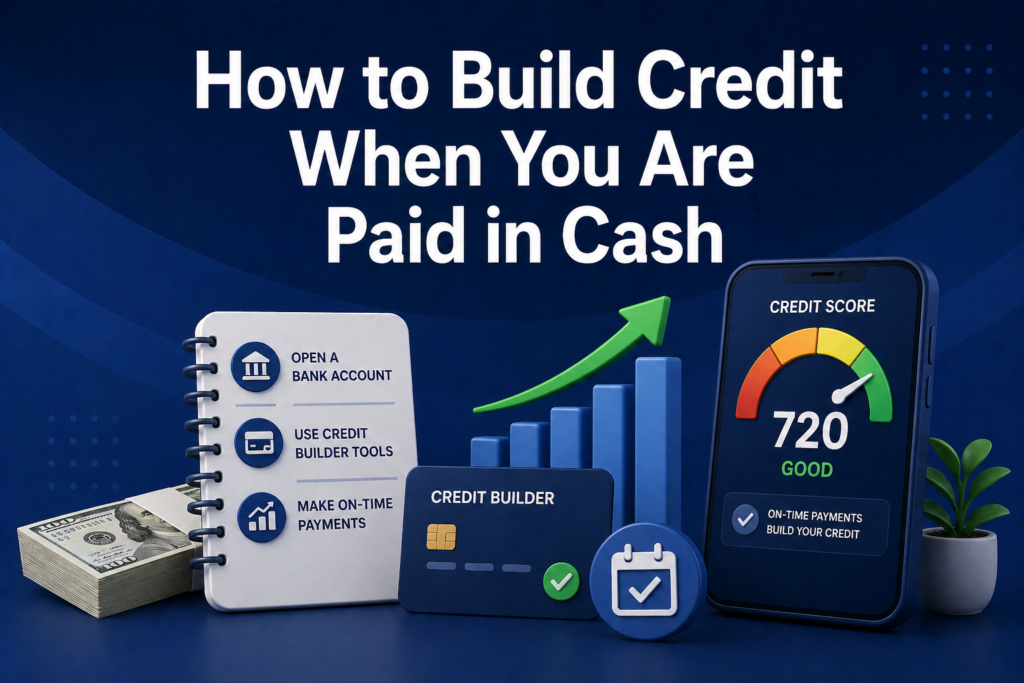
Millions of Americans get paid in cash. Restaurant workers, contractors, cleaners, caregivers, day laborers, and small business owners operating on a cash basis all share the same frustrating credit reality: the income they earn every day is essentially invisible to the financial system. Cash income does not automatically flow through a bank account. There is no pay stub. No W-2. No direct deposit history. And without that paper trail, applying for credit products that require income verification becomes significantly harder. But here is the thing: your credit score itself is not based on your income. It is based on your credit behavior. That means the path to building credit when you are paid in cash is more accessible than most people in this situation realize. You just need to know where to start. Why cash income creates credit challenges Your income does not appear on your credit report and does not directly affect your credit score. The credit system only sees your payment history, your balances, your account age, your credit mix, and your inquiries. A person earning 80,000 dollars a year in cash and a person earning 80,000 dollars on a paycheck both build credit the same way. The challenge shows up when you try to apply for credit products that require income verification. Many credit cards, personal loans, and even some secured products ask for income documentation as part of the application. Without pay stubs or bank statements showing regular deposits, this can create friction. The solution is twofold: start with credit products that have low or no income verification requirements, and simultaneously build a paper trail around your cash income so that future applications are smoother. Open a bank account and deposit your cash income consistently This is the foundational step that unlocks everything else. If you are not already banking your cash income, start now. Open a checking account at a bank or credit union, deposit your cash earnings regularly, and maintain that account consistently over time. Bank statements showing regular cash deposits are a form of income documentation that many lenders accept alongside or instead of pay stubs. Three to six months of consistent deposit history begins to create the paper trail that makes credit applications easier. If you have had banking issues in the past, look into second-chance checking accounts offered by many banks and credit unions specifically for people who have been denied traditional accounts. Online banks and fintech platforms also often have lower barriers to account opening. Report your rent payments If you are renting and paying on time, your rent payment is your most powerful credit-building tool regardless of how you earn your income. Rent reporting services do not require documentation of your employment type or income source. They verify your rent payment history and submit it to the credit bureaus. Credit Genius reports rent payments to Experian with backdating of up to 24 months. For someone paid in cash who has been renting responsibly for a year or more, this can create an immediate foundation of verified payment history on their credit file without any reference to how their income is earned. This is one of the cleanest entry points into the credit system for cash-paid workers because the barrier is your rent payment behavior, not your employment documentation. Apply for a secured credit card Secured credit cards are one of the most income-agnostic credit products available. Because you provide a cash deposit that covers your credit limit, the lender’s risk is minimal. Income verification requirements are typically lower than for unsecured products, and some secured cards require very minimal income documentation. When applying, you can often report self-employment income or cash income on the application without needing to provide documentation upfront. The key is to be accurate about what you earn. Many applications allow you to include any income you have regular access to, including cash earnings, tips, and freelance work. Use the card for one or two small purchases each month and pay the full balance before the due date. The credit-building value comes from the consistent monthly payment record, not from how much you spend. Try a credit builder loan Credit builder loans at credit unions and community banks are specifically designed for people with thin or no credit history. Many have minimal income documentation requirements because the loan is secured by the savings account into which payments are deposited. The risk to the lender is low regardless of how you earn your income. Monthly payments are fixed and typically small, which makes them manageable even on irregular cash income. The payments are reported to the credit bureaus and build your payment history over the loan term. At the end of the term you receive the accumulated payments back minus any fees. For someone with no banking history and no credit file, a credit builder loan from a local credit union that accepts cash deposits is a practical starting point. Become an authorized user Being added as an authorized user on a family member or trusted friend’s credit card does not require any income documentation on your part. The primary cardholder applies for and manages the account. You simply benefit from their credit history appearing on your report. If you have a family member with a long-standing account in good standing, this is one of the fastest ways to go from no credit to a scoreable profile without navigating any income documentation requirements at all. Document your income for future applications While you are building your credit profile, work in parallel on creating documentation of your cash income. This makes future credit applications significantly smoother. File your taxes accurately and on time, including all cash income. Self-employed individuals file a Schedule C. Tax returns are one of the most widely accepted forms of income documentation by lenders and they establish a credible, official record of what you earn. Keep records of your work: invoices, receipts, client payments, or any documentation that supports the income you report.
What Is Credit Piggybacking and Is It Legal?
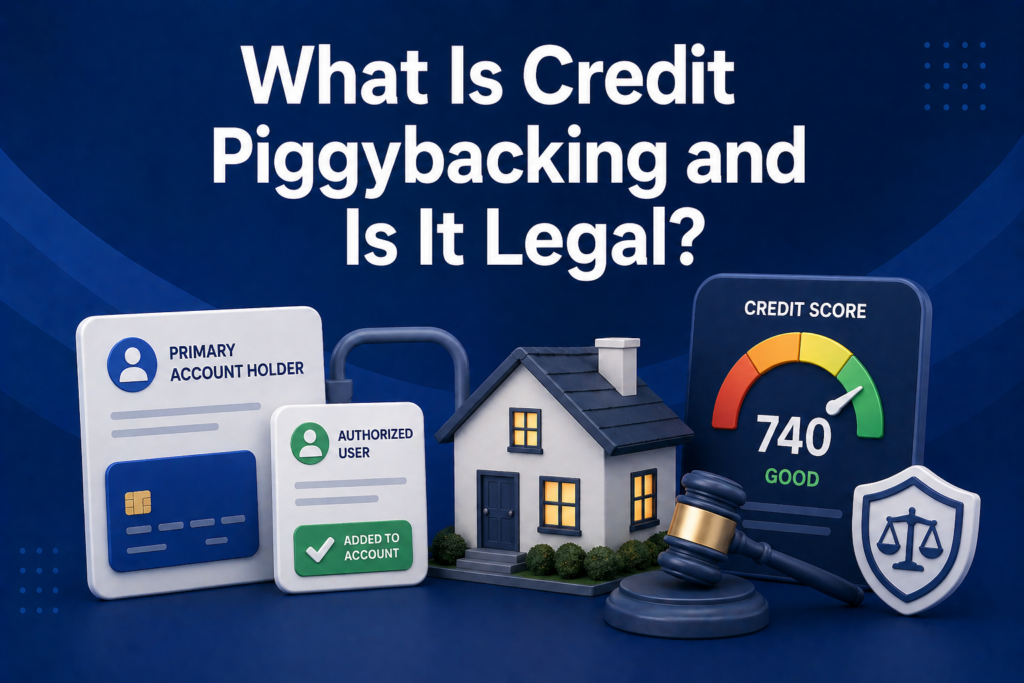
Credit piggybacking is a strategy where one person benefits from another person’s credit history by being added as an authorized user on their credit account. It is one of the fastest ways to add established credit history to a thin file, and it is a strategy that has been around for decades. Whether it is legal, ethical, and practical depends significantly on how it is done. Here is everything you need to know. How credit piggybacking works When someone is added as an authorized user on a credit card account, the primary cardholder’s payment history and account age on that card can appear on the authorized user’s credit report. If the primary cardholder has a ten-year-old account with perfect payment history and low utilization, the authorized user potentially gains the benefit of that entire history the moment they are added. This can have a significant impact on a thin credit file. A person with no credit history who is added as an authorized user on a long-standing account can go from unscorable to having a meaningful credit profile in a matter of weeks. The authorized user does not need to use the card or even receive a physical copy. The benefit comes from the account appearing on their credit report, not from actual card usage. The two types of credit piggybacking This is the traditional version of the strategy and it is completely legal and widely used. A parent adds a child, a spouse adds a partner, or a friend with good credit adds someone they trust. The primary cardholder retains full control of the account. The authorized user benefits from the credit history. This is a paid arrangement where a stranger with good credit allows someone they do not know to be added as an authorized user in exchange for a fee. Companies that facilitate these arrangements, sometimes called tradeline companies or seasoned tradeline services, charge consumers for access to established accounts. Is credit piggybacking legal? Family and friend piggybacking is legal. The authorized user concept is a standard feature of consumer credit accounts recognized by all major card issuers and credit bureaus. There is nothing legally problematic about a parent adding a child or a friend helping another friend. Commercial piggybacking occupies a grayer area. It is not explicitly illegal in the United States, but it has attracted scrutiny from regulators and lenders. The Federal Reserve and FICO have both examined whether commercial tradeline arrangements constitute a form of credit fraud when the relationship between the primary cardholder and authorized user is purely financial. FICO has periodically updated its scoring models, including FICO 8 and subsequent versions, with adjustments intended to limit the impact of authorized user accounts added purely for piggybacking purposes. The effectiveness of commercial piggybacking has diminished over time as a result. More practically, if a lender discovers that a credit improvement was the result of commercial piggybacking rather than genuine credit development, it can affect their lending decision. Some lenders explicitly exclude authorized user accounts from their manual underwriting review. The risks of commercial piggybacking Beyond the legal gray area, commercial piggybacking carries practical risks. You are sharing personal information, including your Social Security Number, with a company and potentially with a stranger whose account you are being added to. Data security and privacy concerns are real. The credit improvement from commercial piggybacking is also temporary in a way that organic credit building is not. When you are removed from the authorized user account, which can happen at any time, the credit benefit disappears. You have not built a credit history of your own. You have borrowed someone else’s temporarily. For a mortgage application, lenders often look closely at authorized user accounts and may exclude them from their evaluation if they appear to have been added recently or without a genuine relationship. The credit score improvement from commercial piggybacking may not actually translate into a better loan outcome. When family piggybacking makes sense The legitimate, family-based version of credit piggybacking is a genuinely useful credit-building strategy in the right circumstances. It works best when there is a real, ongoing relationship between the primary cardholder and the authorized user, when the primary cardholder has a strong, long-standing account with clean payment history and low utilization, and when the authorized user needs a temporary boost to get to a scoreable credit file while building their own history in parallel. The key is to treat authorized user status as a bridge, not a destination. Use the account’s history to establish a baseline while simultaneously building your own credit through rent reporting, a secured card, or a credit builder loan. The goal is to develop a credit file that stands on its own, not one that depends on staying on someone else’s account. Better alternatives for building credit legitimately For people with thin or no credit history, several options build real, durable credit history without relying on another person’s account. Rent reporting through Credit Genius submits your existing rent payments to Experian with backdating of up to 24 months. A secured credit card with a small deposit and consistent monthly payoff creates payment history in your own name. A credit builder loan from a bank or credit union builds payment history and savings simultaneously. These approaches take a little longer than piggybacking in some cases, but the credit history they create belongs to you and does not disappear when a relationship ends or when someone else decides to remove you from their account. The bottom line Credit piggybacking through family or trusted relationships is legal, common, and can be a genuinely useful credit-building tool when used as a bridge alongside other legitimate credit-building strategies. Commercial piggybacking is legally gray, practically risky, and increasingly less effective as scoring models have been updated to account for it.If you have a family member or close friend willing to add you to a long-standing account with good history, it is worth considering as one part of a broader credit-building strategy. If
Why Financial Apps Are Replacing Traditional Credit Counseling
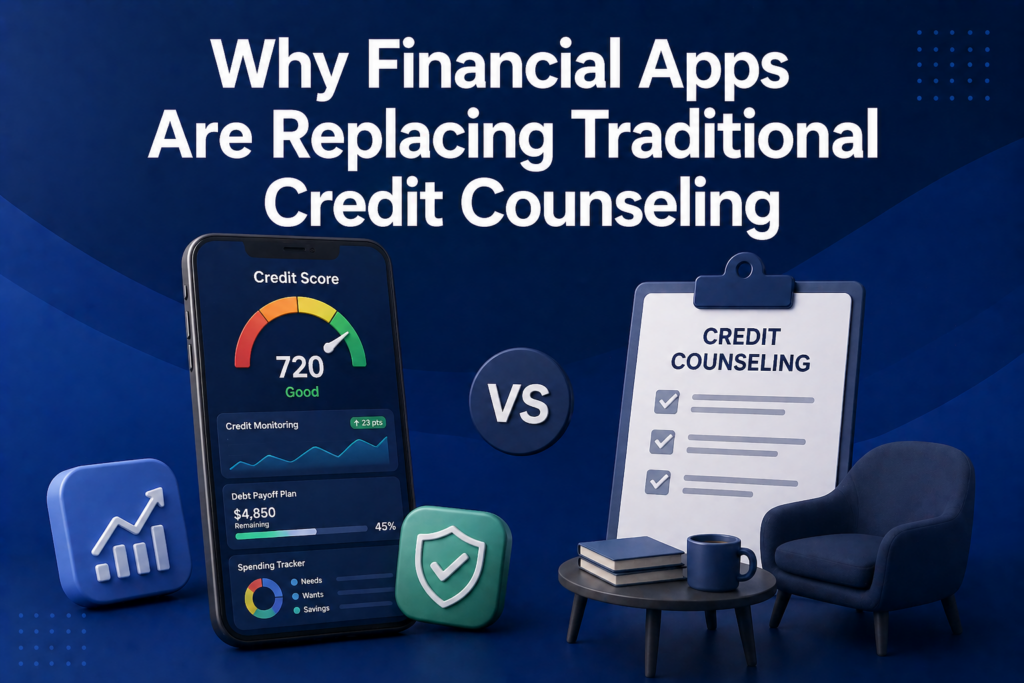
Traditional credit counseling has existed for decades as a way to help Americans manage debt and improve their financial standing. It works, for the people who access it. The problem is that most people never do. Scheduling an appointment, sitting across from a stranger to discuss financial problems, and navigating nonprofit or agency processes creates enough friction that the majority of people who need help simply do not seek it. Financial apps are changing that, and the shift has accelerated significantly in the years leading up to 2026. Here is why it is happening and what it means for consumers. The access problem with traditional counseling Traditional credit counseling, whether through nonprofit agencies, HUD-approved housing counselors, or fee-based financial planners, has always had an access problem. It requires scheduling, it requires disclosure of sensitive financial information to another person, and in many cases it requires either time off work or navigating an appointment system that does not match the way most people manage their lives. There is also a stigma dimension. Seeking credit counseling can feel like an admission of failure, which is enough to prevent many people from taking the step even when they clearly need it. The result is that the people most likely to benefit from financial guidance are the least likely to access traditional channels for it. What financial apps do differently Financial apps address the access problem by removing the friction entirely. The guidance is available at any time, in private, without requiring an appointment or a conversation with another person. For the majority of Americans who would benefit from financial guidance but will not walk into a counselor’s office, this changes everything. The shift from generic to personalized advice is equally significant. Traditional credit counseling, particularly in group or workshop formats, delivers the same information to everyone. A person with a thin credit file who has never missed a payment receives the same guidance as someone with a history of collections and high debt. The advice is technically accurate for both but practically useful for neither in a targeted way. AI-powered financial apps analyze your specific financial situation and deliver guidance that is calibrated to your actual circumstances. The credit advice you receive is not generic. It is based on what is actually in your credit file, what is holding your score back, and what actions will have the most impact given your specific starting point. The role of AI in personalized financial guidance The transition from rule-based financial apps to AI-powered platforms represents a meaningful change in what consumer financial guidance can deliver. Earlier apps could show you your score and provide generic tips. AI-powered platforms can analyze patterns in your credit behavior, identify the specific factors holding your score back, and prioritize recommendations in a way that reflects your individual situation. Credit Genius is one example of this shift. Its AI credit assistant reads your actual Experian credit file and surfaces the specific actions most likely to improve your score, in order of impact. Rather than telling every user to pay on time and keep utilization low, it tells individual users which balance to pay down first, whether disputing a specific item is worth their time, and what the next highest-leverage action is given their current file. This is meaningfully different from what a scheduled appointment with a credit counselor typically delivers, and it is available at any time without requiring the user to disclose their situation to another person. Gamification and engagement One of the persistent problems with financial education is that people do not engage with it consistently enough for it to change behavior. Reading an article about credit utilization once does not produce lasting behavioral change. Understanding why utilization matters, seeing how it applies to your specific accounts, and being reinforced for taking action on that understanding is what produces change. Gamified financial education, where learning is structured around progress, rewards, challenges, and streaks, produces higher engagement and better retention than passive content consumption. Financial apps that incorporate gamification are addressing the engagement problem that has always limited the effectiveness of traditional financial education. Credit Genius builds this into its platform through Credit Games, designed specifically around the insight that financial behavior change is a habit and engagement problem as much as it is a knowledge problem. Where traditional counseling still has an edge Financial apps do not replace traditional credit counseling for every situation. Complex debt management plans, bankruptcy counseling, housing counseling required for certain loan programs, and situations involving multiple creditors and legal considerations still benefit from human expertise and the kind of personalized interaction that an app cannot fully replicate. For situations that require a debt management plan, negotiation with multiple creditors, or formal bankruptcy counseling, a nonprofit credit counseling agency or a consumer law attorney remains the right resource. The National Foundation for Credit Counseling offers free or low-cost services for these situations. The distinction is between guidance and intervention. Financial apps are increasingly effective at delivering guidance. Complex intervention still benefits from human involvement. What this means for consumers The practical implication is that high-quality, personalized financial guidance is more accessible than it has ever been. You do not need an appointment, you do not need to disclose your situation to a stranger, and you do not need to fit your schedule around office hours. If you have credit questions, credit problems, or simply want to optimize a credit profile that is already in decent shape, the quality of guidance available through AI-powered financial apps in 2026 is genuinely competitive with what you would receive from many traditional counseling services for everyday credit management situations. The bottom line Traditional credit counseling is not going away. But it is being supplemented and in many everyday use cases replaced by financial apps that are more accessible, more personalized, and more engaging than the alternatives that existed a decade ago. The shift is good for consumers. More people are getting better financial guidance than at any